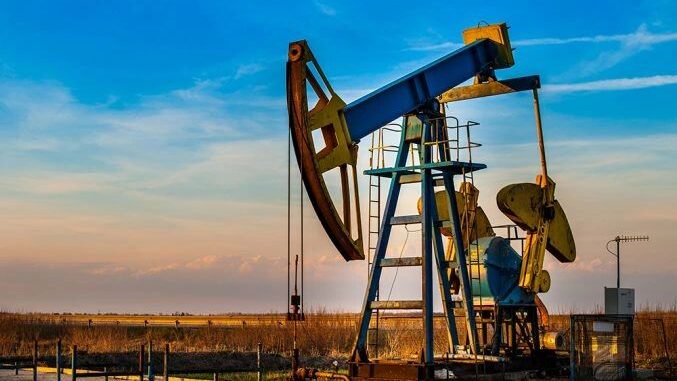
- Oil had a weak and volatile year, while natural gas outperformed on the back of LNG approvals, higher breakevens, and emerging data-center demand.
- Despite price pressure, U.S. E&Ps outperformed expectations, and production is unlikely to decline unless oil approaches the $50 per barrel threshold.
- Looking ahead to 2026, U.S. shale operators may expand international exposure as domestic inventories mature and global shale opportunities gain attention.
The US shale exploration and production (E&P) and Lower 48 midstream sectors experienced a volatile and challenging 2025, likely a far cry from what operators envisioned this time last year as the second Trump administration’s ‘energy dominance’ agenda was taking shape. With WTI languishing below $60 for much of the year, oil E&Ps moderated activity, with the oil-directed rig count dropping from 415 in January to 386 by Thanksgiving. In contrast, Henry Hub gas prices remained supported throughout much of the year, with the front month now north of $5 per million British thermal units (MMBtu). In short, there is more long-term gas bullishness in the US oil and gas industry than perhaps at any time in recent memory, while even the most ardent oil bulls seem to recognize the short-term challenges.
Year of gas and LNG
In the broader US energy conversation, 2025 brought natural gas into focus. The end of the Biden administration’s LNG pause unleashed around 7.6 billion cubic feet per day (Bcfd) of future feedgas demand from newly sanctioned US Gulf Coast LNG export projects, driving total feedgas demand to double its 2024 level by 2030. However, when the 2025 Gulf Coast LNG FIDs enter service later this decade, market conditions will not resemble the previous wave of LNG projects (2016-2021). Lower 48 dry gas breakevens, and therefore Henry Hub, will be materially higher. At the same time, LNG prices will be facing downward pressure due to global supply additions, shrinking the spread between Henry Hub and international benchmarks.
The short-term market may be previewing some of these dynamics. The Title Transfer Facility (TTF)-Henry Hub differential in early December is around $4 per MMBtu, the lowest since early 2021. This will be one of the most important spreads to watch in 2026, as Golden Pass LNG aims to begin operations shortly and aim to ramp up to its full capacity of 2.3 Bcfd.
Costs and timelines require close monitoring, as nine projects are currently under construction in a tightening labor and supply chain environment. The capital investment required to build LNG liquefaction plants continues to increase, with standard capex now rising to near $1,100-$1,200 per ton, roughly 20% higher than the projects sanctioned in 2022-23. EPC contractors are also becoming more rigid with contract terms to pass more cost overrun risk to the developers.
In the broader political and tech world, gas has come to the forefront not via LNG but rather the race for AI supremacy and the surge in plans to develop data centers fueled by dedicated gas-fired power generation plants (as well as with renewables). The amount of data center capacity that is actually built and the corresponding gas demand it ultimately represents will warrant close scrutiny in the years ahead. Rystad Energy will continue to closely monitor data center projects globally in 2026 in order to refine our outlook for the gas and power demand they will drive.
US oil outlook steady as long as WTI holds above $55
Public US oil-focused E&Ps in 2025 defied expectations – including their own guidance updates in May – of slowing production, while the nation’s oil output repeatedly hit record. We estimate that most US oil E&Ps have a ‘corporate breakeven’ of near $60 per barrel, a level at which they can maintain dividends, buybacks, interest and general and administrative (G&A) expenses while drilling breakeven wells (NPV10). Even so, in our estimation, it would require prices to fall closer to $50 per barrel to initiate capex cuts that would spur outright production declines. Triggering production declines is unpalatable for several reasons. For one, sliding output raises per-unit operating costs and potentially leads to suboptimal utilization of midstream assets. Second, due to steep shale well decline rates, cutting capex too sharply leaves a dent in PDP (proved, developing and producing) volumes that generate cash flow and underpin valuations. And third, when prices return to higher levels, ramping up drilling to reach previous output levels is a steeper climb, requiring a sharper jump in spending.
As a result, we would expect operators to be willing to slightly reduce payout ratios in the short term to protect output. There is a historical precedent in the capital discipline era. When oil prices fell from their 2022 highs, operators, having proven their ability to remain disciplined, reduced payout ratios to preserve and deploy cash for longer-term inventory acquisitions through mergers and acquisitions (M&A). With potential contributions from G&A and operational synergies from M&A in 2026, a lower payout ratio could see E&Ps defend corporate breakeven and maintain volumes at $55 per barrel WTI.
Efficiency gains still have room to run
Regardless of the macro environment, it’s clear that shale operators will continue to adopt new technologies and generate further operational efficiencies to drive down unit costs. Drilling and completions (D&C) efficiencies continued to improve in 2025 as operators pushed the envelope to reduce overall costs in a softer oil macro environment. The potential ceiling for efficiency gains has been debated for several years, but we believe there is still room for meaningful improvements. Ultra-long lateral wells remain a relatively new space for Lower 48 operators, and best practices for drilling and completing these wells will continue to evolve.
Simul-fracs have gained a greater market share over the past several years, and we expect operators to accelerate efforts toward trimul- and even quattro-frac designs to capture further economies of scale. A key bottleneck is sourcing and delivering the large frac water volume required within a short period of time to execute on trimul and quattro fracs. Still, the growing prevalence of contiguous acreage positions – particularly among larger operators – will enable bigger pad development. This will lead to longer laterals and the execution of simul, trimul and quattro fracs at scale using continuous-pumping techniques. Taken together, these trends support another step-change in efficiency over the coming years.
Separately, ExxonMobil’s recent use of petcoke blended with conventional proppant to enhance well performance has renewed industry interest in lightweight proppant alternatives. With Tier 1 inventory concerns increasingly top-of-mind, operators are likely to intensify experimentation with novel proppant blends to improve recoveries.
US E&Ps on an international shopping spree?
In 2026 we will also be watching for US E&Ps reversing the retrenchment trend of the 2010s and adding international exposure. Privately-held Oklahoma-based Continental Resources acquired a block in Argentina’s massive Vaca Muerta shale last month, just a few months after forming a joint venture with TPAO to explore and develop shale resources in Turkiye. EOG also entered a shale exploration license in the UAE, conventional exploration in Bahrain and potentially Alaska (yet to be confirmed). While moves such as these are indicative of a more mature US shale industry, they are not necessarily indicative of the often-discussed short-term challenge of limited Tier 1 inventory. Rather, these serve as potential medium-term growth options that are perhaps not as obvious in the Lower 48 as they once were under the prevailing macro conditions.
Want to get your story in front of our massive audience? Get a media Kit Here. Please help us help you grow your business in Energy.