The pacts target higher crude output from existing and new acreage under Venezuela’s reformed hydrocarbons law, separate from the larger U.S.-backed North American Blue Energy Partners (NABEP) arrangement announced days earlier by President Trump.
Wright described the package as “tens of billions” in investments and a “transformation for Venezuela.” Rodríguez credited Trump administration efforts for “win-win” deals and said the moves would generate economic growth. Current national output sits above 1 million barrels per day (bpd), with Rodríguez citing 1.23 million bpd and other reports placing recent levels in the 1.1–1.2 million bpd range. Wright said the new commercial activity should more than double production in the next few years and that the country could reach 2 million bpd by the end of the decade.
Chevron’s $7 Billion Expansion
Chevron, which never fully exited Venezuela, agreed to updated fiscal, commercial, and legal terms for its joint ventures with PDVSA. It will invest more than $7 billion over five years through those ventures and additional Orinoco Belt acreage. The company targets roughly 600,000 bpd by about 2031, more than double its current Venezuelan output. Total costs are expected to stay below $20 per barrel.
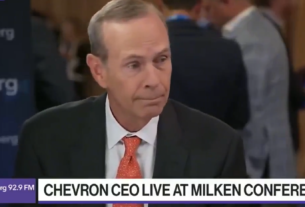
Petroindependencia (Chevron 49%) received rights to the adjacent Carabobo 1 and Carabobo-2-South-A areas. Chevron already operates Petropiar and Petroboscan. PDVSA officials have described a nearer-term lift from about 250,000 bpd across the Chevron ventures toward 420,000 bpd in a first stage. Chevron CEO Mike Wirth pointed to the company’s century-long presence and the resource base’s multi-decade potential. These agreements predate and sit apart from the NABEP structure.
Eni’s Junín-5 Operatorship
Eni signed a 25-year Contrato de Participación Productiva de Hidrocarburos (extendable) and became exclusive operator of the Junín-5 heavy-oil field in the Orinoco Belt. The field holds about 35 billion barrels of oil in place and currently produces only about 12,000 bpd. Eni plans roughly $1.5 billion per year in investment with a target of 400,000 bpd by the end of the decade. CEO Claudio Descalzi attended the signing. Eni has operated in Venezuela since 1998 and also holds other oil and gas positions, including Perla gas. Market sources have described longer-term Eni-linked volumes (including PDVSA-associated barrels) potentially exceeding 1 million bpd.
Other Companies Signing or Advancing Deals
The September 2 ceremony and related talks included more than the headline Chevron and Eni pacts. GE Vernova signed alliances with PDVSA for self-generation of electricity at operational sites and with Corpoelec to support the power system that underpins higher oil output. Power reliability has been a binding constraint.
- Additional names: KEO Capital / KEO Energy (via U.S. subsidiary Maha Energy Indiana): operator role at Petrourdaneta in the Maracaibo Basin, a $350 million credit facility, and an increase in working interest toward 40%.
- Primavera (energy vehicle co-founded by Coinbase co-founder Fred Ehrsam): productive-participation contract on the Budare-Elotes block.
- Aspect Holding: joint technical-economic feasibility study on Oficina Norte exploration areas.
- GeoPark: advanced talks on the Bare heavy-oil field in the Orinoco; sources listed it among expected signatories.
- India’s ONGC, Shell, bp, and Repsol have been cited in official or source comments as possible additional participants, though not all were confirmed at the Wednesday event.
These commercial migrations and expansions follow Venezuela’s January 2026 hydrocarbons reform and months of contract conversions. They are distinct from the Trump-announced NABEP package.
The Separate NABEP / Trump-Announced Framework
Days before the Caracas ceremony, the White House detailed an arrangement with North American Blue Energy Partners, controlled by Venezuelan businessman Alejandro Betancourt. Venezuela granted 100-year concessions on 17 fields holding about 65 billion barrels of proven reserves—roughly one-fifth of the country’s total. Many of those fields had Chinese or Russian operators. NABEP currently produces on the order of 170,000–200,000 bpd and has stated a near-term goal above 1 million bpd, backed by a plan of up to $100 billion in infrastructure investment.
The U.S. Department of War’s Office of Strategic Capital takes a 35% equity stake; the State Department obtains 20% offtake at cost plus a right of first refusal on the rest. Governance includes a U.S. citizen board majority and veto rights. Projected royalties and taxes to Venezuela exceed $200 billion over the first 25 years in White House materials. NABEP has discussed deploying dozens of drilling and workover rigs. This structure is the one President Trump publicly highlighted; the Chevron, Eni, and related pacts were negotiated on a parallel commercial track.
Production History and Targets
Venezuela produced roughly 2.5 million bpd in the mid-2000s and still around 2.3–2.5 million bpd as late as 2015–2016. Output then collapsed under underinvestment, expropriations, mismanagement, and later U.S. sanctions: about 2.0 million bpd in 2017, 1.5 million in 2018, under 1 million by 2019, and a trough near 0.5 million in 2020. Recovery brought levels to roughly 0.87–0.98 million bpd in 2024 and about 0.97–1.1 million in 2025. By mid-to-late 2026, official and secondary-source figures clustered around 1.1–1.23 million bpd. Peak output in the late 1990s exceeded 3 million bpd.
Wright’s near-term language is “more than double” from current levels over the next few years, with 2 million bpd cited as a decade-end national target. Incremental barrels from the announced packages include Chevron’s planned ~300,000 bpd addition, Eni’s ~388,000 bpd addition at Junín-5, and NABEP’s multi-hundred-thousand-barrel ramp from its existing base. Realizing those volumes will require sustained capital, diluent, power, and logistics. Heavy Orinoco crude and aging infrastructure remain operational constraints even with improved fiscal terms.
The combination of U.S. policy shift after the January 2026 change in Caracas, license and contract modernization, and private-operator capital is the mechanism officials are using to reverse two decades of decline. Results will be measured in barrels delivered, not ceremony attendance.
Appendix: Sources and Links
- Bloomberg: Chevron, Eni Lead Wave of Deals to Lift Venezuela Oil Output — https://www.bloomberg.com/news/articles/2026-09-02/chevron-eni-lead-wave-of-deals-to-boost-venezuela-oil-output
- Related Bloomberg: Chevron to Spend $7 Billion on Doubling Its Venezuelan Output — https://www.bloomberg.com/news/articles/2026-09-02/chevron-to-spend-7-billion-on-doubling-its-venezuelan-output
- Related Bloomberg: How Trump’s Venezuela Oil Deal Gives the US Direct Control — https://www.bloomberg.com/news/articles/2026-09-02/how-trump-s-venezuela-oil-deal-gives-the-us-direct-control
- Reuters: Chevron expands Venezuela presence with $7 billion plan — https://www.reuters.com/business/energy/chevron-expands-venezuela-position-plans-7-billion-investment-2026-09-02/
- Reuters: Chevron, KEO Capital, ENI and Primavera to sign energy pacts — https://www.reuters.com/business/energy/chevron-keo-capital-eni-primavera-sign-energy-pacts-venezuela-soon-sources-say-2026-09-02/
- Reuters: US energy secretary says Venezuela oil output to more than double — https://www.reuters.com/business/energy/us-energy-chief-says-venezuela-oil-output-more-than-double-next-few-years-2026-09-02/
- Financial Times: Chevron to double Venezuela oil production with $7bn pledge — https://www.ft.com/content/a76721db-36e1-4198-aad8-8c90137aace9
- Eni press release: Eni signs strategic contract… Junín-5 — https://www.eni.com/en-IT/media/press-release/2026/09/eni-signs-strategic-contract-in-venezuela-and-becomes-operator-of-the-super-giant-junin-5-oil-field.html
- Chevron company announcement (via FT/Yahoo): Chevron Expands Position in Venezuela — https://finance.yahoo.com/energy/articles/chevron-expands-position-venezuela-101500395.html
- White House / Reuters coverage of NABEP terms — https://www.reuters.com/business/energy/white-house-releases-terms-oil-deal-with-north-american-blue-energy-partners-2026-09-01/
- AP: White House fills in some details of Venezuela oil agreement — https://apnews.com/article/trump-venezuela-oil-nabep-reserves-7a4fa51f842e17b9b1d092fbeef2646a
- KEO Capital IR: KEO Energy operating agreements with PDVSA — https://investors.keocapital.com/mfn_news/keo-energy-enters-into-operating-agreements-in-venezuela-with-pdvsa/
- Últimas Noticias (English): Venezuela signs new energy cooperation agreements — https://en.ultimasnoticias.com.ve/economy/Venezuela-signs-new-energy-cooperation-agreements-with-international-companies/
- Últimas Noticias: PDVSA consolidates strategic agreements — https://en.ultimasnoticias.com.ve/economy/petroleum/PDVSA-consolidates-strategic-agreements-to-boost-oil-production-and-the-country%27s-energy-stability/
- CNBC transcript: Energy Secretary Chris Wright on Squawk Box, Sept. 2, 2026 — https://www.cnbc.com/2026/09/02/cnbc-transcript-us-energy-secretary-chris-wright-speaks-with-cnbcs-brian-sullivan-on-squawk-box-today.html
- Historical production references: API chart on 70% decline — https://www.api.org/energy-insights/charts-analysis/venezuela-production-has-fallen-70-percent
- YCharts Venezuela oil production series — https://ycharts.com/indicators/venezuela_oil_production
- Worldometer Venezuela oil statistics — https://www.worldometers.info/oil/venezuela-oil/
- OPEC/EIA secondary-source context via Oxford Energy and STEO tables
- Additional Reuters/FT/Bloomberg items on GeoPark, Primavera, ONGC, GE Vernova, and NABEP rig plans as cited in the body.