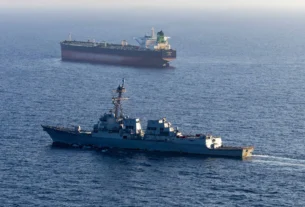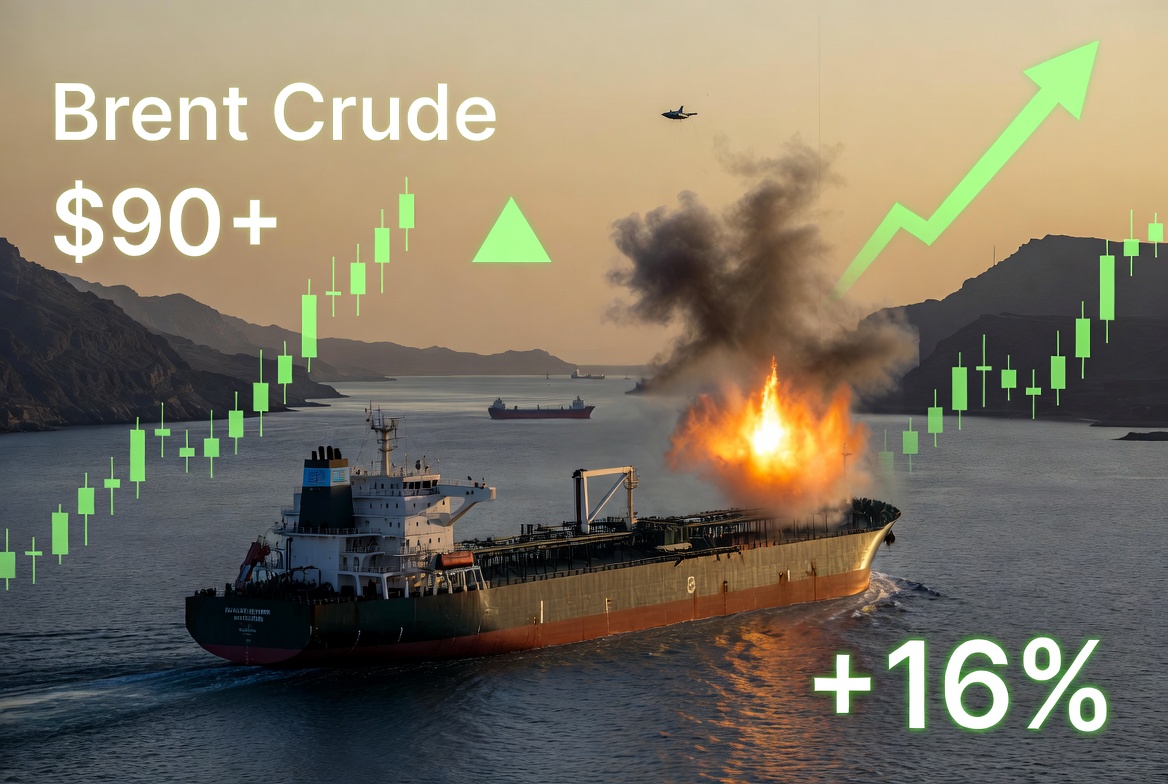
Iran’s Islamic Revolutionary Guard Corps (IRGC) Navy said on Monday, October 12–13, 2026, that it struck a third “violating” or “offending” supertanker in the Strait of Hormuz within roughly 48 hours, sparking an onboard fire. The IRGC stated the vessel had switched off its navigation systems, ignored warnings, and attempted to exit via an unauthorized route, disrupting “order and security” in the waterway—the same pattern alleged in prior incidents involving mines or strikes.
The claim, reported by Iranian state-linked outlets such as Press TV and covered internationally, has not been fully independently confirmed by bodies like the UK Maritime Trade Operations (UKMTO) at the time of reporting. It fits a pattern of accelerated IRGC enforcement amid the ongoing US-Israel-Iran conflict that began earlier in 2026. Related incidents in the same period include drone and projectile strikes on other tankers (some involving Indian crew, with reports of missing seafarers on vessels such as the Nicaragua-flagged MT Petro Dolphin near Sohar anchorage), “dark” ships running with AIS off, and UKMTO advisories on multiple hits in and around the strait. IRGC statements have warned that cooperation with the US or use of unauthorized routes will draw a “decisive response,” and that enforcement may extend beyond the strait itself.
The Strait of Hormuz remains a critical chokepoint. Flows have partially recovered from earlier wartime lows through a combination of risk-tolerant transits, ship-to-ship (STS) transfers in the Gulf of Oman, shuttling operations, and alternative routing/pipeline adjustments, but attacks continue to raise insurance, operational, and routing costs.
Tanker Rates, Shortages, and the Ongoing Rebalancing
What began as a crude supply disruption has evolved into a shipping crisis. Middle East flows rebounded sharply in September (reaching levels around 12 million barrels per day in some assessments after lower summer volumes), pulling a large share of the global VLCC fleet into the region. Analysts note that of roughly 923 VLCCs worldwide, hundreds are actively employed, with limited spare capacity once accounting for vessels tied up by blockades, sanctions-related restrictions, STS waiting times, and regional concentration. More than 40% of the VLCC fleet has been reported in or near the Persian Gulf/Gulf of Oman area at points, supported by shuttling and STS that can add days or weeks to voyages.
The result is record or near-record freight rates. VLCC earnings on key Middle East–Asia routes have hit levels around or above $1 million per day (with peaks near $1.4 million in some reports), and assessed freight costs have soared: Middle East to China routes have been cited in the $24–35+/barrel range (versus single-digit dollars pre-war), while US Gulf to Asia fixtures have reached tens of millions of dollars per cargo (equating to $35–41+/barrel in some cases). All-in delivered costs for Asian buyers of Middle Eastern crude have been pushed into ranges that make alternatives from the Atlantic Basin or elsewhere more competitive on a landed basis in some analyses. Rates on non-Middle East routes have also tightened as the fleet is reallocated.
Rebalancing is underway but expensive and incomplete. Key adjustments have included Chinese import moderation or stock draws at points, greater use of pipelines to outlets like Fujairah or Yanbu, and higher Atlantic Basin (including US and other Americas) exports. Yet persistent Hormuz risk, dark ship activity, and the concentration of vessels keep effective capacity tight and rates elevated relative to pre-conflict norms. As one analysis summarized the shift: earlier the issue was shortage of crude; now it is the high cost of moving it.
What It Means for Consumers
US gasoline prices remain elevated. The national average for regular gasoline stood around $4.35 per gallon in mid-October 2026 (down modestly from recent peaks above $4.50 in May but still roughly $1.27 higher than a year earlier), according to AAA data. Prices are on track to break the 2022 record for the most days above $4 per gallon in a calendar year, per GasBuddy’s Patrick De Haan, and remain at record highs for this time of year in assessments from JPMorgan and others. Diesel has been even higher, around $6.25 per gallon nationally, directly feeding through to trucking, farming, and goods distribution.
Geopolitical risk premiums in crude (Brent recently trading in the $104–106 range in mid-October data, with earlier spikes higher), refinery disruptions (including from Hurricane Isaias), and the elevated freight layer all contribute. Higher delivered crude costs and volatility support elevated product prices even as seasonal demand patterns and some inventory dynamics provide limited relief. For households, this sustains pressure on fuel budgets and broader inflation via transportation and goods costs. Further Hormuz incidents or sustained high freight would reinforce upside risks to pump prices heading into winter heating demand.
Implications for Investors
Energy equities and related assets face a mixed but generally supportive near-term backdrop from higher prices and tight logistics, tempered by execution, geopolitical, and demand risks:
- Oil majors and E&P: Elevated crude and product prices support cash flows. US Gulf Coast exporters and producers can benefit from the relative competitiveness of Atlantic Basin barrels when Middle East freight is extreme. Persistent risk supports a geopolitical premium.
- Shipping and tanker owners: VLCC and other crude tanker owners/operators are clear near-term beneficiaries of the rate spike and fleet tightness. High utilization, strong earnings, and potential for elevated rates into late 2026 or beyond (as long as Hormuz constraints and STS activity persist) are positive. Orderbook dynamics and any easing of regional concentration remain watchpoints.
- Refiners and midstream: Strong refining margins in Asia and elsewhere have helped absorb high freight in some cases, but volatility and feedstock cost swings create uncertainty. Midstream assets tied to alternative export routes gain strategic value.
- Risks: Escalation that further disrupts flows, successful de-escalation that collapses the freight premium, demand destruction from sustained high prices, or inventory builds could reverse gains quickly. Insurance, war-risk, and operational costs remain elevated for participants in the trade.
Investors should monitor UKMTO and other maritime advisories, actual transit volumes versus claims, VLCC rate assessments, and any shifts in Chinese or Asian buying patterns. The current environment rewards exposure to producers and tanker owners with strong balance sheets while requiring caution on pure duration bets given the fluid conflict and rebalancing dynamics.
The IRGC’s latest claimed strike underscores that the Strait of Hormuz remains a live risk factor. For consumers, it reinforces the stickiness of high fuel prices. For investors, it highlights opportunities in the energy and shipping complex alongside the need for disciplined risk management as rebalancing continues at elevated cost.
Check out the World’s Greatest Podcast Show Notes at EnergyNewsBeat.co or EnergyNewsBeat.com. And subscribe to: The Energy News Beat Substack.
Appendices
At Energy News Beat we Make Appendices Great Again.
- Anadolu Agency / AA.com.tr: “Iran’s IRGC says 3rd ‘offending’ supertanker hit in Strait of Hormuz in 2 days” — https://www.aa.com.tr/en/us-israel-iran-war/iran-s-irgc-says-3rd-offending-supertanker-hit-in-strait-of-hormuz-in-2-days/4086287
- Economic Times and related coverage of IRGC claims and related Indian seafarer incidents: https://m.economictimes.com/news/defence/irgc-navy-strikes-third-supertanker-in-strait-of-hormuz-amid-rising-tensions/articleshow/134898952.cms (and similar reports)
- Yahoo Finance: “Gas prices on track to break record for most days above $4 a gallon: Chart of the Day” — https://finance.yahoo.com/markets/article/gas-prices-on-track-to-break-record-for-most-days-above-4-a-gallon-chart-of-the-day-172053108.html
- AAA gas price data referenced in coverage: https://gasprices.aaa.com/
- Rigzone and related tanker market analysis on rates, fleet concentration, and rebalancing (e.g., “October is beginning to look a lot like April for oil”): https://www.rigzone.com/news/october_is_beginning_to_look_a_lot_like_april_for_oil-13-oct-2026-184832-article/
- Kpler analyses on VLCC freight, Hormuz flows, and rate peaks: https://www.kpler.com/blog/vlcc-freight-may-have-peaked-but-hormuz-keeps-the-floor-high and related posts
- OilPrice.com and World Ports Organization coverage of record tanker rates and shipping crisis dynamics
- Additional maritime reports from The National, UKMTO summaries, and industry trackers on strikes and dark ship activity in early–mid October 2026
(Note: IRGC claims should be treated as statements from one party; independent verification of individual strikes varies. Market data on prices and rates are approximate based on contemporaneous reporting and can change rapidly.)