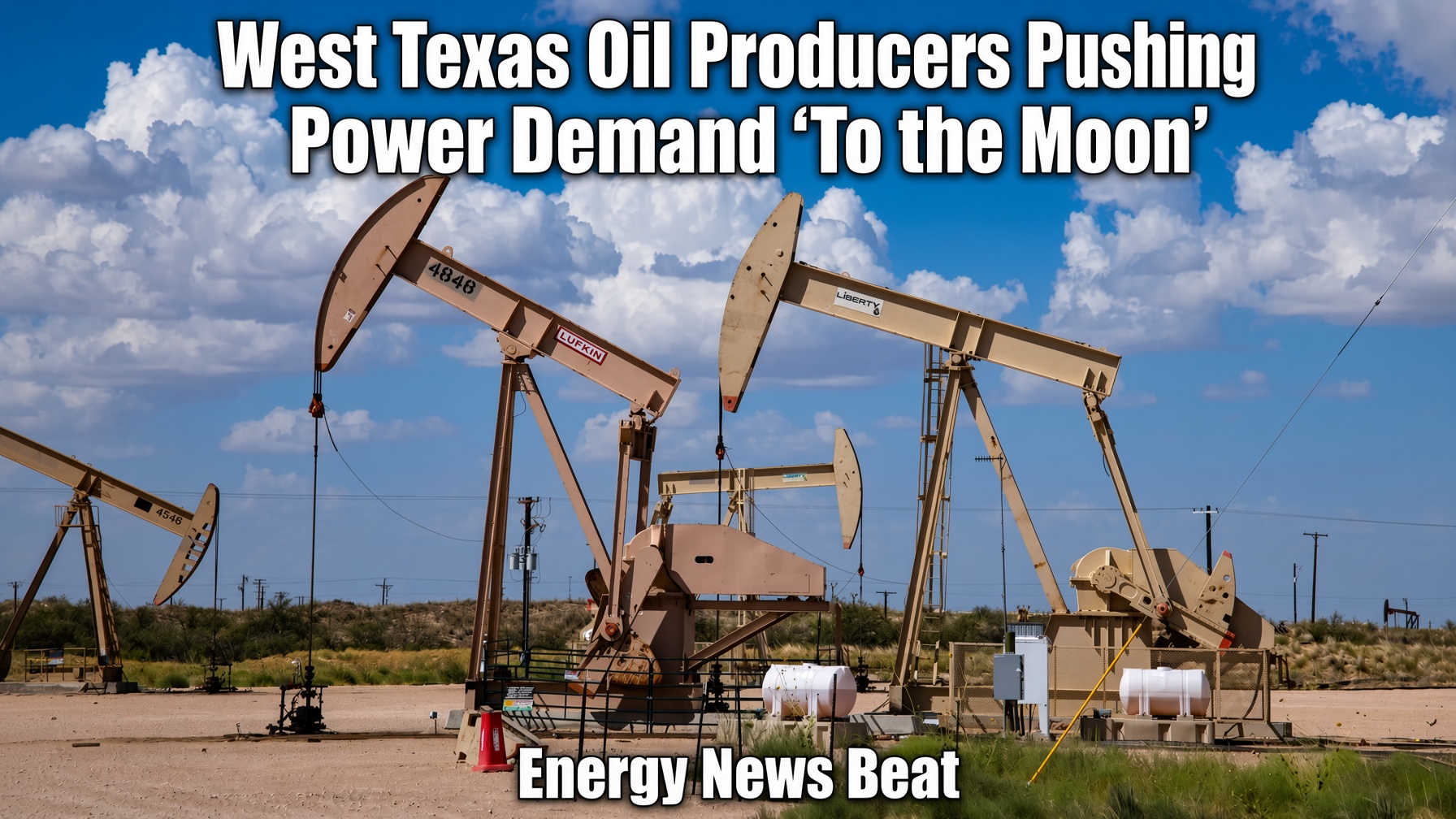
Oil and gas producers in the Permian Basin are driving electricity demand skyward in West Texas, even as technology companies race to site data centers in the world’s most prolific shale play. The dual surge—from electrifying drilling, fracturing, and production operations, plus hyperscale computing loads—is straining the regional grid and prompting warnings of potential reliability challenges. Yet parallel infrastructure advances in pipeline takeaway, behind-the-meter power generation, and electric completion equipment are creating a virtuous cycle that supports continued oil and gas production growth.
Diamondback Energy CEO Kaes Van’t Hof captured the intensity of the trend in a recent Federal Reserve Bank of Dallas interview: “Electricity consumption for the Permian has just gone through the roof. It’s only gone up every year.” He projected that Diamondback’s own power needs will double over the next decade even if production remains flat, driven by the requirement to power every new well and pad. The shift away from diesel-powered rigs and frac pumps toward electrified equipment has been underway for years; data-center development is now supercharging it. Average wait times for grid connections in the basin have stretched to roughly 950 days amid rapid expansion, leading producers like Diamondback to deploy microgrids—often natural-gas-fired modular units—to power frac fleets.
Citigroup analysts, monitoring Texas legislative discussions on transmission needs, warned that Far West Texas could face rotating outages as early as next summer without accelerated buildout. ERCOT and state regulators have emphasized that Permian transmission upgrades are required for existing oil and gas demand and reliability, independent of data centers. Peak demand forecasts for the region have climbed sharply, with some studies projecting multi-gigawatt growth by 2030 as electrification of upstream operations (electric submersible pumps, compression, and completions) combines with industrial and digital loads.
Fortunately, the Permian’s abundant associated natural gas provides a ready fuel source for on-site generation. Rising gas-to-oil ratios mean the basin will remain a major gas producer even if oil output stabilizes. This local resource is unlocking solutions that both ease power constraints and improve producer economics.
Expanding Pipeline Takeaway Capacity
New gas pipeline projects are rapidly increasing egress from the Permian, relieving the chronic Waha Hub bottlenecks that previously forced shut-ins, negative pricing, and flaring. Key 2026 additions include the Gulf Coast Express expansion (approximately 0.57 Bcf/d), Energy Transfer’s Hugh Brinson Pipeline (phased up to 2.2 Bcf/d), and the Blackcomb Pipeline (2.5 Bcf/d). Further capacity is scheduled through the late 2020s, including Eiger Express (around 3.7 Bcf/d in 2028) and expansions such as Desert Southwest (up to 2.3 Bcf/d). Aggregate new takeaway could exceed 11 Bcf/d by 2030.
These pipelines stabilize in-basin gas prices, reduce the need for production curtailments, and enable operators to grow output without being constrained by takeaway limits. Because most Permian gas is associated with oil, improved gas economics indirectly support higher oil production. Local power generation further complements this by converting some gas into electrons on-site, lowering the volume that must leave the basin via pipe.
Chevron’s Data-Center Power Play
Chevron is advancing a major behind-the-meter solution with Project Kilby, a roughly 2.67-gigawatt natural-gas-fired power facility co-located with a Microsoft data-center campus in Reeves County. Under a 20-year power purchase agreement, the project will use Permian gas and turbines (primarily GE Vernova, with additional capacity from Solar Turbines/Caterpillar) to deliver dedicated electricity without initially connecting to the ERCOT grid. Final investment decision is targeted for later in 2026, with first power expected in 2028 and phased expansion thereafter.
By bringing demand to the resource, Chevron monetizes associated gas that might otherwise face takeaway constraints or price discounts, generates diversified cash flow, and avoids adding load to the stressed regional grid. The model—leveraging existing production, processing, and surface infrastructure—offers a template for other producers and is expected to create significant local economic benefits, including jobs and tax revenue. Excess power could eventually support the broader grid. Similar in-basin power projects are under discussion across the industry, turning a potential constraint into an opportunity that underwrites higher upstream activity.

Liberty Energy’s Electric Frac Equipment
Oilfield service providers are accelerating the electrification of completions. Liberty Energy’s digiFrac system is a purpose-built fully electric frac pump platform that can draw power from the grid or from on-site digiPower natural-gas generation units. The technology replaces diesel engines and hydraulic systems with electric motors, delivering finer control, higher reliability, lower emissions, reduced fuel logistics, and improved thermal efficiency (digiPower units achieve around 43% efficiency using field gas).
Deployed extensively in the Permian, these fleets lower operating costs, cut silica dust and noise, and support high-intensity simulfrac operations that maximize productivity per pad. By utilizing associated gas that might otherwise be constrained, digiFrac and similar systems reduce diesel dependence and emissions intensity while enabling operators to complete more wells more efficiently. Liberty’s modular approach—pairing electric pumps with scalable on-site generation—addresses the intermittency of grid access and aligns with producer microgrid strategies. There is a reason that Liberty Energy is interested in nuclear reactors for their frac fleet. We are reaching out to Ron Gusek, CEO of Liberty Energy, for an update and to schedule the podcast.

Sustaining Permian Production Growth
Taken together, these developments form a reinforcing loop. Electrification of operations (via Liberty-style equipment and microgrids) improves efficiency and lowers costs per barrel, making higher activity levels more economic. Expanding pipeline takeaway unlocks trapped gas and oil volumes that were previously constrained. Behind-the-meter data-center projects like Chevron’s create firm local demand for that gas, stabilize prices, and generate incremental revenue streams that support upstream investment. On-site generation bridges the multi-year lag in grid transmission and interconnection.
The result is greater resilience: producers can maintain or grow output even amid grid bottlenecks, while the basin’s gas resources fuel both oilfield power needs and the AI-driven digital economy. Challenges remain—transmission buildout timelines, equipment lead times for turbines, and the need for continued capital discipline—but the infrastructure response underway positions the Permian to keep delivering rising oil and gas volumes for years to come. Power demand may be headed “to the moon,” yet the industry’s adaptive solutions are ensuring that production growth stays grounded in practical economics and abundant local energy resources.
Appendix: Sources and Links
- Bloomberg – West Texas Oil Producers Pushing Power Demand ‘Through the Roof’ (August 20, 2026): https://www.bloomberg.com/news/articles/2026-08-20/west-texas-oil-producers-pushing-power-demand-through-the-roof
- Insurance Journal reprint of Bloomberg article (August 21, 2026): https://www.insurancejournal.com/news/southcentral/2026/08/21/882367.htm
- World Oil – Permian producers drive surging West Texas power demand: https://worldoil.com/news/2026/8/20/permian-producers-drive-surging-west-texas-power-demand/
- Federal Reserve Bank of Dallas interview with Diamondback CEO Kaes Van’t Hof: https://www.dallasfed.org/research/swe/2026/swe2617
- Chevron official announcement – Chevron signs 20-year power agreement with Microsoft for West Texas data center (June 22, 2026): https://www.chevron.com/newsroom/2026/q2/chevron-signs-20-year-power-agreement-with-microsoft-for-west-texas-data-center
- USA Today – Chevron, Microsoft sign 20-year West Texas data center deal: https://www.usatoday.com/story/money/business/2026/06/25/chevron-microsoft-sign-20-year-west-texas-data-center-deal/90697200007/
- WSJ – Chevron Strikes Power Deal With Microsoft for West Texas AI Data Center: https://www.wsj.com/business/energy-oil/chevron-strikes-power-deal-with-microsoft-for-west-texas-ai-data-center-3751de34
- Liberty Energy digiTechnologies / digiFrac information: https://libertyenergy.com/technology/digitechnologies/ and https://libertyenergy.com/completion-services/frac/
- Liberty Energy 2025 Annual Report references to digiFrac and digiPower: https://libertyenergy.com/wp-content/uploads/2026/03/LibertyEnergy-2025AnnualReport-webOptimizedSpreads.pdf
- Midland Reporter-Telegram – Permian Basin gas takeaway improves as crude limits loom: https://www.mrt.com/business/oil/article/permian-basin-tx-crude-takeaway-limits-22386879.php
- East Daley / RBN Energy reporting on pipeline projects (Hugh Brinson, Blackcomb, GCX, Eiger, Desert Southwest): Multiple analyses including https://eastdaley.com/daley-note/et-boosts-desert-southwest-capacity-keeps-ball-rolling-for-permian-pipe-boom and https://rbnenergy.com/daily-posts/blog/new-permian-takeaway-capacity-coming-online-gas-production-could-soar
- Utility Dive – Vistra Permian Basin Power Plant expansion and related grid context: https://www.utilitydive.com/news/vistra-corp-natural-gas-permian-basin-power-plant/761358/
- E&E News / POLITICO – Power crunch puts West Texas at risk of rolling blackouts: https://www.eenews.net/articles/power-crunch-puts-west-texas-at-risk-of-rolling-blackouts-says-grid-official-2/
- Additional supporting coverage on ERCOT Permian load growth and transmission plans from Texas Policy Foundation and related reports.
All factual claims in the article are drawn from the above publicly reported sources as of August 2026.