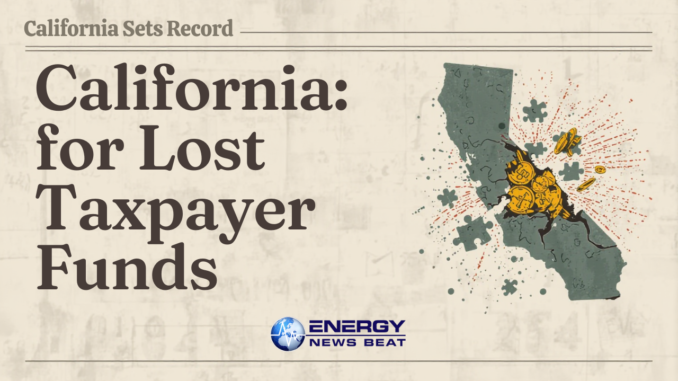
In a bombshell 92-page report released by the California State Auditor, investigators have revealed that over $70 billion in taxpayer funds have been effectively lost due to fraud, waste, and ineffective spending across various state programs.
This staggering figure includes significant allocations to energy initiatives, social services, and major infrastructure projects that have failed to deliver tangible results for Californians. The findings come at a precarious time for the state, as it grapples with a massive budget shortfall projected at $18 billion for the 2026-27 fiscal year, alongside an emerging fuel crisis driven by refinery closures.
As residents face rising costs and diminishing services, this report highlights a systemic financial crisis that could have profound impacts on everyday consumers.
Key Findings from the Auditor’s Report
The report, which scrutinizes spending across multiple state agencies, paints a picture of rampant mismanagement and lack of accountability. Among the most alarming revelations:
$24 billion on Homelessness Programs: Despite pouring billions into housing and support initiatives through agencies like the California Department of Housing and Community Development (HCD) and the Homeless Housing, Assistance, and Prevention Program, homelessness rates have not decreased significantly. Critics argue that poor oversight and fragmented efforts have led to funds being squandered without measurable outcomes, leaving vulnerable populations underserved.
$2.5 Billion in SNAP Fraud: The Supplemental Nutrition Assistance Program (SNAP), administered by the California Department of Social Services (CDSS), has seen widespread fraud, with funds misallocated or stolen. This not only wastes taxpayer money but also undermines food security for low-income families, exacerbating social inequities in a state already burdened by high living costs.
$18 Billion on High-Speed Rail with No Completion: The California High-Speed Rail Authority (CHSRA) has burned through approximately $18 billion since the project’s inception, yet not a single mile of operational track has been completed.
Originally budgeted at $33 billion with a 2020 completion target, costs have ballooned to between $89 billion and $128 billion, with no clear path to finishing even the initial segment.
Recent developments include the state dropping a lawsuit to recover $4 billion in federal funds pulled by the Trump administration, citing slim chances of success.
This fiasco exemplifies how ambitious infrastructure promises have turned into black holes for public funds, with no light rail or high-speed system to show for it.
While the report doesn’t break out energy-specific spending in detail, it encompasses broader fiscal waste in state agencies overseeing energy programs, such as the California Energy Commission (CEC) and the Public Utilities Commission (CPUC). These bodies have been implicated in smaller-scale wastes, like improper payments and unused resources, contributing to the overall $70 billion tally.
For instance, separate audits have flagged millions in unused mobile devices and service fees at the Employment Development Department (EDD), hinting at similar inefficiencies in energy-related grants and subsidies.
The auditor’s office emphasizes that this $70 billion represents “lost” funds—money allocated but not effectively used, often due to fraud, poor tracking, or failed projects. Agencies like the EDD, CDSS, HCD, and CHSRA are repeatedly cited for inadequate oversight, allowing waste to proliferate.

BREAKING – A 92-page report by the California State Auditor has found that over $70 billion in taxpayer funds have been lost, including $2.5 billion in SNAP fraud, $24 billion on fighting homelessness, and $18 billion for a high-speed rail where not a single track has been laid. pic.twitter.com/WjTCzTyElU
— Right Angle News Network (@Rightanglenews) December 24, 2025
Potential Impact on Consumers and the Broader Financial Crisis
For California consumers, the implications of this mismanagement are dire. Taxpayers are footing the bill for these losses through higher taxes and fees, while receiving little in return. The state’s ongoing budget deficit—now estimated at $18 billion—could force cuts to essential services or further tax hikes, directly hitting households already strained by inflation and high energy costs.
In social programs, the $24 billion squandered on homelessness means fewer shelters and support services, potentially increasing reliance on emergency resources and driving up local taxes. Similarly, SNAP fraud erodes trust in welfare systems, leaving genuine recipients shortchanged. The high-speed rail debacle is particularly galling for commuters and businesses. Billions spent with no functional system means continued dependence on congested highways and polluting vehicles, delaying any shift to efficient public transit. This not only wastes money but also hampers economic growth, as promised connectivity between major cities remains a pipe dream. Compounding these issues is California’s looming fuel crisis, which ties directly into energy program failures. Strict environmental regulations and economic pressures are forcing major refinery closures: Phillips 66 plans to shutter its Los Angeles-area facility by late 2025, and Valero will close its Bay Area plant in 2026, eliminating about 17-20% of the state’s refining capacity.
Experts warn this could lead to gasoline shortages and price spikes, with averages potentially hitting $5-$12 per gallon in some areas.
Governor Gavin Newsom has begun reversing some anti-oil policies to mitigate the crisis, but critics argue it’s too little, too late, as the state risks becoming an “energy island” isolated from national supplies.
This fuel shortage could ripple through the economy, raising transportation costs for goods and commuting, and straining low-income families. Combined with the auditor’s findings, it underscores a broader financial crisis where taxpayer dollars are mismanaged in energy sectors, leading to higher bills and reduced reliability.
Calls for Reform and Accountability
Public outcry has been swift, with figures like U.S. Representative Ro Khanna decrying the “appalling” $70 billion in fraud and calling for anti-corruption measures in Sacramento.
The report recommends stronger oversight, better financial tracking, and penalties for wasteful agencies to prevent future losses.
As California enters 2026, this audit serves as a wake-up call. With billions vanished into ineffective programs and an energy crunch on the horizon, consumers deserve transparency and results—not more excuses. The Energy News Beat will continue monitoring these developments, as they directly affect the state’s energy security and economic health.
Sources: foxbusiness.com, forbes.com, cnn.com, instituteforenergyresearch.org, auditor.ca.gov