ENB Pub Note: Interesting article from Andrew Korybko’s Newsletter on SubStack.
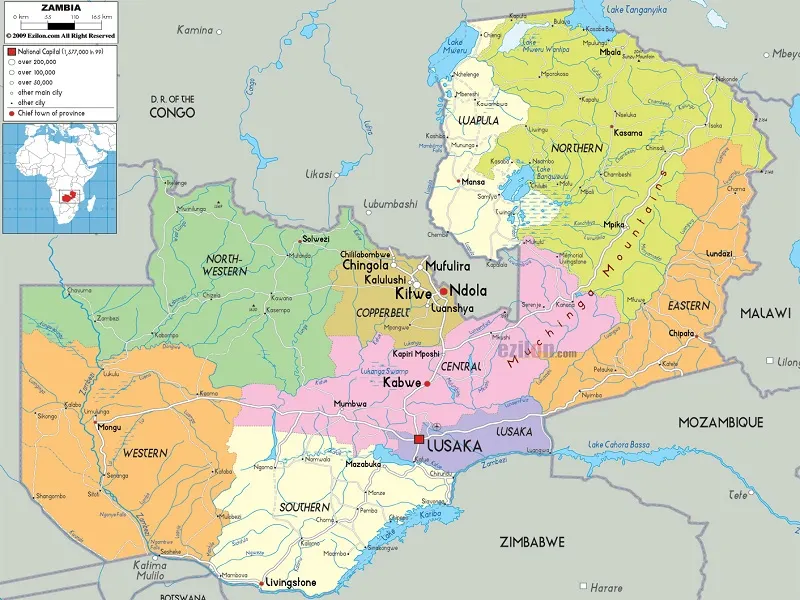
China could replace the US’ subsidization of Zambia’s healthcare industry to preempt it from obtaining influence over Zambia’s critical minerals one, but failing to act soon could lead to Zambia capitulating to the US’ demanded quid pro quo, thus threatening China’s access to its and the Congo’s resources.
Zambian Foreign Minister Mulambo Haimbe lent credence last month to prior reports that the US is tying $2 billion in health assistance to preferential access for American companies to his country’s critical minerals. He also objected to its data-sharing demands that he claims will violate citizens’ right to privacy. The outgoing US Ambassador, who prompted Haimbe’s remarks by blaming corruption for the US’ refusal to disperse its health assistance, predictably denied a quid pro quo for critical mineral access.
There are reasons to believe Haimbe over him, however, since the National Security Strategy prioritizes trade with developing nations over aid. Last year’s shuttering of USAID also hit Zambia hard. That’s because it has one of the highest HIV rates in the world at an estimated 11% of its citizens. Furthermore, Zambia’s GDP was only $25.4 billion in 2024 per the World Bank, 13% of which is from mining per official US estimates from 2022 (last updated this year). This makes for some interesting calculations.
The $2 billion in health assistance being dangled by the US before Zambia is therefore roughly equivalent to 7.8% of its GDP. That’s a little more than half of what it makes from mining, which comes out to around $3.3 billion per the abovementioned stats, but the real amount is likely higher when considering that the data that was shared is outdated and there might be undisclosed (e.g. non-taxed) exports too. Anyhow, it’s clear that the US’ quid pro quo is essentially an investment, and a very profitable one too.
In exchange for $2 billion, the US would obtain preferential access to critical minerals worth at least over one and a half times that amount per year, plus it would ipso facto deprive China of whatever resources are sold to the US. For background, Zambia is one of China’s oldest African partners, which hosts the Tanzania-Zambia Railway (TAZARA) that was completed in 1970 for accessing Zambia’s copper. In retrospect, this can be considered the first modern Silk Road, a predecessor of the Belt & Road Initiative.
TAZARA also facilitates Chinese imports of copper from the neighboring Democratic Republic of the Congo (DRC), as well as its cobalt and coltan that are indispensable to the “Fourth Industrial Revolution”, but growing US influence over Southern Africa could make China indirectly dependent on the US. The means through which its influence is spreading across the region is Angola’s Lobito Corridor, which will extend to the DRC and could then facilitate more Zambian critical minerals exports to the US too.
Readers can learn more about the Sino-US competition for Southern Africa’s critical minerals here, while these analyses here and here respectively brief them about the US’ growing influence over the DRC and Angola, which altogether show that the Sino-US New Cold War has now spread to this region. In particular, per Trump 2.0’s “Strategy of Denial” that was shaped by Under Secretary of War for Policy Elbridge Colby, the US aims to either control China’s access to resources or outright cut it off.
Circling back to Zambia, it desperately needs the US’ $2 billion in health assistance but has so far remained firm in opposing the proposed quid pro quo, thus leading to the possibility that China could replace the US’ subsidization of Zambia’s healthcare industry to protect access to its critical minerals. If China doesn’t move fast, then its reduced access to Zambia’s resources and gradual loss with time could lead to similar consequences with the DRC’s, therefore giving the US a greater strategic edge over China.