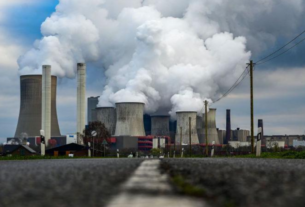
Nigeria’s Dangote Petroleum Refinery has officially broken ground on a second 700,000-barrels-per-day (bpd) crude processing unit at its Lekki complex outside Lagos. The expansion, announced today, will nearly double the facility’s total refining capacity to approximately 1.4 million bpd once the new unit comes online by the end of 2028.
The move cements the Dangote project’s status as one of the world’s largest single-site refining complexes and marks a pivotal step in transforming Nigeria from a major crude exporter and refined-product importer into a net exporter of fuels with significant influence in regional and global markets.
Current Operations: From Import Dependence to Export Surplus
The existing 650,000-bpd refinery, which reached near-full utilization in spring 2026, has already delivered transformative results. It has enabled Nigeria to become a net gasoline exporter for the first time in decades, with exports commencing in March 2026.
Domestic fuel imports have plummeted—falling 60% year-over-year in the first quarter of 2026—while local production now covers more than 90% of national demand.
In April 2026 alone, the refinery operated at 99.12% capacity, producing 53.6 million litres of petrol, 23.6 million litres of diesel, and 22.9 million litres of aviation fuel daily. Surplus volumes—17.1 million litres of petrol, 17.8 million litres of diesel, and 20.5 million litres of jet fuel—were exported daily.
At peak, jet-fuel exports reached roughly 100,000 bpd, with Europe absorbing about half.
Dangote Petroleum Refinery CEO David Bird confirmed that construction on the second unit is already underway and that the company is simultaneously expanding its trading business to capitalize on the added volumes.
Boosting Domestic Supply and Energy SecurityNigeria’s daily refined-product demand is estimated at around 40–50 million litres of petrol alone. The current refinery already meets or exceeds this requirement with just a portion of its output, freeing the balance for export while building strategic stockpiles that exceed 20 days of national consumption.
The second 700,000-bpd unit will provide a massive buffer against global supply shocks—such as those triggered by Middle East disruptions—while virtually eliminating the need for subsidized imports that have historically drained foreign-exchange reserves. By processing more domestic crude locally, the expansion will also reduce Nigeria’s exposure to volatile international product prices and improve supply reliability for households, transport, and industry.
Unlocking Export Potential
With domestic needs comfortably covered, the expanded complex will generate substantial exportable surpluses across key products: petrol, diesel, jet fuel, and petrochemicals. Early exports have already reached East Africa (Ghana, Cameroon, Togo, Tanzania) and Europe, reshaping regional trade flows.
Analysts note that Dangote’s output is already altering global petroleum trade patterns, with Nigerian jet-fuel exports surging 770% over two years.
The additional 700,000 bpd will position Nigeria as a major refining hub capable of supplying neighboring markets and further afield, especially during periods of international refinery outages or geopolitical tensions.
Dangote is also exploring a potential second refinery project in East Africa, which could push the group’s total capacity toward 2 million bpd and amplify its global trading footprint.
Economic Impact: Lifting GDP and Strengthening the Energy Market
The expansion delivers clear macroeconomic benefits. By substituting imports and generating export revenues, the refinery is already improving Nigeria’s balance of payments. The Economist Intelligence Unit (EIU) projects that full-capacity operations plus the planned doubling of output will support real GDP growth and foreign-exchange earnings through 2026–2027 and beyond.
Independent studies estimate annual foreign-exchange savings from reduced imports at $7–10 billion, with additional export earnings further strengthening the current account.
The IMF has highlighted that the combination of lower imports and rising refined-product exports improves the balance of payments by approximately $5.5 billion annually.
Value addition from refining—rather than exporting raw crude—boosts the oil sector’s contribution to GDP, which historically lagged due to low domestic refining utilization. Macroeconomic modeling shows GDP growth accelerating under the “with Dangote” scenario, with multiplier effects from job creation (direct, indirect, and induced), infrastructure development, and local supply-chain spending.
In the broader energy market, the project enhances Nigeria’s energy security, stabilizes domestic fuel prices (recent ex-depot petrol price cuts to ₦1,250/litre illustrate the effect), and reduces the fiscal burden of subsidies. It also attracts further investment into upstream crude supply and downstream infrastructure, reinforcing Nigeria’s role as Africa’s energy leader.
Outlook
Mechanical completion of the second crude distillation unit is targeted for late 2028. Once operational, the 1.4-million-bpd complex will not only secure Nigeria’s domestic fuel needs for decades but also establish the country as a significant player in international refined-product markets.
Aliko Dangote’s vision—turning Nigeria from a crude exporter into a refined-product powerhouse—is rapidly becoming reality, delivering energy independence, economic diversification, and long-term GDP uplift.
- OilPrice.com – “Dangote Breaks Ground on 700,000-Bpd Second Crude Processing Unit” (June 04, 2026): https://oilprice.com/Latest-Energy-News/World-News/Dangote-Breaks-Ground-on-700000-Bpd-Second-Crude-Processing-Unit.html
- Dangote Industries / EIU Report – “Dangote Refinery Ends Nigeria’s Era of Fuel Import Dependence, Boosts GDP, FX Earnings” (May 25, 2026): https://www.dangote.com/dangote-refinery-ends-nigerias-era-of-fuel-import-dependence-boosts-gdp-fx-earnings-eiu/
- Additional data from Kpler, NMDPRA, Reuters, and industry analyses referenced via web search results on Dangote operations, exports, and economic modeling (2025–2026).
Energy News Beat – Delivering timely, in-depth coverage of Africa’s evolving energy landscape.