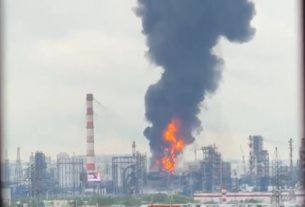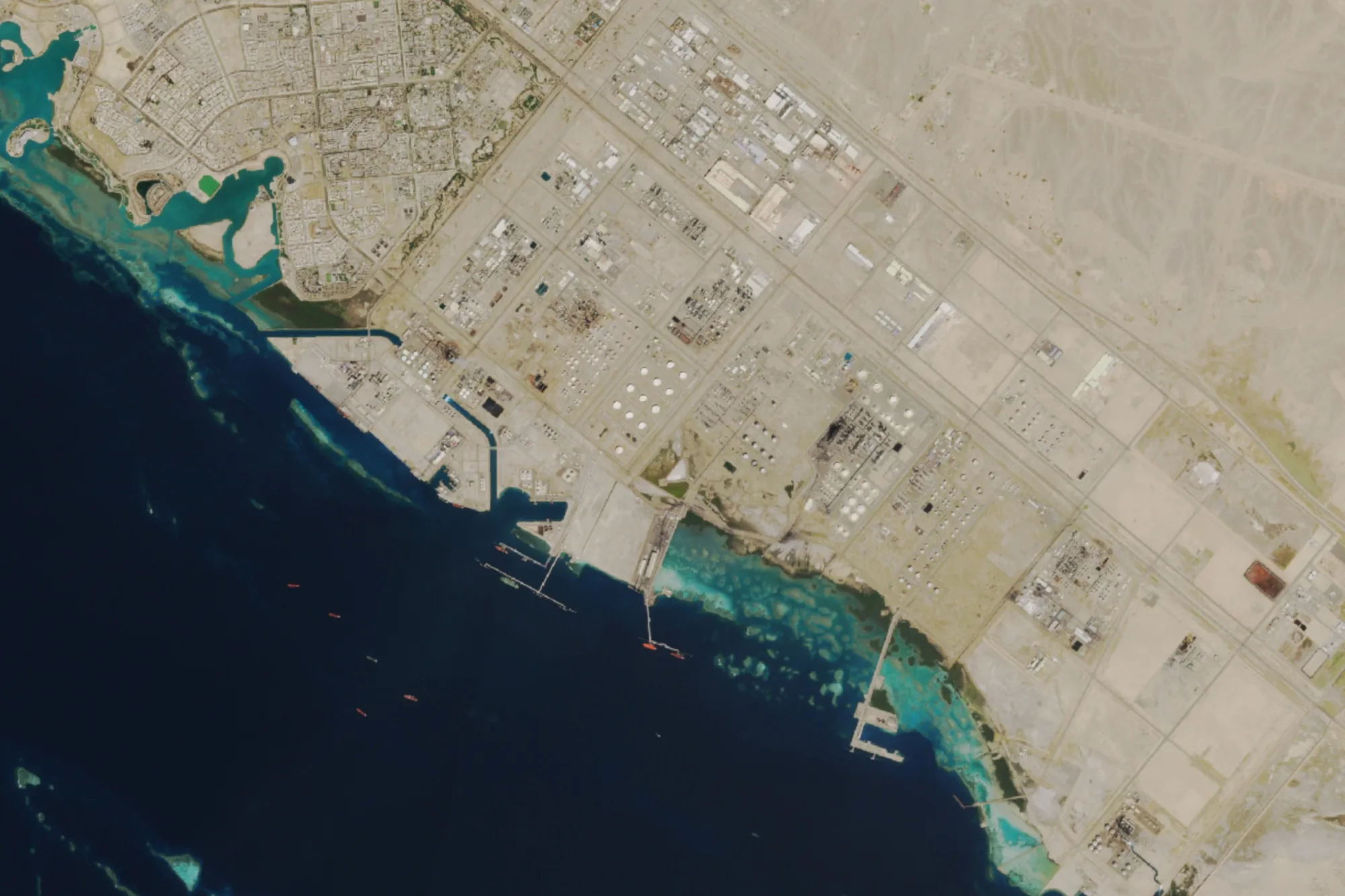
In a sharp escalation of regional tensions, Yemen’s Iran-aligned Houthi forces reportedly launched ballistic missiles and drones at Saudi Aramco’s Jazan (also spelled Jizan) refinery complex on the Red Sea coast overnight into July 25, 2026. The strikes came roughly 24 hours after Saudi-led coalition airstrikes targeted Houthi positions in the Yemeni port of Hodeidah, with the Houthis vowing “escalation with escalation.”
Social media reports, Houthi-linked channels, and independent satellite data pointed to impacts at the facility. Mario Nawfal’s post highlighted NASA FIRMS fire-detection imagery showing active fires and thermal anomalies at the Jazan complex, independently corroborating geolocated footage of smoke and flames. The refinery is one of Saudi Arabia’s newest and largest downstream facilities, designed to process up to 400,000 barrels per day.
Confirmed Damage Assessment Remains Limited
As of the latest available reports, there is still no official Saudi or Aramco damage assessment, casualty count, or formal detailed claim from the Houthis beyond initial announcements of a missile strike on Jazan. Saudi Civil Defense issued early alerts for Jazan and nearby Yanbu urging residents to stay alert, but these were later lifted after the “danger had passed.”
NASA’s FIRMS/VIIRS system detected multiple substantial thermal anomalies (infrared signatures consistent with fires) clustered in the eastern half of the refinery complex that were not present in prior periods. Regional media and bystander accounts described thick smoke plumes and at least several explosions. Some trading sources and secondary reports noted possible limited damage and ongoing secondary fires or containment efforts, but mainstream wire services have not yet quantified production outages or structural impacts. Viral videos circulating online include both new footage and older recycled clips from prior incidents, underscoring the need for caution.
This marks the first reported direct strike on a major Saudi refinery in years and adds a land-based energy target to the Houthis’ recent maritime campaign.
Bab el-Mandeb Strait Under Pressure
The Jazan incident occurs against the backdrop of a Houthi-declared naval blockade targeting Saudi vessels in the Red Sea and the strategic Bab el-Mandeb Strait—the narrow chokepoint linking the Red Sea to the Gulf of Aden and Indian Ocean. Earlier this week, the Houthis claimed attacks on two Saudi oil tankers, the Encelia and Layla, using ballistic missiles, cruise missiles, and drones. Saudi sources confirmed a fire on the bow of the Encelia; crews were reported safe.
Transit through Bab el-Mandeb has already fallen sharply—by around 30% in one recent daily reading—as commercial vessels begin rerouting. The strait is not fully closed; some traffic, including non-Saudi-linked ships, continues, but the threat and selective targeting of Saudi-related shipping have raised insurance premiums and disrupted normal flows. Houthis have emphasized their operations focus on Saudi shipping in response to what they call a Saudi “siege” of Yemen.
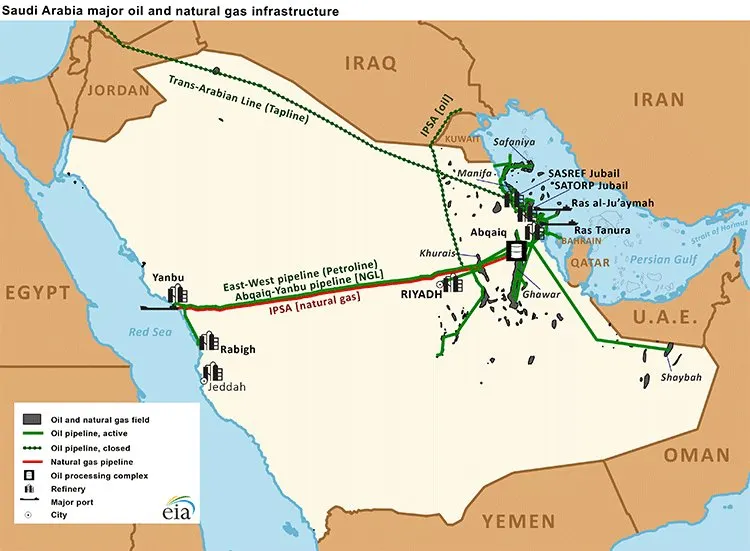
Bab el-Mandeb typically handles a significant share of global oil and product movements (historically around 6–9 million barrels per day in various periods, or roughly 7% of seaborne oil trade in some estimates). In the current environment—where the Strait of Hormuz faces severe disruption from the broader U.S.-Iran conflict—the Red Sea route has become a critical alternative for Saudi crude heading to Asia via Red Sea terminals such as Yanbu.
Impact on Global Oil Prices and Shipping Routes
Oil markets have already reacted strongly to the tanker attacks and blockade threats. Brent crude briefly pushed above $100 per barrel earlier in the week (the first time since May in some readings) before settling lower; as of the July 24 close, Brent was around $96.78 and WTI near $90, reflecting volatility and partial pullbacks.
Analysts warn of further upside if disruptions intensify:
John Paisie of Stratas Advisors said a severe hindrance of Red Sea barrels could push prices above $115–$120, raise freight and insurance costs, and undermine the global economy to the point of risking recession.
Goldman Sachs has projected Brent could exceed $120 in the fourth quarter (and average $100 next year) under prolonged Hormuz disruption, with additional upside if Bab el-Mandeb and Suez face persistent problems.
Other voices, including Houthi officials in extreme scenarios, have floated figures as high as $200, while market observers note the combined Hormuz + Bab el-Mandeb risk covers roughly a quarter of world oil supply in some estimates.
Workarounds exist but are costly. Tankers are already diverting around the Cape of Good Hope, adding 10–14 days or more to Asia-Europe or Middle East-Asia voyages, higher fuel burn, and elevated war-risk insurance. Saudi Arabia can shift some volumes via its East-West Pipeline to Red Sea terminals (capacity historically around 5 million bpd), but those outlets are now under direct threat. There is no full land-based bypass equivalent for all Bab el-Mandeb traffic. European refined-product supplies (diesel, jet fuel) and Asian crude deliveries face particular strain.
Broader Global Economic Implications
Prolonged or widened disruption would amplify inflationary pressures already present from energy shocks, raise shipping costs across container and bulk trades, delay supply chains, and potentially tip vulnerable economies toward recession. Higher oil and product prices feed directly into gasoline, diesel, and industrial costs worldwide. The dual-chokepoint risk (Hormuz plus Bab el-Mandeb) is described by analysts as creating correlated supply-chain stress—energy, freight, manufacturing delays reinforcing one another.
Saudi Arabia’s ability to maintain exports remains a key stabilizer; any sustained outage at a 400,000-bpd complex like Jazan, or further tanker disruptions, would tighten an already constrained market. Markets will watch closely for official Saudi damage reports, Houthi follow-through, and any de-escalation signals amid the wider regional conflict.
The situation remains fluid. Official confirmations of the precise scale of damage at Jazan are still pending, and shipping patterns continue to adjust in real time.
Appendix: Sources and Links
- Mario Nawfal X post (primary reference): https://x.com/MarioNawfal/status/2080874749681390015
- Türkiye Today report on Jazan fire and satellite data: https://www.turkiyetoday.com/region/aramco-refinery-in-jazan-burns-after-houthi-missile-and-drone-strike-3224596
- Maritime Executive on Houthi claim and NASA FIRMS: https://maritime-executive.com/article/houthi-rebels-claim-missile-strike-on-giant-saudi-refinery-at-jazan
- Al Jazeera on Houthi tanker attacks: https://www.aljazeera.com/news/2026/7/22/yemens-houthis-claim-attack-on-two-saudi-oil-tankers
- Reuters analysis of Houthi Red Sea blockade and oil-price impact: https://www.reuters.com/business/energy/houthi-red-sea-blockade-would-lift-oil-prices-workarounds-could-limit-impact-2026-07-20/
- The Guardian on Bab al-Mandab threat and oil prices: https://www.theguardian.com/business/2026/jul/23/bab-al-mandab-blockade-push-oil-100-houthi-ships
- Jerusalem Post / analyst comments (Yawger, Goldman Sachs, Gelber): https://www.jpost.com/middle-east/article-903523
- Al Jazeera on shipping insurance and Bab al-Mandeb transit drop: https://www.aljazeera.com/economy/2026/7/23/how-shipping-insurance-rates-are-rising-as-hormuz-bab-al-mandeb-shut-down
- Habtoor Research on potential Bab el-Mandeb closure impacts: https://www.habtoorresearch.com/programmes/houthis-close-bab-el-mandeb/
- Aramco / public references confirming Jazan 400,000 bpd capacity: https://americas.aramco.com/en/news-media/elements-magazine/2022/jazan-complex
- Additional X trending and related posts on the Jazan reports (e.g., https://x.com/i/trending/2080749579646161233)
- Oil price data points drawn from CME, Yahoo Finance, and market reports as of July 24–25, 2026 closes.
All details reflect information available as of July 25, 2026. Developments continue rapidly.