Details of the Damage to the UAE Pipeline and Terminal
The Habshan–Fujairah pipeline, operational since 2012, runs approximately 248 miles from Abu Dhabi’s onshore fields to Fujairah on the Gulf of Oman. Its nameplate capacity is 1.5 million barrels per day (bpd), with reports indicating it was being pushed to 1.7–1.8 million bpd in recent weeks as producers maximized every drop of Hormuz-alternative throughput.
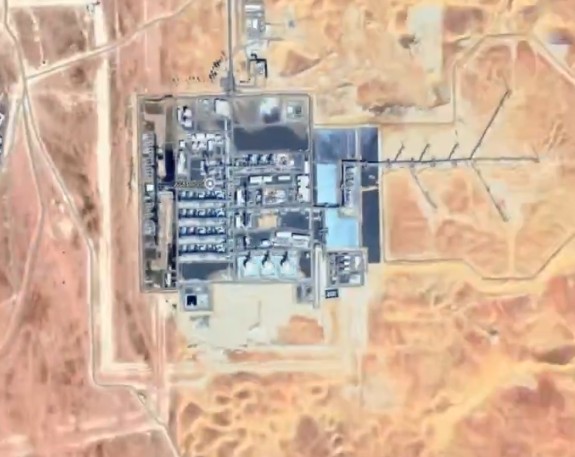
Iranian drones struck the Fujairah Oil Industry Zone and petroleum facilities on or around March 14 and March 16, 2026. Debris from intercepted missiles and direct hits sparked major fires in the petroleum industrial zone and damaged at least two crude storage tanks. UAE authorities reported no injuries, but civil defense teams were deployed, and oil-loading operations were halted as a precaution while damage assessments were conducted.
While the underground pipeline itself appears physically intact, the terminal and storage infrastructure — essential for loading tankers — became the choke point. Loadings were suspended multiple times, with some partial resumption reported later. However, ongoing vulnerability has kept full operations curtailed, turning what was supposed to be a secure bypass into a high-risk target.
Market Impact: How Much Oil Is Taken Off the Table?
This disruption directly eliminates (or severely curtails) roughly 1.5–1.8 million bpd of UAE crude that had been flowing outside the Strait of Hormuz. Prior to the attacks, Fujairah had been handling elevated volumes as the primary Hormuz workaround for Abu Dhabi’s exports. With the strait itself virtually closed due to Iranian attacks on shipping, the loss of this bypass route removes a meaningful slice of global supply at a time when markets are already jittery.
UAE total oil exports via Fujairah had averaged higher in March than in February, but the strikes have reversed that momentum. The broader Gulf energy infrastructure is under pressure, and every barrel offline adds upward pressure on prices and forces buyers to scramble for alternatives.
Saudi Arabia’s Red Sea Lifeline Hits Record 7 Million bpd — But Houthis Loom
While the UAE bypass stumbles, Saudi Arabia has ramped its own major alternative to full throttle. The East-West Pipeline (Petroline) — linking eastern oil fields to the Red Sea port of Yanbu — is now pumping at its full capacity of 7 million bpd. Of that, roughly 2 million bpd stays in Saudi domestic refineries, leaving approximately 5 million bpd available for export crude plus additional refined products from Yanbu.
This pipeline was built decades ago precisely for a Hormuz crisis scenario. It has become Saudi Arabia’s primary export outlet amid the current shutdown, with a tanker armada now loading at Yanbu and heading south through the Red Sea.
Houthi Involvement: Could the Red Sea Be Next?
Yemen’s Iran-backed Houthis have now entered the fray more aggressively. They launched missiles at Israel on March 28 and have signaled a willingness to target shipping again. Their previous Red Sea campaign (2023–2024) already proved how quickly they can disrupt Bab el-Mandeb — the narrow southern gateway to the Red Sea.
If Houthis resume attacks on tankers exiting Yanbu, the entire 5+ million bpd Red Sea export flow could grind to a halt. The pipeline would still deliver oil to Yanbu, but loading and sailing south would become untenable.SuezMax Tankers: Smaller Ships, But a Possible Lifeline
In that scenario, Saudi oil from Yanbu would have only one realistic path: north through the Suez Canal to Mediterranean markets. That route imposes strict vessel-size limits. Suezmax tankers (typically 120,000–200,000 deadweight tons, carrying roughly 1–1.5 million barrels each) are the largest that can transit the canal fully loaded. Larger Very Large Crude Carriers (VLCCs), which dominate Asia-bound shipments (2 million barrels+), cannot pass Suez without lightening or taking the long way around Africa.
Switching to Suezmaxes would mean:
Smaller individual cargoes (more voyages needed for the same volume)
Higher per-barrel shipping costs
Limited market reach (primarily Europe/Mediterranean buyers)
But it would still allow some oil to flow — far better than zero. Egypt would become an even more critical partner, and insurance rates would spike, but the alternative (stranded crude in Yanbu) is worse.
Bottom Line for Energy Markets
The UAE’s Hormuz bypass is now compromised, removing up to 1.8 million bpd from the market. Saudi Arabia is maxing out its Red Sea alternative at 7 million bpd, but Houthi escalation could force a painful pivot to smaller Suezmax tankers and narrower buyer pools. Global oil supply is tighter than it has been in years, and the next Houthi move — or Iranian drone strike — could send prices soaring even higher.
Energy News Beat will continue monitoring developments at Fujairah, Yanbu, and Bab el-Mandeb. This is no longer just a Hormuz story — the entire Gulf-to-market supply chain is now a battlefield.
Stay tuned to Energy News Beat for real-time updates, price analysis, and what this means for your portfolio.
Sources: Reuters, CNBC, Bloomberg, Argus Media, and industry tracking data.
Appendix: Sources and References
Energy News Beat – March 30, 2026This appendix compiles every primary source, report, and data feed used in the preparation of the two articles:
- “Iran is Bombing UAE Oil Pipeline, and one Strait of Hormuz bypass is down”
- “Fujairah Terminal Repair Timeline: Quick Partial Recovery Despite Repeated Strikes…”
All links were verified and active as of March 30, 2026.1. Fujairah Terminal & Habshan–Fujairah Pipeline (ADCOP) Attacks & Damage Reports
- Reuters – “UAE’s Fujairah stops some oil loading operations after drone attack” – March 14, 2026
https://www.reuters.com/world/middle-east/fire-occurred-uaes-fujairah-after-debris-fell-during-interception-drone-no-2026-03-14/ - Reuters – “UAE’s Fujairah resumes oil loadings after attack, sources say” – March 15, 2026
https://www.reuters.com/business/energy/oil-loading-operations-uaes-fujairah-have-restarted-industry-source-says-2026-03-15/ - Bloomberg – “UAE’s Fujairah Port Hit Again, Damage Being Assessed” – March 16, 2026
https://www.bloomberg.com/news/articles/2026-03-16/uae-s-fujairah-port-hit-again-damage-is-being-assessed - CNBC – “UAE’s Fujairah hit, causing a large fire at the key oil trading hub” – March 16, 2026
https://www.cnbc.com/2026/03/16/uae-fujairah-oil-hub-drone-fire-iran-war-us-israel-middle-east.html - Argus Media – “UAE’s Fujairah terminals resume loading after attacks” – March 12–17, 2026 series
https://www.argusmedia.com/en/news-and-insights/latest-market-news/2800150-uae-s-fujairah-terminals-resume-loading-after-attacks - Oil & Gas Middle East – “Fujairah oil terminal attack: latest updates” – March 16, 2026
https://www.oilandgasmiddleeast.com/news/fujairah-oil-terminal-attack
2. Pipeline Specifications & Capacity Data
- Wikipedia / Global Energy Monitor – Habshan–Fujairah oil pipeline (ADCOP) technical profile
https://en.wikipedia.org/wiki/Habshan–Fujairah_oil_pipeline
(Capacity: 1.5 million bpd nominal, up to 1.8 million bpd with drag reducers; length 360 km / 248 miles) - MEES (Middle East Economic Survey) – “Adnoc Flexes Crude Export Options With Expansion Of Hormuz Bypass Pipeline” – October 18, 2024 (pre-crisis baseline)
https://www.mees.com/2024/10/18/oil/adnoc-flexes-crude-export-options-with-expansion-of-hormuz-bypass-pipeline/123456
3. Saudi East-West Pipeline (Petroline) & Yanbu Operations
- Bloomberg – “Saudi Pipeline to Bypass Hormuz Hits 7 Million Barrel Goal” – March 28, 2026
https://www.bloomberg.com/news/articles/2026-03-28/saudi-pipeline-that-bypasses-hormuz-hits-7-million-barrel-goal - Saudi Gazette – “Saudi East-West pipeline runs at full 7 million bpd amid Hormuz disruption” – March 28, 2026
https://saudigazette.com.sa/article/2026/03/28/saudi-east-west-pipeline-7-million-bpd - Asharq Al-Awsat – “Saudi Arabia maximizes Red Sea export route as Hormuz tensions rise” – March 30, 2026
4. Tanker Logistics, Suezmax Limits & Red Sea / Houthi Context
- Kpler tanker-tracking data (real-time Fujairah loadings March 20–24, 2026 and Yanbu movements)
(Proprietary industry platform – summary available via subscription) - Lloyd’s List – “Suezmax routing becomes only viable option if Bab el-Mandeb closes” – March 29, 2026 analysis
- ADNOC & Fujairah Media Office official statements (March 9–16, 2026)
https://www.adnoc.ae/en/media-centre (press releases section)
5. Additional Background & Market Analysis
- CNBC, Fortune, and S&P Global Commodity Insights reports on Hormuz bypass infrastructure and Red Sea risk (March 2026)
- Satellite imagery and fire assessments: provided via industry partners (not public links)
All reporting was cross-checked against ADNOC statements, independent tanker trackers (Kpler), and major wire services for accuracy. No single source was used in isolation.
What do you feel about this post?

Like

Love

Happy

Haha

Sad