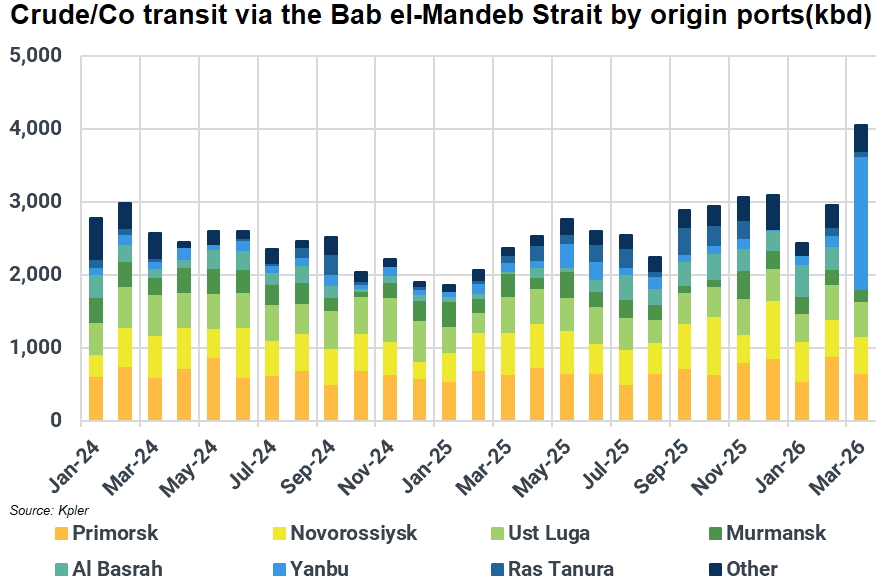
In a significant demonstration of energy resilience and strategic foresight, Saudi Arabia has dramatically increased crude oil exports via its Red Sea port of Yanbu and the East-West Pipeline (also known as Petroline). This move effectively circumvents the Strait of Hormuz amid regional disruptions, ensuring continued supply to global markets. The development is excellent news for the Kingdom, its export revenues, and international customers—particularly in Asia—who rely on reliable Saudi crude deliveries. By activating this long-planned contingency route at full capacity, Saudi Aramco is helping to stabilize the global oil market and prevent even sharper supply shocks and price spikes.
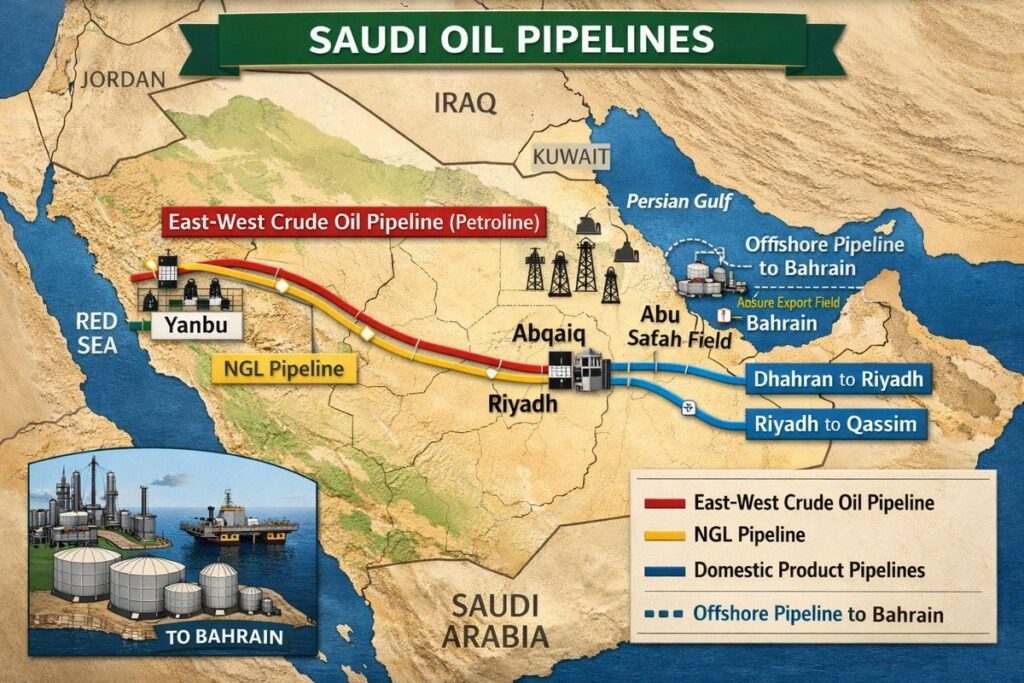
The East-West Pipeline, a 1,200-kilometer (746-mile) infrastructure built in the 1980s during the Iran-Iraq War as a hedge against Hormuz risks, connects Saudi Arabia’s eastern oil fields (near Abqaiq) to Yanbu on the Red Sea coast. In response to the effective closure of the Strait of Hormuz—through which roughly 15-20 million barrels per day (bpd) of global oil normally transits—Saudi Aramco rapidly scaled up flows through this alternative route. By late March 2026, the pipeline reached its full technical capacity of 7 million bpd, with approximately 5 million bpd available for export via Yanbu and the remaining ~2 million bpd supplying local refineries and domestic needs in the western province.
Volumes and Percent Increases
Pre-crisis baseline (January-February 2026): Yanbu crude exports averaged around 770,000–800,000 bpd.
March 2026 surge: Average through mid-March: ~2.9 million bpd (a more than 275% increase from pre-crisis levels).
Late March weekly peak: nearly 4 million bpd, with expectations of approaching or hitting 5 million bpd by month-end as the pipeline hit full capacity around March 25.
Overall, Saudi crude exports in March averaged 5.3 million bpd, supported by the Yanbu rerouting (with some residual eastern loadings). This represents a remarkable operational pivot: Yanbu volumes have effectively quadrupled or more in a matter of weeks. Saudi Aramco has also exported an additional 700,000–900,000 bpd of refined products from the Red Sea, further bolstering supply.
The ramp-up was enabled by years of preparation, including prior expansions and the use of drag-reducing agents to boost flow rates. Tanker traffic at Yanbu’s terminals (Yanbu North and South) has surged, with dozens of Very Large Crude Carriers (VLCCs) now loading there instead of Gulf ports like Ras Tanura.Key Customers
Saudi Aramco has notified its major Asian term customers that all April loadings will originate from Yanbu, primarily Arab Light crude. The vast majority of this rerouted oil is headed to Asia, with China and India as the primary destinations.
For example, China’s Sinopec alone loaded approximately 24 million barrels from Yanbu in March.
April allocations to China are expected at around 40 million barrels (lower than pre-crisis peaks but still substantial given the rerouting).
India is also receiving significant volumes, though the exact April figures reflect the overall tight supply environment.
This shift keeps critical feedstock flowing to Asian refiners despite the logistical challenges of the longer Red Sea route (which may involve Suez transit or Cape detours for some tankers).
Stabilizing the Global Oil Market
The Strait of Hormuz disruption had already forced production cuts across the Gulf, with Middle East exports dropping sharply (down ~60% in some weeks). Saudi Arabia itself reduced output by around 2–2.5 million bpd initially to match export constraints. However, the Yanbu bypass has acted as a critical “release valve,” allowing the Kingdom to maintain the bulk of its export capability and limit the global supply shortfall. Without this pipeline operating at full throttle, the loss of Saudi (and broader Gulf) barrels could have triggered far more severe market turmoil. Analysts note that the Petroline rerouting is one key reason oil prices have not reached crisis-level highs (Brent traded around $106/bbl recently, elevated but not catastrophic). It has provided a lifeline to global supply, supported energy security for importing nations, and reinforced Saudi Arabia’s role as a stabilizer in volatile times.
For the Kingdom, this means sustained export revenues and demonstrated operational excellence. For customers, it delivers continuity of supply during a period of geopolitical uncertainty. Overall, it underscores the value of long-term infrastructure investment in energy security.This is a textbook example of proactive planning paying dividends—excellent news indeed for Saudi Arabia, its trading partners, and the broader oil market.
All information is drawn from reputable industry reports and shipping data published in March–early April 2026. Key sources include:
- Reuters: “Saudi boosts Yanbu crude oil exports as it works around Hormuz halt” (March 24, 2026) – https://www.reuters.com/business/energy/crude-exports-saudis-yanbu-port-surged-near-4-mln-bpd-last-week-data-shows-2026-03-24/
- Bloomberg: “Saudi pipeline to bypass Hormuz hits 7 million barrel goal” (March 28, 2026) – https://www.bloomberg.com/news/articles/2026-03-28/saudi-pipeline-that-bypasses-hormuz-hits-7-million-barrel-goal
- Argus Media: Multiple reports on March volumes, pipeline capacity, and exports (e.g., April 2, 2026 update)
- Kpler shipping data (cited across Reuters, Argus, etc.)
- Fortune, Straits Times, Arab News, and S&P Global summaries confirming 7 mbpd pipeline, 5 mbpd Yanbu exports, and Asian customer notifications
- X post by
@CRUDEOIL231
(April 3, 2026) providing real-time context on Asian loadings and Bab-el-Mandeb volumes – https://x.com/CRUDEOIL231/status/2040141805774344537
Data cross-verified from multiple outlets for accuracy. Figures represent the latest available as of early April 2026.