Wasif Latif, Co-Founder, President & Chief Investment Officer, Sarmaya Partners, stopped by the Energy News Beat Podcast again.
This time, we covered current events in the Strait of Hormuz and the impact of the war in Iran. It does not look like they will be going away quietly into the night, and they will want to cause damage to global markets, as they were caught mining the Strait this weekend.
As I have stated several times, I do not think this will end until we have Venezuelan-style controls over oil and gas revenue. The key problem is that Iran is not Venezuela, and the current regime needs to be totally replaced. Anything less than that will be a failure.
We highly recommend following Wasif on his LinkedIn https://www.linkedin.com/in/wasiflatif/, and check out Sarmaya Partners
1. The Return to Tangibles & Commodity Super Cycle
The podcast opens with the central theme that the world is returning to tangible assets—commodities, real assets, and energy. Wasif Latif argues this is a multi-year secular trend that began in 2021, driven by inflationary pressures and geopolitical events. He believes we’re in the early innings of a commodity super cycle that will last several years.
2. Geopolitical Impact on Oil Markets
A major focus is the closure of the Strait of Hormuz and its cascading effects on global oil supply. The hosts discuss how this disruption has taken 10-20% of global oil supply offline, creating supply shocks similar to the 1970s. They explore how this affects different regions differently—the U.S. is relatively insulated (only 2% of oil comes from the Strait), while Asia faces acute challenges.
3. Oil Supply & Demand Imbalance
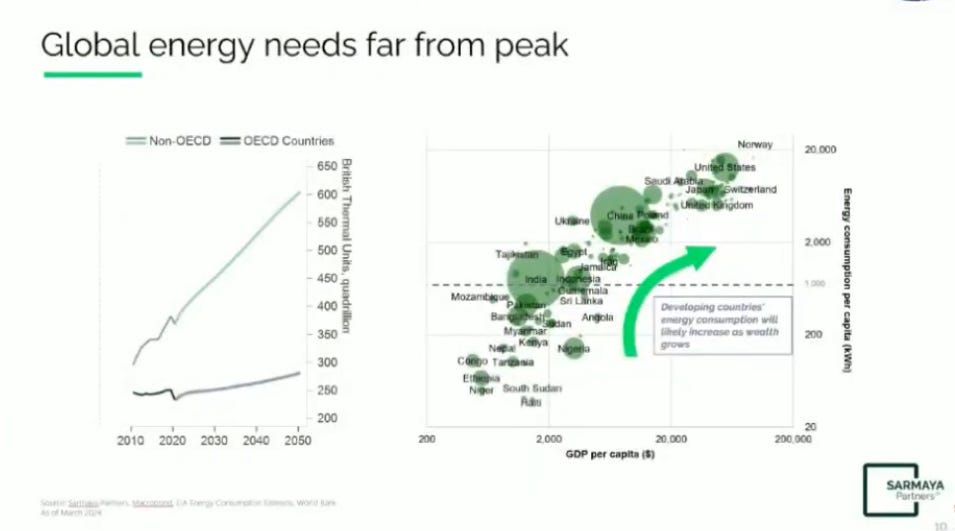
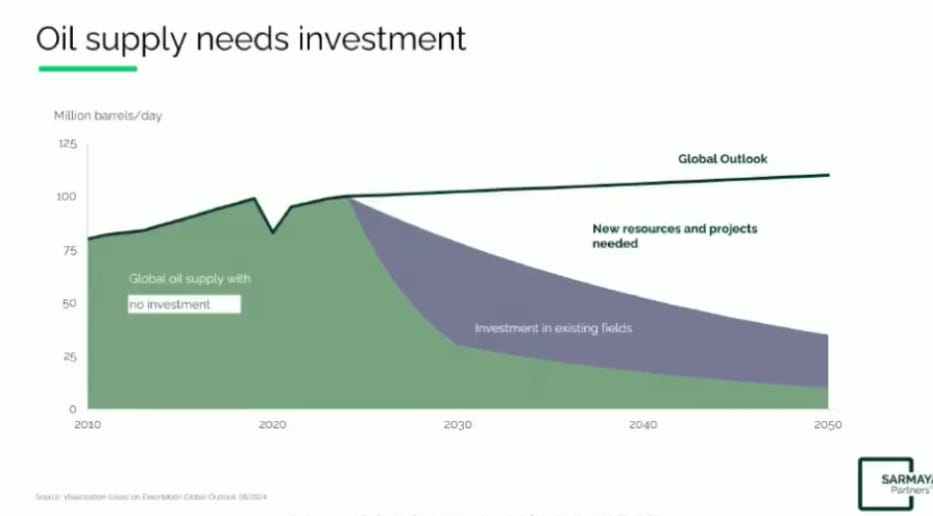
The podcast emphasizes that global oil demand continues to rise as developing nations grow economically, but investment in new oil exploration and production has stalled. They cite a $1-3 trillion shortfall in exploration spending needed to meet future demand. Oil prices may need to reach $100+ per barrel to justify new investment.
4. U.S. Energy Independence & Refining Capacity
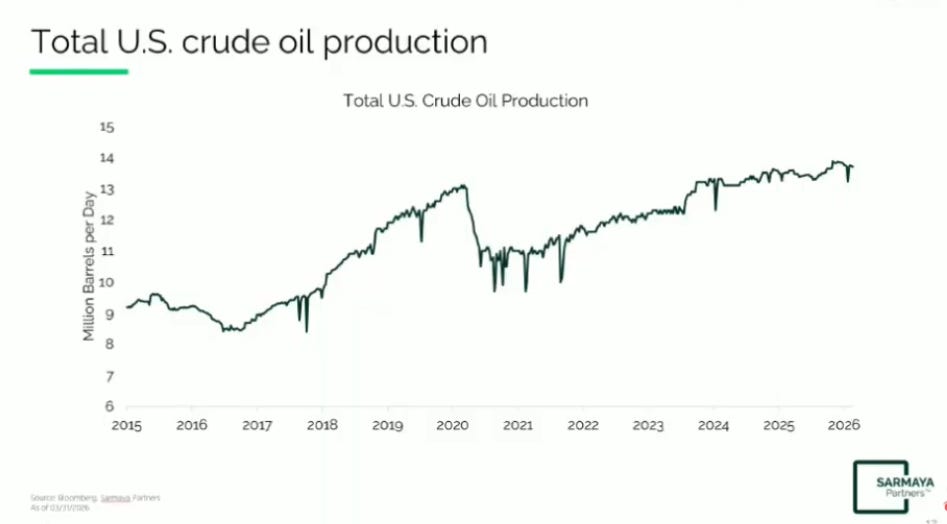
Discussion of America’s shale revolution and recent developments like the new refinery in Brownsville, Texas (coming 2027) designed to process light sweet crude. The U.S. has increased production from 8 to 13 million barrels per day over a decade, but refining capacity remains a constraint.
5. Stagflation Risk (1970s Scenario)
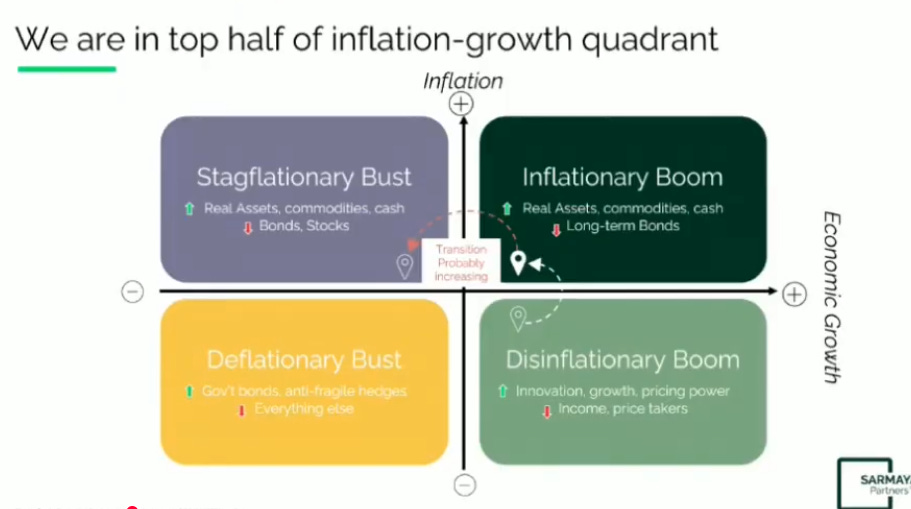
The hosts warn of a potential stagflationary environment, where the economy stagnates while inflation remains high. They compare current inflation trends to the 1970s, noting that recent CPI and PPI data show concerning spikes. Unlike the 1970s, gas lines are unlikely due to improved energy efficiency, but widespread price increases across goods are expected.
6. Strategic Petroleum Reserve (SPR) Releases
Discussion of coordinated global SPR releases as a stopgap measure to dampen oil prices. However, these are temporary solutions that buy time but don’t provide permanent protection. The hosts note that countries like Japan, Korea, and India will likely rebuild their SPRs, creating additional future demand.
7. Natural Gas as a Bridge Energy Source
Natural gas is positioned as a key transitional energy source, especially for data centers and AI infrastructure seeking low-carbon alternatives. The podcast explores how U.S. natural gas prices could converge with global prices as LNG export capacity expands, similar to how Brent and WTI oil prices have converged.
8. Coal’s Role in the Global Energy Mix
While Western nations have reduced coal usage, China and India continue heavy reliance on it as part of an “all-of-the-above” energy strategy. Germany’s energy policy mistakes (shutting nuclear and coal, relying on Russian gas) are highlighted as a cautionary tale.
9. Gold as Inflation Hedge & Currency Protection
Gold is analyzed as a beneficiary of both geopolitical tensions and sovereign debt pressures. The podcast argues that governments facing high debt levels will choose to protect bond markets over currencies, leading to currency depreciation and gold appreciation. Historical comparisons show gold’s current bull market is still in early innings.
10. The Yen Carry Trade & Financial Stability Risk
Discussion of Japan’s bond market challenges and the “widow maker” trade. The hosts warn that if the Bank of Japan raises rates to combat inflation, it could trigger a yen appreciation that unwinds the massive yen carry trade, potentially causing a global equity market selloff.
11. Silver’s Dual Role: Precious & Industrial Metal
Silver is highlighted as both a precious metal and a critical industrial commodity for chips, solar panels, and AI infrastructure. Physical demand for silver is outpacing supply, with industrial companies now procuring directly from mining companies, suggesting the physical market will eventually drive prices higher.
12. Geopolitical Negotiations & Market Implications
The podcast discusses ongoing negotiations between the U.S., China, and Iran regarding the Strait of Hormuz. President Xi’s statement about wanting the strait open without tolls is seen as positive. The hosts note that equity markets are already pricing in a resolution, suggesting the war is “over” from a market perspective.
Key Takeaway:
The overarching narrative is that we’re entering a new era where physical commodities and real assets will outperform financial assets due to geopolitical tensions, supply constraints, inflation, and sovereign debt pressures—a return to the dynamics of the 1970s, but without the gas lines.

Global Energy Consumption by Source:
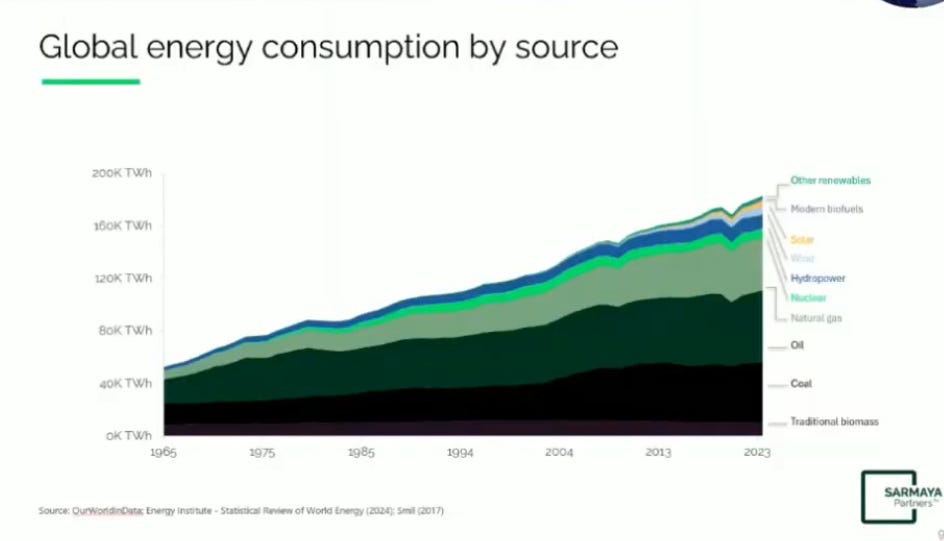
We need More Energy
Total US Crude Production
Oil needs to stay at $100 because of past underinvestment.
All wars are inflationary
Gold and Silver
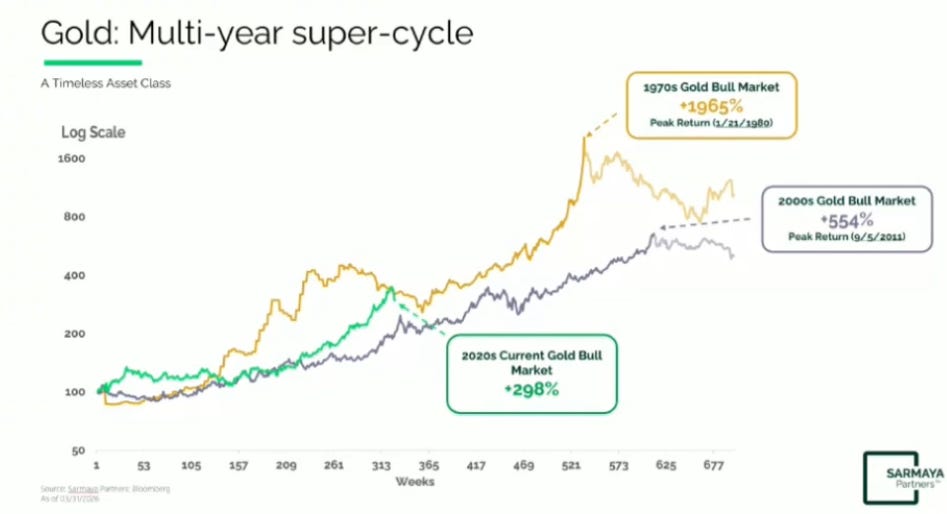
Bottom line is that we are in a commodities super cycle, and the Sarmaya Partners call to the Return to Tangibles will be a huge topic.
Do not forget to check out their EFT LENS.
Thank you, Wasif, for stopping by the Energy News Beat Podcast!

A shout-out to Steve Reese and the Reese Energy Consulting group for sponsoring the Podcast https://reeseenergyconsulting.com/.

Data2 if you have any business systems, can you trust A? Well, they have the patent on validation. . https://data2.zoholandingpage.com/energy
And we have WellDatabase rolling in as a new sponsor.