We had Doomberg ready, and the system was overwhelmed, so we rescheduled for tomorrow.
How will the US Grid Handle the Cuts to Wind, increased Nat Gas, and can it be maintained?
Tomorrow we have the CEO of Jackery Power Solutions and Doomberg stopping by the podcast for two different interviews. We will be covering the home market with Steven Wang from Jackery, and Doomberg’s article tomorrow is a huge discussion about how Russia, Ukraine, and Turkey’s influences could impact the global oil and natural gas markets. Here is the link for the Doomberg Video at 9:00 Central tommorow.
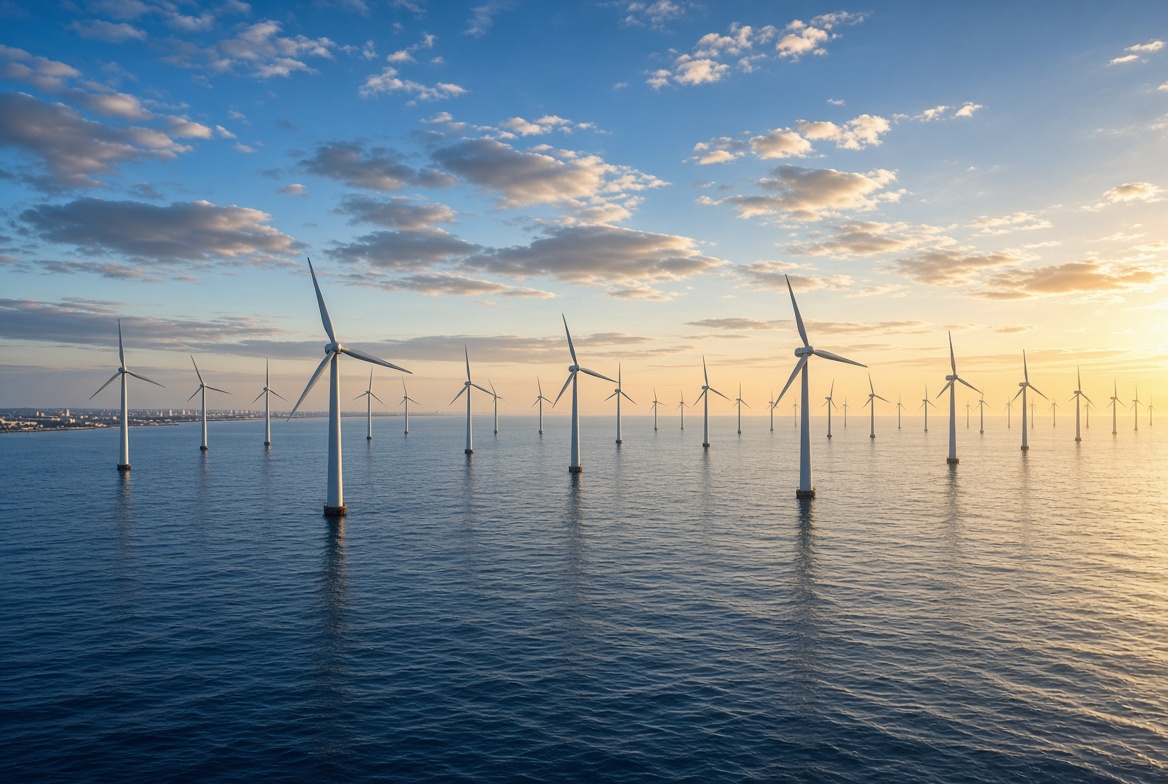
For today, I have to ask the question following my last two articles, and the Trump administration’s roughly $4 billion push to exit offshore wind leases and redirect capital into natural gas, LNG, and oil projects represents a deliberate bet that cheap, abundant gas can power America’s surging electricity needs.
As detailed in recent reporting, the Department of the Interior has reached settlements totaling nearly $3.9–4 billion (including a $1.22 billion deal with RWE and earlier agreements with TotalEnergies, Invenergy, Bluepoint Wind/Golden State Wind, and others) reimbursing developers for surrendered leases conditional on equivalent investments in fossil infrastructure such as LNG facilities and gas peaking plants.
This policy accelerates a near-term shift away from planned offshore wind capacity (potentially several GW that would have served millions of homes) toward dispatchable gas-fired generation.
Natural gas already supplies about 40–41% of U.S. utility-scale electricity generation. The question is whether the grid can absorb reduced wind contributions—especially as older onshore turbines age out—while meeting explosive demand growth, and whether the underlying exploration and production (E&P) economics can sustain the required fuel supply.
The $4 Billion Wind Retreat and the Gas Pivot
Offshore wind faced genuine headwinds from inflation, higher rates, supply chains, and permitting. The administration’s approach, however, actively steers capital away from it. Meanwhile, the broader market pipeline for 2026 still leans heavily toward solar (roughly half of planned capacity additions), batteries, and some wind, according to EIA data referenced in analyses.
Aging Wind Fleet: The Coming Attrition Wave
Still, a wave is approaching. Roughly 7,500 turbines are already 20+ years old, with tens of thousands more in the 15–19-year range. Decommissioning rates stay low (under 5%) through the first 20 years but rise sharply thereafter (around 24% in the 21–25-year cohort and much higher later).
Many sites are repowered rather than fully retired: fewer, larger, more efficient turbines often increase nameplate capacity and extend site life by decades. Cumulative blade and turbine waste will grow substantially by 2040–2050, but the more immediate grid issue is potential net capacity loss or delayed replacement if policy, economics, or permitting slow repowering and new builds.
I do not see more recommissioning or nameplate upgrades rolling through as in the past due to the subsidy boom rush being over, and this will mean more reduction in upgrades. And in my opinion, that is a good thing.
Additional offline capacity from canceled or stalled offshore projects compounds the challenge in coastal regions facing tight supply.
Surging Demand: The AI and Data-Center Driver
Data-center electricity use could reach 9–17% (or higher in some scenarios) of total U.S. demand by 2030 and approach 20% by 2035 in some outlooks.
Tens to well over 100 GW of new capacity and associated transmission will be needed this decade simply to keep pace, while also replacing retiring resources. Solar, batteries, and gas are the fastest-to-deploy options; nuclear and new coal take far longer.
Can Natural Gas Fill the Gap—and Can E&P Deliver?
EIA and other forecasts show continued strong gas-fired generation and capacity additions. Henry Hub prices have recently hovered near or below $3/MMBtu at times, with short-term outlooks around $3.50–$3.70 for 2026–2027 amid strong production and inventories.
At sustained ~$3 levels, however, the incentive for aggressive new drilling and infrastructure is limited.
Associated gas from oil wells helps, but pure-play gas E&P and midstream expansion require higher sustained prices or policy support to match rising power-sector and LNG export demand (LNG exports are already climbing toward and beyond 15–18 Bcf/d).
Over-reliance also exposes the system to price spikes—as seen in past volatility episodes exceeding 100%—especially as domestic demand competes with global LNG markets.On the oil side, WTI prices fluctuating near or under $70 (and lower in some forecasts) constrain new rig activity. Operators prioritize capital discipline, shareholder returns, and efficiency over rapid expansion. Break-evens and expansion thresholds vary by basin and company, but sustained prices comfortably above maintenance levels (often cited in the mid-to-high $60s or higher for meaningful growth) are typically needed for significant rig-count increases.
Production can still rise modestly via efficiency and existing inventory, yet the headroom for the dual oil-and-associated-gas boom that previously supported gas supply is narrower.
Nuclear: Ambitious Goals, Slow Near-Term Ramp
Meaningful new large reactors or commercial SMR fleets are more likely post-2030/2035 due to permitting, supply-chain, financing, and first-of-a-kind hurdles. Nuclear cannot fully offset near-term wind attrition or demand growth on its own.
Coal as a Reliability Backstop?
Path to Grid Stability
- Sustained gas production and infrastructure despite current price signals.
- Faster nuclear deployment (uprates now, SMRs and large reactors later).
- Continued (or resumed) renewable and storage build-out for cost and diversification benefits.
- Realistic acknowledgment that permanently cheap gas is not guaranteed once demand and LNG exports tighten the market.
- Policy that narrows the technology set increases vulnerability to fuel-price volatility and supply bottlenecks.
- A diversified portfolio—gas for flexibility, nuclear and coal for firm capacity, renewables + storage for low marginal cost—plus permitting and interconnection reform offers the most robust path.
The $4 billion wind retreat buys time and signals priorities, but the underlying physics of rising load, aging assets, and capital economics will determine whether the lights stay on affordably and reliably.
Getting more than 42% natural gas on the grid for power is a problem, and we need multiple power sources. But I do not recommend wind and solar at scale with the current technology, Rafe Champion’s grid resiliency, and how solar has performed under duress. We recommend subscribing to Rafe’s Substack as well.
The one key point I am trying to make is that we all, as Americans, need to take our home security as our number one priority. I am seeing problems on the near-term horizon and am trying to sound the alarm for folks to be prepared. The world is changing and be prepared for anything.
Thanks again to all of our great patrons, paid subscribers, subscribers and sponsors. Be ready to help your family and your neighbors.
Appendix: Sources and Links
- America’s $4 Billion Wind Retreat Is a Bet on Permanently Cheap Gas (OilPrice.com, Aug 10, 2026): https://oilprice.com/Alternative-Energy/Wind-Power/Americas-4-Billion-Wind-Retreat-Is-a-Bet-on-Permanently-Cheap-Gas.html
- Bloomberg: Trump Administration Pays $4 Billion to Cancel Offshore Wind Projects: https://www.bloomberg.com/news/articles/2026-08-06/trump-refunds-4-billion-to-cancel-us-offshore-wind-projects
- New York Times coverage of RWE and related deals: https://www.nytimes.com/2026/08/06/climate/rwe-trump-offshore-wind-canceled.html
- AP News on settlements totaling nearly $4 billion: https://apnews.com/article/trump-offshore-wind-energy-projects-fossil-fuels-d39aaf20d259d15d0777dcaec7aa3524
- USGS/Wind Energy journal: Out With the Old – Empirical Trends in U.S. Land-Based Wind Turbine Decommissioning and Repowering: https://onlinelibrary.wiley.com/doi/10.1002/we.70099 and https://www.usgs.gov/publications/out-old-empirical-trends-us-land-based-wind-turbine-decommissioning-and-repowering
- CNBC / Wood Mackenzie on aging turbines and repowering: https://www.cnbc.com/2025/04/27/wind-power-trump-climate-change-energy-policy.html
- EIA Annual Energy Outlook 2026 and electricity demand notes: https://www.eia.gov/outlooks/aeo/
- McKinsey, BloombergNEF, EPRI, Rhodium Group, and related data-center demand outlooks (various 2025–2026 reports summarized in search results).
- World Nuclear Association / DOE nuclear capacity projections and administration targets: https://world-nuclear.org/our-association/publications/world-nuclear-outlook-report/united-states-of-america—world-nuclear-outlook-report
- National Coal Council and EIA on coal fleet status, retirements, and delays: reports and https://www.eia.gov/todayinenergy/detail.php?id=67206
- EIA Short-Term Energy Outlook (natural gas prices and production): https://www.eia.gov/outlooks/steo/
- Baker Hughes, Dallas Fed, Rystad, and industry commentary on rig counts, break-evens, and E&P responses to oil/gas prices.
- EIA electricity generation mix data: https://www.eia.gov/energyexplained/electricity/electricity-in-the-us-generation-capacity-and-sales.php
Additional primary sources include DOI press releases on individual settlements, company announcements (RWE, TotalEnergies, etc.), and NERC reliability assessments referenced across the above reporting. All figures are approximate and drawn from publicly available analyses as of August 2026; markets and policies continue to evolve.