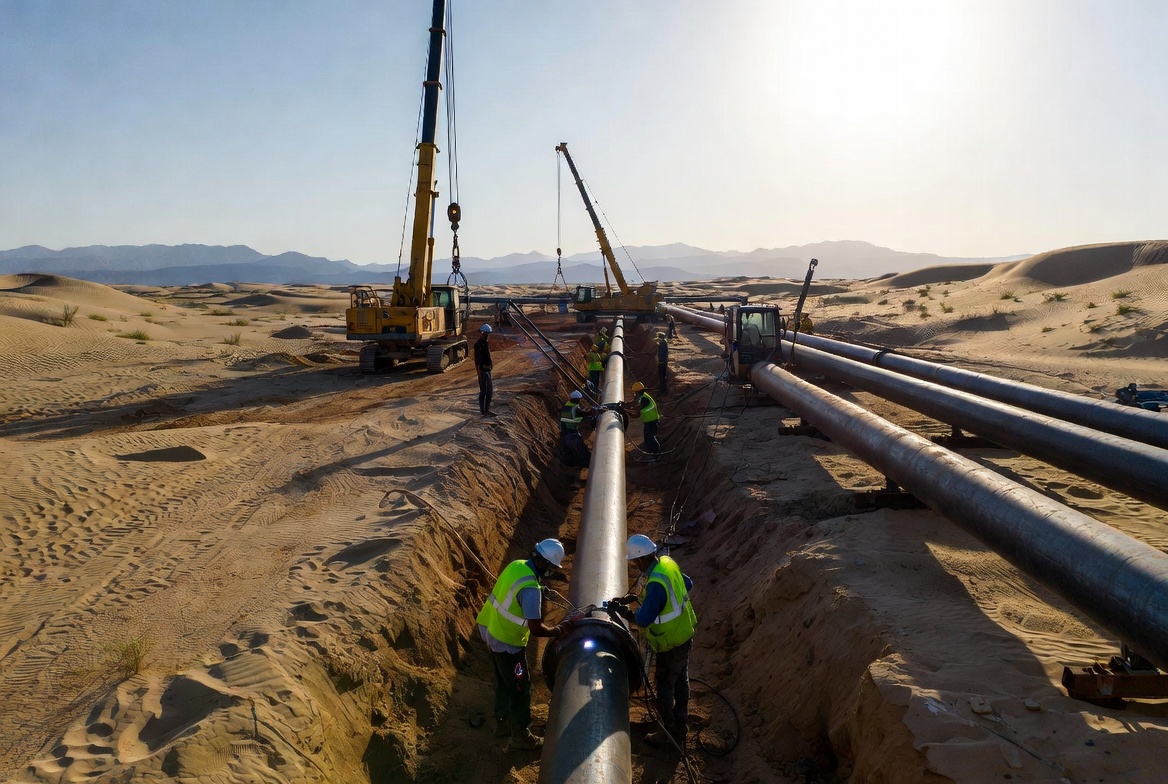
As the Strait of Hormuz remains effectively closed amid the ongoing U.S.-Israeli conflict with Iran, Iraq is racing to reroute its crude exports northward. The Iraqi government has approved an urgent plan to nearly triple pipeline shipments of crude oil from the Kurdistan region to Turkey’s Mediterranean port of Ceyhan, aiming to ease the severe revenue crunch hitting the country’s heavily oil-dependent economy.
According to reports, Baghdad initially targeted 500,000 barrels per day (bpd) via the northern route but has now accelerated ambitions to reach up to 770,000 bpd within the next two-and-a-half months. This move would represent a dramatic increase from current levels and restore the Kirkuk-to-Ceyhan pipeline as a critical lifeline.
The closure of the Strait of Hormuz — the world’s most vital oil chokepoint — has devastated Iraq’s southern export terminals at Basra. Unlike Saudi Arabia and the UAE, which have alternative pipelines bypassing the strait, Iraq has no such options. As a result, production from southern fields has plummeted 70%, averaging just 1.3 million bpd compared to 4.3 million bpd before the conflict escalated. Storage tanks and tankers in the Gulf are now full, forcing further cuts.
Iraq’s economy is uniquely vulnerable. Petroleum sales still account for approximately 90% of the state budget, with little diversification achieved in recent decades. The collapse in exports is already triggering a broader economic crisis, with oil revenues trickling in and public finances under immense strain.
U.S. Control Over Iraqi Oil Revenues Persists
Compounding Iraq’s challenges is the fact that its oil revenues continue to be held and managed through accounts at the Federal Reserve Bank of New York — a legacy arrangement dating back to the 2003 U.S.-led invasion. Following the establishment of the Development Fund for Iraq (DFI), oil sale proceeds have been deposited directly into this U.S.-custodied system. The arrangement, originally intended to protect funds and support reconstruction, has been maintained through annual executive orders renewed by successive U.S. presidents.
As of 2026, Iraqi oil revenues remain under the custody of the New York Fed, giving Washington significant leverage over Baghdad’s finances. Recent reports indicate the U.S. has even halted dollar shipments from these accounts at times to pressure Iraq over regional ties, underscoring the ongoing structural dependency.
Do These Controls Extend to Natural Gas?
The U.S. oversight mechanism primarily targets oil revenues, which dominate Iraq’s export income. While early post-invasion frameworks (such as the DFI) referenced proceeds from petroleum broadly — including associated natural gas in some contexts — Iraq’s natural gas sector remains underdeveloped and is not a significant export revenue source. Iraq currently produces associated gas from oil fields for domestic power generation and is expanding processing capacity through projects with international partners, but it imports gas to meet demand and has minimal standalone gas exports. No current evidence indicates that natural gas revenues are subject to the same direct Federal Reserve custody or U.S. Treasury controls as crude oil sales. Any future gas export revenues would likely follow oil precedents if routed through similar dollar-based channels, but the sector’s scale makes it secondary to oil.
Energy’s Massive Role in Iraq’s Economy
Oil remains the cornerstone of Iraq’s GDP. According to the latest World Bank data, the oil sector accounted for an estimated 53% of real GDP in 2025, alongside 88% of government revenues and 91% of merchandise exports. This extreme dependence leaves the country exposed to global price swings and geopolitical disruptions like the current Hormuz crisis.
What Lies Ahead
The push to triple northern pipeline exports offers a short-term lifeline, but long-term solutions — including diversification, southern infrastructure upgrades, and regional stability — remain elusive. With Hormuz appearing locked down for the foreseeable future, Iraq’s pivot north highlights both its resilience and its precarious position in the global energy landscape.
All information in this article is drawn from publicly available reporting as of June 3, 2026. Full links are provided below for transparency and further reading:
- Original reference article: “Iraq Looks to Triple Pipeline Oil Exports as Hormuz Remains Closed” by Tsvetana Paraskova, OilPrice.com, June 3, 2026.
https://oilprice.com/Latest-Energy-News/World-News/Iraq-Looks-to-Triple-Pipeline-Oil-Exports-as-Hormuz-Remains-Closed.html - Reuters: “How the U.S. controls Iraq’s oil revenues,” January 23, 2026.
https://www.reuters.com/business/energy/how-us-controls-iraqs-oil-revenues-2026-01-23/ - Al Jazeera: “US halts shipment of Iraq’s oil dollars to curb Iran-linked groups,” April 22, 2026.
https://www.aljazeera.com/news/2026/4/22/us-halts-iraq-dollar-shipments-in-pressure-campaign-over-iran-linked-groups - World Bank: Iraq Macro Poverty Outlook (MPO), referencing 2025 data on oil’s contribution to GDP, revenues, and exports.
https://thedocs.worldbank.org/en/doc/65cf93926fdb3ea23b72f277fc249a72-0500042021/related/mpo-irq.pdf (and related country page updates confirming 53% of real GDP from oil). - U.S. Energy Information Administration (EIA): Iraq Energy Overview (natural gas production, processing, and limited export context).
https://www.eia.gov/international/analysis/country/irq - Additional context from IMF Article IV consultations and EITI reports on revenue flows (historical DFI structure and petroleum revenue accounting).
Energy News Beat will continue monitoring developments in Iraq’s export strategy, U.S.-Iraq financial relations, and the broader Middle East energy crisis. Stay tuned for updates.