In the shadow of the ongoing Iran war that erupted in late February 2026, QatarEnergy—the world’s second-largest LNG exporter—is sending carefully calibrated signals to the global market. On one hand, it is cautiously testing the resumption of its own exports through the Strait of Hormuz. On the other, it is aggressively securing alternative supplies to shield long-term customer relationships and revenue streams.
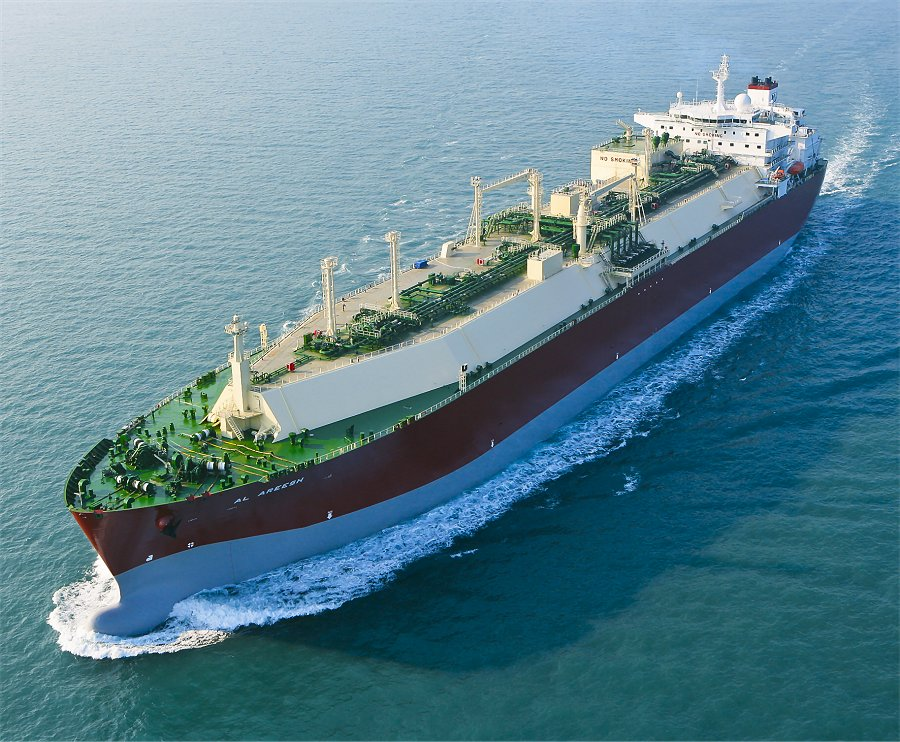
Commodity trader and analyst Jack Prandelli highlighted these dual moves in a post on July 30, 2026: For the first time in nearly three weeks, a QatarEnergy-controlled LNG tanker had exited the Strait of Hormuz. The Al Areesh, loaded at Ras Laffan around July 4–6 and bound for Pakistan, marked the first visible restart of Qatari LNG exports through the waterway since mid-July. At the same time, QatarEnergy had purchased 33 U.S. LNG cargoes this year—worth around $1 billion—to replace disrupted supply and protect deliveries to Asian customers. That compares with just four U.S. cargoes the previous year; 28 of the 33 have already been delivered, with five remaining in transit.
Independent reporting confirms the details of Prandelli’s analysis. Ship-tracking data from Kpler, LSEG, and Bloomberg shows the Al Areesh exited the Strait overnight on July 29–30 with its transponder active and is heading to Port Qasim, Pakistan (estimated arrival July 31). This is the first QatarEnergy-controlled LNG tanker to clear Hormuz since the Al Rekayyat was struck by a projectile near the Omani coast on or around July 7, prompting a pause in shipments. The vessel had been idling in the Persian Gulf after loading at Ras Laffan. Iranian media later reported it used a Tehran-designated route without incident.
Separately, a Reuters exclusive published the same day detailed the U.S. cargo purchases. Four trade and industry sources said QatarEnergy bought the 33 spot LNG cargoes from U.S. producer Venture Global LNG (and some of its customers) for delivery to South Korea, Taiwan, Bangladesh, India, and Japan. The volume equates to roughly one-third of a pre-conflict month of QatarEnergy exports and is valued at about $1 billion. The move was described by sources as “a gesture of good faith” toward key Asian customers, who typically account for about 80% of Qatar’s LNG shipments. QatarEnergy and Venture Global declined to comment.
Background: Damage, Force Majeure, and Disrupted Flows
The Iran war has fundamentally altered Qatar’s energy landscape. Iranian drone and missile attacks in early March 2026 (notably around March 2 and mid-March) struck facilities at Ras Laffan Industrial City and Mesaieed. QatarEnergy halted LNG production, and CEO Saad al-Kaabi later stated that the damage knocked out 17% of Qatar’s LNG export capacity—about 12.8 million tons per year—with repairs expected to take three to five years and an estimated $20 billion in annual lost revenue.
In late March 2026, QatarEnergy declared force majeure on some long-term LNG contracts, including those with customers in Italy, Belgium, South Korea, and China. Force majeure clauses excuse contractual obligations due to unforeseeable events beyond a party’s control. Subsequent extensions have prolonged the cancellations; reports in July 2026 indicated force majeure continuing into September or potentially mid-October for certain European and Asian buyers, with dozens of cargoes already canceled.
Hormuz disruptions compounded the problem. The strait, through which roughly 20% of global LNG typically flows (largely from Qatar), faced closures, attacks, and high insurance risks. Empty tankers began cautiously returning in June, but laden exports remained limited and intermittent.
Protecting Contracts and Obligations
Rather than relying solely on force majeure declarations—which legally release QatarEnergy from delivery obligations—the company has chosen a hybrid approach. By purchasing U.S. spot cargoes as emergency replacements, it continues to supply key Asian buyers even while its own production and Hormuz transit remain constrained. This preserves QatarEnergy’s decades-long reputation as a highly reliable supplier, safeguards long-term contract relationships, and protects future revenue streams once full operations resume.
The strategy is particularly important given the structure of Qatar’s LNG business. A large share of volumes sits under long-term, often oil-indexed contracts. Maintaining goodwill with buyers in South Korea, Japan, India, Taiwan, and Bangladesh reduces the risk of permanent market-share losses to competitors (including rising U.S. and Australian supply) and positions QatarEnergy better for post-war renegotiations or expansions.
Looking Ahead: Life After the Iran War
Full normalization of Hormuz transit and restoration of undamaged capacity would allow Qatar to ramp production relatively quickly—analysts and company guidance earlier suggested reaching ~50% of capacity within a month of safe passage and ~80% within two months. However, the permanent 17% capacity loss will constrain total output for years.QatarEnergy’s current dual-track approach—testing limited Hormuz exports while using U.S. LNG as a bridge—demonstrates pragmatic adaptation. It limits immediate revenue damage, fulfills customer needs where possible, and buys time. In a post-war environment, this could translate into stronger negotiating leverage, diversified logistics options, and a reinforced reputation for reliability amid geopolitical volatility.
The Al Areesh transit is a positive first step, but the simultaneous $1 billion U.S. cargo program shows QatarEnergy still treats Hormuz as unreliable. How quickly and fully the company can pivot from emergency backup purchases back to its own production will define its competitive position in the years ahead.
Appendix: Sources and Links
- Jack Prandelli X post (July 30, 2026): https://x.com/jackprandelli/status/2082739754169196950
- Reuters exclusive: “QatarEnergy buys 33 US LNG cargoes to offset Hormuz disruption, sources say” (July 30, 2026): https://www.reuters.com/business/energy/qatarenergy-buys-33-us-lng-cargoes-offset-hormuz-disruption-sources-say-2026-07-30/
- Bloomberg: “Qatar Sends First LNG Shipment Through Hormuz in Three Weeks” (July 30, 2026): https://www.bloomberg.com/news/articles/2026-07-30/qatar-sends-its-first-lng-shipment-through-hormuz-in-three-weeks
- Arab News / related: “QatarEnergy-controlled LNG tanker exits Hormuz, first in nearly three weeks” (July 30, 2026): https://www.arabnews.pk/node/2652766/middle-east
- Reuters: “Iran attacks wipe out 17% of Qatar’s LNG capacity for up to five years” (March 19/20, 2026): https://www.reuters.com/business/energy/iran-attack-damage-wipes-out-17-qatars-lng-capacity-three-five-years-qatarenergy-2026-03-19/
- Al Jazeera: “QatarEnergy declares force majeure on some LNG contracts” (March 24, 2026): https://www.aljazeera.com/news/2026/3/24/qatarenergy-declares-force-majeure-on-some-lng-contracts
- CNBC: “QatarEnergy halts LNG production after Iran drone attacks” (March 2, 2026): https://www.cnbc.com/2026/03/02/qatars-state-owned-energy-company-halts-lng-production-after-iran-drone-attacks.html
- Bloomberg / related reporting on force majeure extensions (July 2026): Multiple references including https://www.bloomberg.com/news/articles/2026-07-28/qatarenergy-extends-lng-force-majeure-for-european-buyers and reports of potential extension to mid-October.
- Additional ship-tracking context from Kpler, LSEG, and earlier Bloomberg/Reuters pieces on Hormuz transits and the July 7 Al Rekayyat incident.