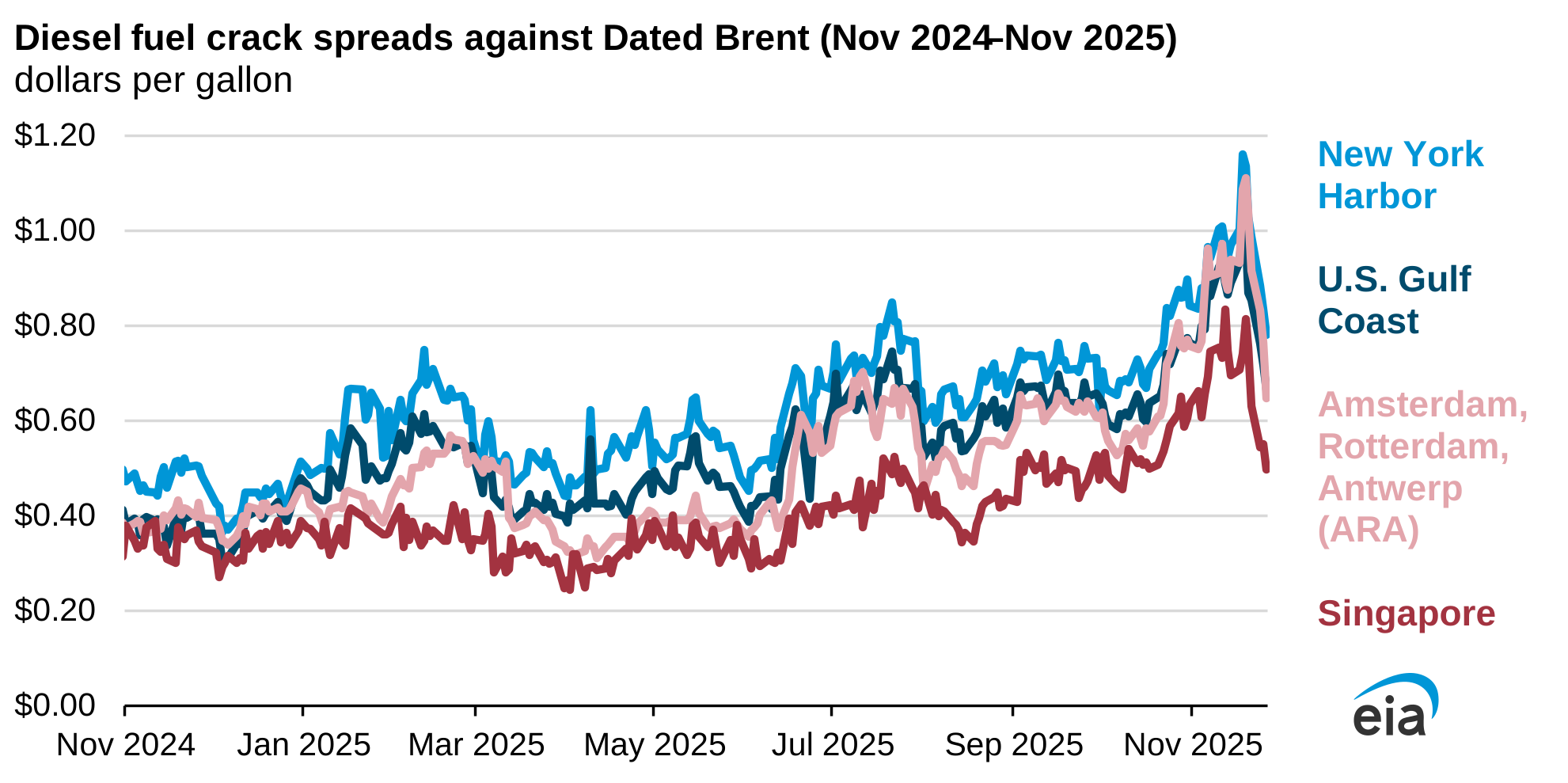
Note: Data through November 26, 2025. All crack spreads are calculated against the Dated Brent crude oil spot price.
Global refinery margins for diesel have widened since late October and increased to their highest level all year, following refinery outages in Russia and in the Middle East and new sanctions on Russia’s crude oil, leading to limited refinery production and a decreased global diesel supply. The impact was most pronounced in the Atlantic Basin, contributing to higher prices at the Amsterdam, Rotterdam, Antwerp (ARA) shipping hub, a key benchmark for European prices, as well as at New York Harbor and the U.S. Gulf Coast. The higher global prices also affected prices in the United States because U.S. refiners can sell into both domestic and international markets.
Crack spreads indicate the profitability of refining crude oil into certain products. They’re calculated by subtracting the spot market price of a gallon of crude oil from the price of a gallon of refined product. Crack spreads for diesel fuel increased sharply from mid-October to mid-November, with spreads in New York Harbor, the U.S. Gulf Coast, and the ARA shipping hub all rising above $1 per gallon for the first time in over a year.
New EU sanctions against Russia have contributed to tight global diesel supply and rising crack spreads. In October 2025, the EU tightened restrictions on the major Russian oil companies Rosneft, Lukoil, and Gazprom Neft. That tightening followed EU sanctions against Russia implemented in July that included an import ban on refined products derived from Russia’s crude oil. The EU first banned the import of Russia’s crude oil and oil products from refineries in Russia, including diesel fuel, in late 2022 and early 2023 in response to Russia’s full-scale invasion of Ukraine.
The latest sanctions aim to diminish the value of Russia’s crude oil by targeting refineries in Türkiye and India, which have been processing discounted crude oil from Russia and exporting refined products, including diesel, to the EU.
Meanwhile, Ukraine’s attacks on Russia’s refinery and petroleum export facilities have curbed Russia’s product exports of the fuels. Reduced exports directly affect countries that have continued to import fuels from Russia. In the absence of discounted Russian volumes, these markets must instead bid for available volumes from other sources, further contributing to rising diesel prices.
Outside of Russia, an ongoing outage at Kuwait’s Al Zour refinery since late October has further tightened available refined products supplies. The Al Zour refinery came online in 2023 and helped provide fuel supplies to Europe after the implementation of the import ban on oil products from Russia earlier that year. The outage at Al Zour comes amid a relatively strong refinery maintenance season in the Middle East, as several other refineries in the region temporarily reduce their processing rates. In addition, the progress of refinery maintenance at the large Dangote refinery in Nigeria has received mixed reports, putting additional pressure on the Atlantic Basin market.
Sustained international demand amid constraints on international supply have contributed to increased demand for products from those refiners that remain operational. These refiners include refiners on the U.S. Gulf Coast, which supply most U.S. petroleum product exports. U.S. gasoline exports have risen to their highest levels so far this year, according to both our Weekly Petroleum Status Report and shipping data from Vortexa. U.S. distillate fuel oil exports, which include diesel, have also been high in November, relative to the five-year (2020–24) average.
Principal contributor: Kevin Hack
Want to get your story in front of our massive audience? Get a media Kit Here. Please help us help you grow your business in Energy.