


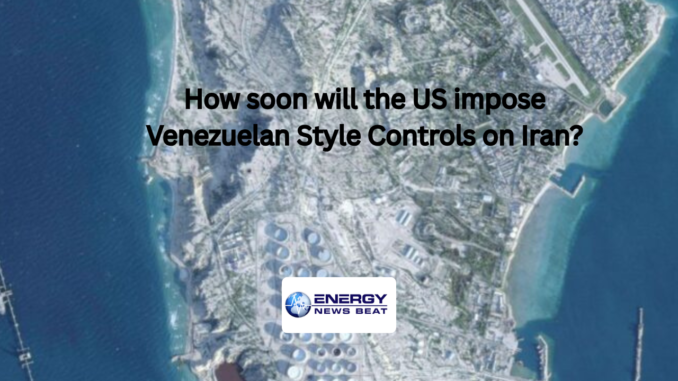
In the midst of escalating tensions in the Middle East, the ongoing Iran War—marked by U.S. and Israeli strikes on Iranian targets—presents a pivotal moment for global energy markets. As of March 2026, the conflict has already disrupted regional oil flows, with Iran’s key export hub, Kharg Island, targeted in U.S. operations. This island, handling approximately 90% of Iran’s crude exports (around 1.5-1.7 million barrels per day), underscores Tehran’s vulnerability. But beyond immediate disruptions, a deeper shift is underway: OPEC and Saudi Arabia are transitioning to a new pricing and production framework by 2027, just as hypothetical U.S. military control over Iranian assets could accelerate regime change and realign global oil dynamics. This article explores how these elements intersect, potentially empowering OPEC while squeezing buyers like China.
OPEC’s Pivot to Capacity-Based Quotas: A Game-Changer by 2027
OPEC+ (including allies like Russia) has been grappling with internal tensions over production quotas, often criticized as outdated and unfair. In late 2025, the group approved a groundbreaking mechanism to assess members’ maximum sustainable production capacities (MSC). This system, set to determine 2027 baselines, shifts from historical quotas to audited capacities, rewarding countries that invest in expanding output.Saudi Arabia, with its 12 million bpd capacity and low-cost extraction (around $2 per barrel), stands to benefit most. The UAE aims to hit 5 million bpd by 2027, backed by $150 billion in investments from ADNOC. Assessments begin in January 2026 and wrap by September, with quotas finalized in November. This “transparent and fair” approach, as described by Saudi Energy Minister Prince Abdulaziz bin Salman, could stabilize markets by aligning quotas with real capabilities.Global demand forecasts support this: OPEC projects 1.3 million bpd growth in 2027, reaching 107.9 million bpd, driven by non-OECD economies. Yet, with non-OPEC+ supply (e.g., from Brazil and Canada) also rising by 0.6 million bpd, the new system could help OPEC+ maintain influence amid oversupply risks.
Current and Projected Member Capacities
|
Member
|
Current Production (Oct 2025)
|
Current Spare Capacity
|
Estimated Current Total MSC
|
Projected 2027 MSC
|
Key Notes
|
|---|---|---|---|---|---|
|
Saudi Arabia
|
9,950
|
2,200
|
12,150
|
~12,000-12,500
|
Maintains dominant spare capacity; low-cost leader (~$2/bbl).
reuters.com
|
|
UAE
|
3,650
|
~350
|
~4,000-4,850
|
5,000 (target); up to 6,000 speculated
|
$150B ADNOC investments; aggressive expansion.
reuters.com
|
|
Iraq
|
4,650
|
~50
|
~4,700
|
~6,000 by 2028
|
Seeking foreign investors (e.g., BP, Exxon) for 1M bpd boost.
reuters.com
|
|
Russia
|
9,280
|
N/A (sanctions)
|
~10,000-11,000
|
TBD (non-U.S. audit)
|
Limited data; relies on alliances.
argusmedia.com
|
|
Kuwait
|
2,650
|
~100
|
~2,750-2,900
|
~4,000 by 2035
|
Accelerating plans post-mechanism.
reuters.com
|
|
Iran
|
3,400
|
N/A (sanctions)
|
~3,800
|
Based on 2026 avg. production
|
Sanctions limit expansion; baseline via secondary sources.
indexbox.io
|
|
Nigeria
|
1,370
|
Minimal
|
~1,500-2,000
|
Declining; potential cuts
|
Infrastructure challenges; resisting quota reductions.
cnbc.com
|
|
Kazakhstan
|
1,680
|
~20
|
~1,700
|
Moderate growth
|
Non-OPEC ally; compliance issues.
|
|
Overall OPEC+
|
~41,000 (group production)
|
~3,000-4,000
|
~55,000
|
+1-2M bpd growth
|
EIA forecasts +0.31M bpd avg. in 2026; 2027 TBD.
eia.gov
|
The Kharg Island Scenario: Echoes of Venezuelan Sanctions
Kharg Island, a coral outcrop in the Persian Gulf, is Iran’s oil lifeline. Pipelines from fields like Ahvaz and Marun feed its terminals, where supertankers load crude for export—primarily to China. U.S. strikes in March 2026 have already damaged military sites there, but oil infrastructure remains operational for now.
Imagine a U.S. takeover: Military control of Kharg could halt exports overnight, imposing Venezuelan-style sanctions. In Venezuela, U.S. measures since 2017—banning PDVSA financing, oil imports, and secondary sanctions on traders like Rosneft—slashed production from over 2 million bpd to around 1 million bpd. Exports to the U.S. dropped to near zero, shifting to discounted sales via shadow fleets to China.
Applied to Iran, this would be devastating. Oil accounts for about 9% of Iran’s GDP and over 25% of its public budget. In 2024, exports generated $43 billion, over 57% of total export revenue. Cutting this off could collapse the economy in days, as revenues fund the government and military. World Bank data shows oil rents at 13.57% of GDP in 2016, but recent estimates highlight vulnerability: 2023-2024 revenues fell short of half the budgeted amount.
Such pressure might force regime change, installing a U.S.-backed government under figures like Reza Pahlavi. This could end Iran’s support for proxies (e.g., Hezbollah, Houthis), stabilizing the region.
Regime Change and the Dark Fleet’s Demise
A new, Trump-approved Iranian government would likely see sanctions lifted, integrating Iran’s 3.2 million bpd production (with 1.4 million bpd exports) into mainstream markets. Short-term disruptions could spike prices—analysts warn of $100+ per barrel if the Strait of Hormuz closes—but long-term, added supply might ease them.
Critically, this shifts the “dark fleet”—a shadow network of aging tankers evading sanctions. Comprising 1,100-1,400 vessels (18% of global tanker capacity), it moves sanctioned oil from Iran, Russia, and Venezuela. Iran relies on it for 90% of its exports to China; Russia for 80% to India, China, and Turkey.
With Iran “normalized,” its oil flows legitimately, reducing dark fleet demand. Venezuela’s fleet is already dismantled post-U.S. intervention, leaving Russia as the main user. China, importing 90% of Iran’s crude and much of Russia’s, would lose a discounted source, relying more on Russia or pricier alternatives. This could embed a $5-10 per barrel risk premium in markets, per scenario analyses.
OPEC’s Potential Power Play
OPEC+ could gain unprecedented control. With less sanctioned oil bypassing quotas via dark fleets, markets tighten. OPEC forecasts demand for its crude at 43.6 million bpd in 2027, up 0.6 million from 2026. Saudi Arabia’s spare capacity (2.2 million bpd) becomes a stronger lever.
If dark fleet volumes decline, OPEC+ enforces discipline better—non-compliant members like Iraq and Kazakhstan face pressure. The 2027 system rewards investors like Saudi Arabia and the UAE, potentially sidelining Russia if tensions persist.
However, risks abound: Prolonged conflict could disrupt 20% of global oil via Hormuz, surging prices to $100+, and risk recession. OPEC+ has pledged output hikes (206,000 bpd from April), but spare capacity is limited beyond Saudi Arabia.Conclusion: A New Energy Order?
The Iran War coincides with OPEC’s structural overhaul, amplifying its potential to dominate. U.S. control of Kharg and Venezuelan-like sanctions could topple the regime swiftly by starving it of oil revenue—vital to GDP and budgets. A pro-Western government ends proxies, shrinks the dark fleet, and forces China toward Russia or OPEC suppliers.
This gives OPEC more sway: Less off-market oil means tighter compliance and pricing power. Yet, short-term chaos could spike costs globally. As Stuart Turley often notes on the Energy News Beat podcast, energy policy isn’t just about barrels—it’s geopolitics in motion. Watch 2027: It could redefine who controls the taps.
How soon the US will impose the new financial controls on Iranian oil is the key question. The sooner they shut down oil production through control, the sooner they can implement the financial controls.
Get your CEO on the #1 Energy Podcast in the United States: https://sandstoneassetmgmt.com/media/
Is oil and gas right for your portfolio? https://energynewsbeat.co/invest/


Be the first to comment