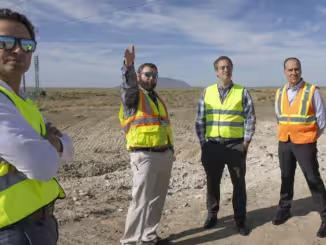
In a significant milestone for advanced nuclear technology, the Idaho National Laboratory (INL) has received its first delivery of tri-structural isotropic (TRISO) fuel for the Department of Defense’s (DoD), now called the DOW, Project Pele, a pioneering mobile microreactor designed to provide resilient, transportable power for military operations. This development, achieved by December 2, 2025, underscores the rapid progress in next-generation nuclear systems and highlights the collaborative efforts between government agencies and industry partners to enhance national security through innovative energy solutions.
Project Pele: A Leap Forward in Mobile Nuclear Power
Project Pele, led by the DoD’s Strategic Capabilities Office (SCO), represents a first-of-its-kind prototype for a mobile microreactor. Unlike traditional large-scale nuclear plants, this compact system is engineered for deployment in remote or contested environments, delivering reliable electricity where conventional grids are unavailable or vulnerable. The reactor’s design emphasizes safety, mobility, and efficiency, making it ideal for supporting military missions that demand uninterrupted power.INL plays a central role in this initiative, leveraging its world-class facilities such as the Transient Reactor Test Facility, Advanced Test Reactor, and Materials and Fuels Complex. These capabilities, unique to INL and Oak Ridge National Laboratory, have been instrumental in qualifying the TRISO fuel. The fuel delivery marks a critical step toward full-scale demonstration, enabling the project to advance with greater speed and confidence.TRISO fuel itself is a game-changer in nuclear technology. Composed of uranium, carbon, and oxygen kernels encased in multiple protective layers—including a robust silicon carbide barrier—these poppy seed-sized particles are highly resistant to extreme heat, radiation, and corrosion.
A single cask delivered to INL contains over one-fourth of the fuel required for the reactor, demonstrating the efficiency of this advanced format. Produced by BWX Technologies Inc. (BWXT), the fuel draws from the Department of Energy’s (DOE) Advanced Gas Reactor TRISO Fuel Qualification Program, ensuring it meets stringent safety and performance standards.
Key stakeholders expressed optimism about the project’s trajectory.
INL Director John Wagner noted, “This milestone reflects years of dedicated effort… enabling Project Pele to move forward with the speed and confidence our national security demands.” Similarly, Principal Deputy Assistant Secretary for Nuclear Energy Mike Goff highlighted the value of collaborative partnerships in accelerating innovation. David Schurr, SCO’s project manager for Pele, emphasized the fuel’s role in advancing private sector investment in advanced nuclear technologies. Jeff Waksman from the U.S. Army added that Project Pele paves the way for the Army’s Janus Program, which aims to deliver affordable commercial nuclear power for critical infrastructure amid grid disruptions.Looking ahead, the demonstration phase will test the reactor’s viability for real-world applications, potentially revolutionizing how the military secures energy independence.
The Broader Nuclear Energy Market:
Progress Through 2026This achievement at INL is emblematic of a resurgent nuclear energy sector, fueled by surging demand from AI data centers, geopolitical energy security concerns, and commitments to carbon-free power. As of early 2026, the global nuclear market is experiencing robust growth, with projections indicating steady expansion driven by technological advancements, policy support, and massive investments.According to industry analyses, the nuclear value chain could see investments reaching $2.2 trillion by 2050, up from earlier estimates of $1.5 trillion, reflecting heightened optimism.
The U.S. nuclear industry anticipates about 7% net growth—or roughly 7 gigawatts—through the mid-2020s, bolstered by new reactor builds and restarts.
Globally, 2026 is poised to be a pivotal year, with expectations of up to 15 new reactors coming online, alongside China’s aggressive expansion and AI-driven energy needs pushing nuclear back into prominence.
Small modular reactors (SMRs), like the one in Project Pele, are at the forefront of this renaissance. The SMR market, valued at $6.9 billion in 2025, is forecasted to double to $13.8 billion by 2032, growing at a compound annual rate of around 10-12%.
This segment benefits from factory-built designs that reduce construction times and costs, making them attractive for diverse applications from remote power to data center support. Investments in advanced nuclear hit record levels in 2025, with companies securing major funding for demonstrations and commercialization.
Uranium, the backbone of nuclear fuel, also shows a rosy outlook. Strengthening government support for nuclear energy has boosted demand, with producers like Energy Fuels outlining positive near-term prospects amid Big Tech’s bets on nuclear for AI infrastructure.
Leaders and Suppliers in the Nuclear Space
The nuclear ecosystem features a mix of established giants and innovative newcomers:
Leaders in Reactor Development and Operations:
NuScale Power: A frontrunner in SMRs with U.S. Nuclear Regulatory Commission (NRC) certification, focusing on scalable deployments. Its partnerships, like with the Tennessee Valley Authority (TVA), position it for large-scale growth.
Oklo: Emphasizing recycled uranium in SMR designs, targeting groundbreaking in 2026 for its first Idaho site.
X-energy: Advancing TRISO-fueled reactors, with vertical construction underway on a dedicated fuel facility.
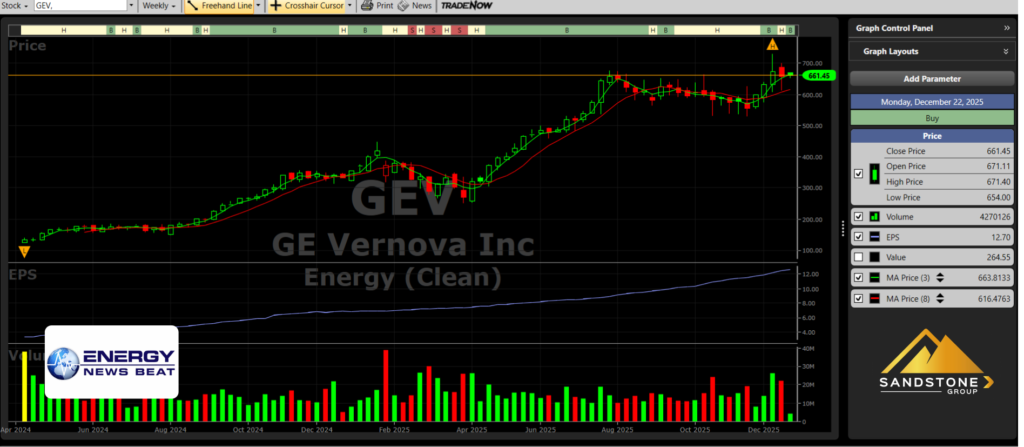
GE Vernova (GEV): A diversified player in nuclear services and SMR tech, benefiting from broader energy trends.
Key Suppliers and Fuel Providers:BWX Technologies (BWXT): Delivered the TRISO fuel for Project Pele; a core supplier for advanced fuels and components.
Standard Nuclear: Partnering with Framatome in a joint venture to produce commercial TRISO fuel at scale, aiming for 2 metric tons annually. Recent DOE contracts expand its manufacturing capacity.
Framatome: Collaborating on TRISO production, enhancing the Western nuclear supply chain.
Cameco (CCJ): A leading uranium supplier, poised to capitalize on rising demand from AI and nuclear expansions.
Tech giants like Amazon, Microsoft, and Alphabet are also investing heavily, funding SMR developers and integrating nuclear into their energy strategies.
Investment Opportunities: Promising Companies for 2026For investors eyeing the nuclear boom, several stocks stand out based on market performance, growth potential, and exposure to key trends like AI power needs and SMR advancements. Note that nuclear investments carry risks, including regulatory hurdles and commodity cycles, but the sector’s upward trajectory offers compelling opportunities.
|
Company
|
Ticker
|
Why Invest?
|
Key Strengths
|
|---|---|---|---|
|
Constellation Energy
|
CEG
|
Leading U.S. nuclear operator with AI data center tie-ins.
|
Strong revenue from existing plants; positioned for demand surge. |
|
Vistra Corp.
|
VST
|
Diversified energy firm with nuclear assets.
|
Benefits from grid resilience focus; recent performance gains. blog.valuesense.io
|
|
Cameco
|
CCJ
|
Top uranium producer.
|
Rosy outlook amid supply shortages and nuclear renaissance. |
|
NuScale Power
|
SMR
|
SMR pioneer with regulatory approvals.
|
Factory-built reactors align with market growth; investor favorite. |
|
Oklo
|
OKLO
|
Innovative SMR developer using recycled fuel.
|
Backed by tech investors; 2026 site development milestone. |
|
GE Vernova
|
GEV
|
Broad nuclear tech exposure.
|
Synergies with renewables; undervalued entry point. |
|
BWX Technologies Inc
|
BWXT
|
Electrical Equipment
|
|
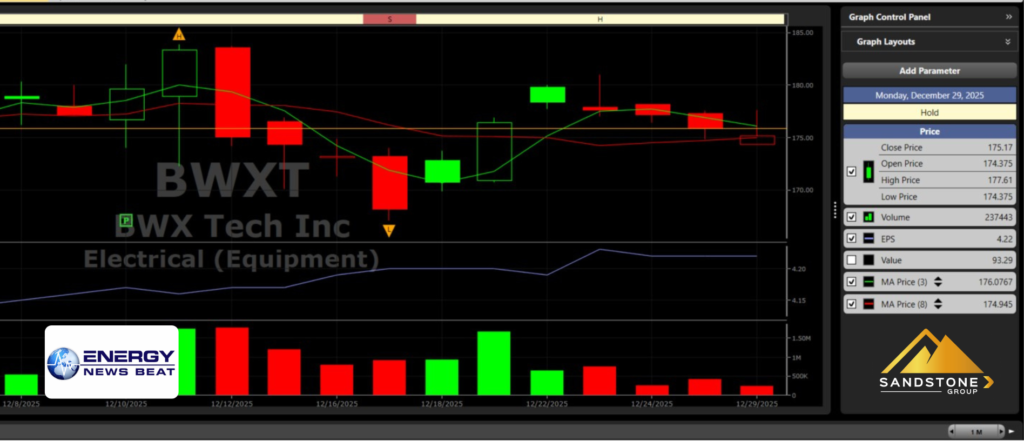
Recent dips in nuclear stocks present buying opportunities, as major projects and data center expansions drive long-term value.
Investors should monitor policy developments, such as continued DOE support, which could further accelerate the sector.As Project Pele demonstrates, the fusion of military needs and commercial innovation is propelling nuclear energy into a new era. With strong market tailwinds through 2026, this sector promises not just energy security but also substantial economic returns. The looming threat of a AI Data Center bubble impacting several markets is real. The amount of power and grid requests is ennormous, while we need to ballance the real requests vs the requests that can acctually be funded and approved through the regulatory process. Applications do not equal true demand.
Sources powermag.com, ipo.club, carboncredits.com, carboncredits.com,nei.org, marketbeat.com, nasdaq.com, nuclearbusiness-platform.com, world-nuclear-news.org,