

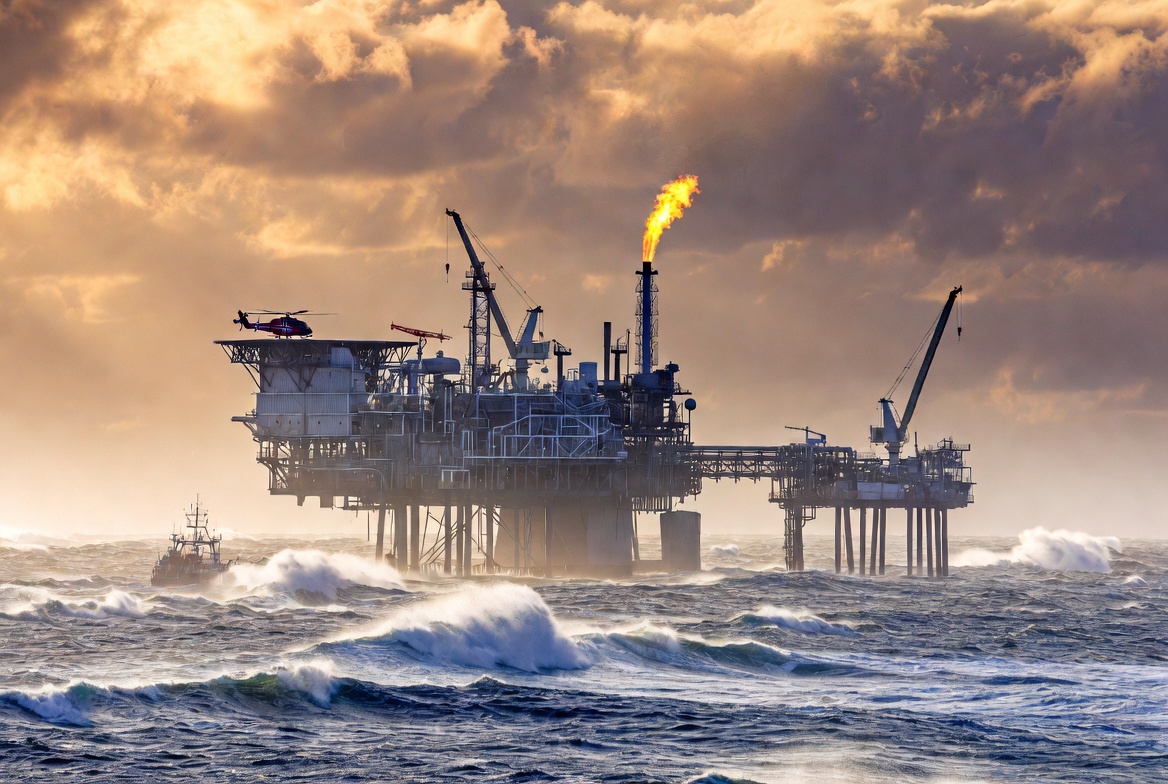
Oslo, Norway – In a significant move to bolster European energy security, Norway’s Ministry of Energy has approved the reopening of three long-idle North Sea gas fields that were shut down in 1998. The fields—Albuskjell, Vest Ekofisk, and Tommeliten Gamma—are located less than 10 km west of the giant Ekofisk complex and will resume production in 2028 under a redevelopment project led by U.S.-based ConocoPhillips and its partners.
The Previously Produced Fields (PPF) project involves an estimated investment of approximately 19 billion Norwegian kroner (around $2 billion or €1.8 billion). It includes 11 new wells and four subsea templates tied back to the existing Ekofisk infrastructure via a shared multiphase pipeline. Production is expected to continue until 2048, with first gas targeted for the fourth quarter of 2028.
ConocoPhillips estimates recoverable resources at 90–120 million barrels of oil equivalent (boe), consisting primarily of natural gas and condensate. Peak production is projected at around 36,000 boe per day (gross). While this represents a modest addition relative to Norway’s overall output, it provides a reliable, long-term boost to European supplies at a time when energy security remains a top priority.
How Much Could This Add to the Market?
Norway is Europe’s largest and most reliable supplier of pipeline natural gas. Recent annual gas production has hovered near record levels—approximately 120–124 billion cubic meters (bcm) in 2024–2025, with exports typically in the 115–122 bcm range. The PPF project’s total recoverable volume of 90–120 MMboe equates to roughly 15–20 bcm of gas equivalent over its 20-year life (using standard conversion factors where 1 MMboe of gas ≈ 0.164 bcm). On an average annual basis, this translates to about 0.75–1 bcm per year, with a peak contribution of roughly 2 bcm per year equivalent during high-output periods.
This incremental supply is small in the context of Norway’s total output (less than 1% annually on average) but carries outsized strategic value. It helps offset natural declines in mature fields, sustains plateau-level exports through the 2030s, and reinforces Norway’s role as a stable alternative to more volatile global LNG or politically sensitive supplies. The gas will flow directly into Europe’s pipeline network, primarily to Emden in Germany, while condensate (a light hydrocarbon liquid) will be shipped to Teesside in the UK.
Norway’s Domestic Use vs. Exports
Norway produces vast quantities of natural gas but consumes almost none domestically. Domestic gas consumption is minimal—typically 4–6 bcm per year—representing less than 5% of production. The vast majority (95%+) is exported, primarily via an 8,800-km subsea pipeline network, with a small share (about 5%) shipped as LNG from the Melkøya facility in Hammerfest.
This export-heavy model is enabled by Norway’s abundant hydropower, which dominates its domestic electricity mix and keeps gas demand low. In 2025, Norway exported around 122 billion Sm³ of gas (not normalized), making it a cornerstone of European energy security and accounting for roughly 30% of the continent’s natural gas imports.
Who Does Norway Export Energy To?
Norwegian gas flows overwhelmingly to European markets via pipelines. Key destinations in recent years include:
Germany (including volumes routed to Denmark): The largest recipient, receiving ~56–58 bcm in 2025.
United Kingdom: ~24–30 bcm annually.
France: ~14–16 bcm.
Belgium: ~15–16 bcm.
Other routes: Volumes also reach the Netherlands, Poland (via Baltic Pipe), and beyond through onward transmission.
These deliveries cover a substantial portion of Europe’s total energy needs and have been critical since Russia’s invasion of Ukraine in 2022, when Norway stepped up to help replace lost Russian supplies.
The reopening of these fields underscores Norway’s commitment to maintaining strong export volumes amid Europe’s ongoing energy transition challenges. As Prime Minister Jonas Gahr Støre has emphasized, the oil and gas sector remains vital for jobs, welfare, and Europe’s energy needs.
This project also coincides with Norway’s APA 2026 licensing round, which expands exploration opportunities and signals continued long-term investment in the Norwegian Continental Shelf.
Appendix: Sources and Links
- Norwegian Energy Ministry / ConocoPhillips announcements (via multiple outlets, May 5–6, 2026): Details on approval, fields, investment, timeline, and exports.
- Financial Times (original reference): “Norway to reopen three gasfields closed down last century” – https://www.ft.com/content/cd4c728d-ef3b-4f17-bca5-414703974ad6 (paywalled; content mirrored in public reporting).
- ConocoPhillips official release: Submitted Plans for Development and Operation (February 2026) – https://www.conocophillips.no/news-media/story/submitted-plans-for-development-and-operation-for-the-previously-produced-fields-project-in-the-greater-ekofisk-area/
- Norwegian Petroleum Directorate / norskpetroleum.no: Exports of Norwegian oil and gas – https://www.norskpetroleum.no/en/production-and-exports/exports-of-oil-and-gas/
- Enerdata / Offshore Engineer / World Oil: Production estimates and project details (February–May 2026 reporting).
- Reuters, Strait Times, Channels Television, and Gassco data: 2025 export figures and market context (January–May 2026).
- IEA and EIA historical data: Domestic consumption and long-term production trends.
All figures are based on the latest available public data as of May 2026. Production forecasts are subject to operational and market conditions.