


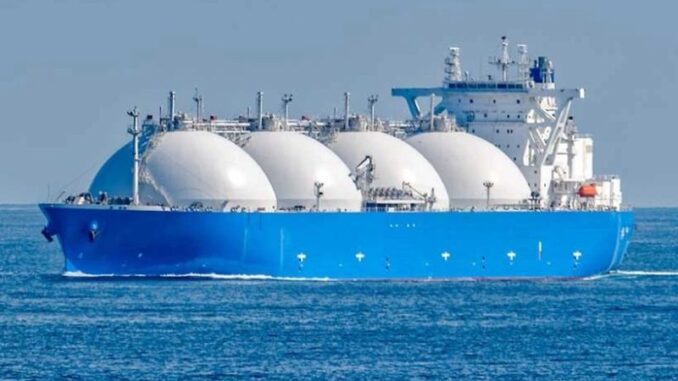
The global LNG market is in full turmoil following the March 2026 escalation in the Middle East. Saudi Arabia’s Ras Tanura refinery — the kingdom’s largest domestic facility at 550,000 barrels per day and a critical export terminal — remains shut after drone strikes, part of a broader wave of precautionary closures across the Gulf.
QatarEnergy, the world’s top LNG producer, has also halted output at Ras Laffan and Mesaieed following direct attacks, while tanker traffic through the Strait of Hormuz has ground to a near-standstill. The result: a sudden supply shock that has erased the expected 2026 LNG oversupply, sent Asian and European spot prices soaring, and thrust U.S. producers into the spotlight as the most reliable alternative supplier.
U.S. LNG Exports: Record Volumes and Rising
U.S. LNG exports continue to set new benchmarks, underscoring America’s role as the world’s largest and most flexible supplier. The U.S. shipped roughly one-third of global LNG in 2025 and is on track for even stronger performance this year. The Energy Information Administration (EIA) now forecasts average U.S. LNG exports of 16.7 Bcf/d in 2026, up from 15.1 Bcf/d last year.
In the most recent reported week, 36 LNG vessels departed U.S. terminals with a combined capacity of approximately 133 Bcf. Feed-gas flows to export plants have repeatedly approached or exceeded 18–19 Bcf/d. Europe remains the primary destination (68 % of 2025 volumes), but Asia-bound shipments jumped nearly 20 % year-over-year in Q1 2026, with an estimated 3.75 million metric tons already loaded for Asian buyers.
Key terminals driving the surge include Cheniere’s Sabine Pass and Corpus Christi (Stage 3 trains ramping through 2026), Venture Global’s Plaquemines (now operating), and upcoming contributions from Golden Pass LNG.
Global Tanker Traffic: Congestion, Rerouting, and Soaring Rates
The Middle East disruptions have dramatically altered LNG shipping dynamics. Hundreds of tankers are anchored or rerouted outside the Strait of Hormuz, creating bottlenecks and forcing longer voyages. Spot charter rates for modern two-stroke LNG carriers have spiked sharply — reports cite daily rates climbing into the $200,000–$320,000 range on key Atlantic and Pacific routes, a surge of 40–650 % from pre-crisis levels in some segments.
Even as the broader 2026 supply outlook had pointed to softer rates, the crisis has flipped the script: utilization is high, port congestion is worsening, and buyers outside the Gulf are scrambling for non-Middle East tonnage. U.S. Gulf loadings are benefiting, with vessels prioritizing shorter, safer routes to Europe and Asia.
New Applications & Additions to U.S. LNG Facilities
U.S. regulators are fast-tracking capacity growth to meet the moment. On March 13, the Department of Energy approved an immediate 13 % increase at Venture Global’s Plaquemines terminal (+0.45 Bcf/d), lifting its authorized non-FTA export volume to 3.85 Bcf/d.
Venture Global has also filed a major FERC application for the Plaquemines Expansion Project (up to ~18.6 million tonnes per annum additional capacity). Cheniere continues Corpus Christi Stage 3 commissioning, while Golden Pass LNG is expected to ship its first cargo in early 2026. Overall, U.S. liquefaction capacity is projected to nearly double by 2031, with multiple brownfield uprates already moving through permitting without new greenfield construction.
Russia Shifting More LNG to Asia
Russia is accelerating its pivot away from Europe. Deputy Prime Minister Alexander Novak confirmed active discussions to redirect LNG cargoes from the EU to Asia-Pacific markets (China, India, Thailand, Philippines) ahead of looming European import bans. Russian LNG exports rose 5.8 % year-over-year in January–February 2026 to 5.5 million tonnes, with Arctic LNG 2 contributing fresh volumes. While Yamal LNG cargoes remain largely Europe-bound for now, the strategic redirection is underway and expected to intensify through 2026–2027.
This shift helps fill Asian gaps created by the Qatar outage but also highlights the growing competition U.S. suppliers face on longer routes.
Alaska LNG Receives a Major Boost
The Middle East conflict has given the long-gestating Alaska LNG project fresh momentum. Developer Glenfarne Group (partnered with the state-backed Alaska Gasline Development Corp.) is targeting a pipeline final investment decision (FID) in 2026 and an export terminal FID in 2027, with first shipments targeted for 2031. Early construction on the 739-mile pipeline — including camps, roads, and bridge crossings — is scheduled to begin as soon as mid-April 2026.
Asian buyers, desperate to diversify away from Middle East risk, are showing heightened interest in the 20 million tonne-per-annum project. The $44 billion development now looks far more viable as a secure, non-Gulf supply source.
Companies U.S. Investors Should Watch
The combination of record U.S. exports, Middle East supply shocks, and new capacity additions creates a favorable backdrop for several publicly traded players:Cheniere Energy (NYSE: LNG) — The undisputed U.S. LNG leader with ~50 % of domestic capacity, aggressive expansion (Corpus Christi Stage 3), and strong contract backlog. Analysts highlight robust 2026 EBITDA guidance and dividend growth.
Archrock (NYSE: AROC) — Pure-play compression services provider riding the wave of higher feed-gas demand; positioned for margin expansion as export volumes climb.
ExxonMobil (NYSE: XOM) — Significant LNG exposure via Golden Pass and global portfolio; benefits from both export growth and upstream integration.
EQT Corp. (NYSE: EQT) and midstream names such as Williams — Upstream producers and pipeline operators supplying the LNG boom will see sustained demand.
Bottom line: The Saudi shutdown and broader Gulf disruptions have turned the 2026 LNG market from “oversupplied” to “tight and volatile” overnight. U.S. exporters are uniquely positioned to capture the upside, with new capacity approvals, record shipments, and Asia’s diversification push creating multi-year tailwinds. Investors focused on the LNG value chain — from producers to infrastructure and services — stand to benefit as America fills the global supply gap.Stay tuned to Energy News Beat for weekly export updates and terminal commissioning timelines. The next several weeks will be critical as markets watch for Qatar and Saudi restart signals — or further escalation.
Sources: reuters.com, 247wallst.com, eia.gov
Get your CEO on the #1 Energy Podcast in the United States: https://sandstoneassetmgmt.com/media/
Is oil and gas right for your portfolio? https://energynewsbeat.co/invest/




Be the first to comment