Weekly Daily Standup Top Stories
Mike Wirth, Chevron CEO, Believes in the Future of Oil, Gas, and Chevron
In a landscape where energy markets are grappling with uncertainties around oversupply and the push toward renewables, Chevron CEO Mike Wirth stands firm in his optimism for the oil and gas sector. Speaking recently, Wirth […]
Sweden’s Pension Funds Face Eye-Watering Losses After Investing Heavily in Net Zero Projects
In a stark warning to global investors chasing the green dream, Sweden’s pension funds are reeling from massive financial setbacks tied to ambitious net-zero initiatives. Once hailed as pioneers in sustainable investing, these funds poured […]
Enbridge Updating Expansion Plans to its Mainline and Flanagan South Systems to Export Canadian Oil
In a significant move for North America’s energy landscape, Enbridge Inc. has announced the final investment decision on its Mainline Optimization Phase 1 (MLO1) project, greenlighting a $1.4 billion expansion to enhance the flow of […]
$1 Billion Loan from the DOE to Restart Three Mile Island: A Boost for American Energy Security
In a landmark move to revitalize America’s nuclear energy sector, the U.S. Department of Energy (DOE) has finalized a $1 billion loan to Constellation Energy Generation, LLC, paving the way for the restart of the […]
China Sets the Floor and Ceiling for Global Oil Prices
In the intricate dance of global energy markets, China has emerged as a pivotal player, effectively establishing both a floor and a ceiling for crude oil prices through its strategic imports and stockpiling activities. As […]
Why China and India Continue Buying Russian Oil?
ENB Pub Note: This article is from The Merchants News Substack by Giacomo Prandelli, and I had an outstanding conversation with him while he was in Switzerland. I love talking to people from around the […]
Highlights of the Podcast
00:00 – Intro
00:22 – Mike Wirth, Chevron CEO, Believes in the Future of Oil, Gas, and Chevron
03:46 – Sweden’s Pension Funds Face Eye-Watering Losses After Investing Heavily in Net Zero Projects
07:17 – Enbridge Updating Expansion Plans to its Mainline and Flanagan South Systems to Export Canadian Oil
11:01 – $1 Billion Loan from the DOE to Restart Three Mile Island: A Boost for American Energy Security
12:49 – China Sets the Floor and Ceiling for Global Oil Prices
15:45 – Why China and India Continue Buying Russian Oil?
18:25 – Outro
Need Power For Your Data Center, Hospital, or Business?
– Get in Contact With The Show –
Video Transcription edited for grammar. We disavow any errors unless they make us look better or smarter.
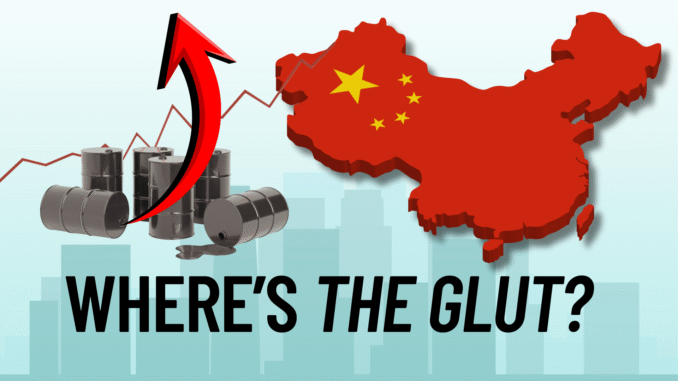
Stuart Turley: [00:00:00] Where’s the glut? There is no glut with all the oil demand going on around the world. We cover China Sets the Floor and Ceiling for Global Oil Prices. That and more on the weekend edition, the weekly update. Have a great day. [00:00:13][13.7]
Stuart Turley: [00:00:22] Mike Wirth, Chevron CEO, believes in the future of oil, gas, and Chevron in a landscape where energy markets are grappling with uncertainties around oversupply, glut oil on the water, and the push toward renewables. Chevron CEO, Mike Wirth stands alone in his optimism for the oil and gas sector. Michael, this is out of the park huge. Speaking recently, he dismissed fears of a glooming glut in oil supply, emphasizing a balanced outlook that aligns more closely with OPEC’s projections than those of the IEA. Imagine that. When you take a look at brushing off oil concerns, he actually is increasing his capex, and they’re reducing their budgets by laying off middle management. So when you listen to this, Michael, modest cap et cuts signal confidence in demand. Chevron’s 2025 CapEx plans further illustrates Worth’s bullish outlook. The company announced a reduction of 1 billion from its previous guidance from a new annual range of 18 billion to 21 billion through 2030. This is very important. When you take a look at AI, AI is actually wiping out middle management. Now, is it gonna really hurt their production? No, anybody that can turn a wrench is still gonna be employed. Ruth is focusing on internal efficiency, targeting three billion to four billion in structural cost reductions by twenty twenty six. It’s pretty important. [00:01:57][95.6]
Michael Tanner: [00:01:58] Yeah, I I think at a high level, I mean, what do we expect the CEO of Chevron to say? He’s not gonna say oil’s dead. He’s got a fiduciary responsibility to the shareholders to make sure that at least the sentiment around his company is good. So I’m not too and I’m not reading too much into oh, Mike Worth thinks there’s no oil. Well, of course he’s gonna say that. His PR guy would literally shoot him metaphorically, if he came out and said there’s an oil glut, because that just goes against the business. Now I do find what what interesting here. What are they doing? You just mentioned that they’re cutting back about a billion dollars on their guidance. What does that mean? It means they may not be as bullish as they say they are, or they feel like they can be more efficient with every dollar that they spend. And specifically, I think you talked a little bit about what’s going on with AI. I think it’s the fact that they are trying to pivot and and they came out and said this. They’re trying to become an a and really work towards an energy demand company versus an oil company, right? I think we’ll be extremely interesting. And I think you will see oil and gas companies get into the data center space. Well, that whether it is they actually start, you know, investing in data centers themselves and then supplying their power to that, or they just become a power generation company. I mean, to lock up all these deals. I think it’s really fascinating. Do I think Chevron’s in a in an interesting position to go forward? Yeah, I think they’re in a fine position to go forward. They own some very great acreage positions. It’s you know, some of the acreage that money can’t buy. It’s one of the reasons why they swooped up Hess. Now all of a sudden they’ve got access to the insane profits coming out of Guyana, and they don’t really have to do anything because it’s just, you know, they’re not the operator. They just get a hey, we’re drilling another well. Great, where do we send the money? Truly how it works. And so I I think from this standpoint, it you know, do I think Chevron is a is absolutely gonna crush it over the next five to ten years? No. But they’re gonna be a steady dividend and you can do a lot worse investing in Chevron than you could in some of these other boomer bust stocks. [00:03:45][106.6]
Stuart Turley: [00:03:45] Oh yeah. Sweden’s pension fund faces an eye-watering loss after heavily investing in net zero projects. Along the net zero theme, since I’m on a roll, in a stark warning to global investors chasing the green dream, Sweden’s pension funds are reeling from massive financial setbacks tied to ambitious net zero initiatives, once held as pioneers in sustainable investing. Sustainable investing. I love that one. These funds poured billions into high-risk clean energy ventures only to watch them crumble and market realities. This debacle highlights the peril of over reliance governance, subsidies and unproven technologies. Michael, you ask, how much did they lose? That’s a great question, Michael. Thank you for asking that. Let’s go to this one. They lost AP2, the the fund at invested 1.2% 46 billion Swedish kroner or 15017 million pounds in the company, much of which is now wiped out. Similarly, the AMF pension invested 1.9 billion kroner or 153 million at risk at 2% in North Volt, representing a significant to its portfolio. Sterga also focused on green steel production. You gotta be kidding me. Green steel production does not work using Michael. Wait for it, hydrogen instead of coal. That is not fiscally possible. I mean, it is just absolutely so you take a look at the two different paths that they could have done. They they could have either gone down and invested in Chevron, Exxon, or in Bridge, which we’re gonna talk about on the next story here. And you sit back and take a look at it, they could have made seven percent to ten percent on their money. Let’s see, losing billions, making seven to ten percent. I went to Oklahoma State, but the math does not math up. [00:05:50][125.4]
Michael Tanner: [00:05:51] Yeah, I think you’re absolutely right on the math, not mathing here. I again, I think people made all of these net zero decisions to without really thinking about the I don’t want to say the consequences, but thinking about the profile. If you’re making an investment, and you know, we talk about this with people when it comes to investing in oil and gas projects all the time. If you’re investing solely based on a tax deduction, well, don’t be surprised when revenue doesn’t eventually come your way because they designed the product just for tax benefits. So it’s a little bit like this if you’re they’re making all these investments because oh, it’s great. Oh, there’s great tax benefits for the developers, and oh, there’s these theoretical revenues that may or may not happen. [00:06:27][36.7]
Stuart Turley: [00:06:28] Whoops. Right. Oops. Rutro. Hey, let me point out nuclear. Nuclear is oversold right now. And when you take a look at nuclear, we I would not want to invest in too many of the different companies. I am looking at, as a day trader, looking at the nuclear companies that have the potential of already licensed and micro nuclear reactors that can be mass produced. And I got my eye on a few of those. And the reason is because they’re going to have reoccurring revenue faster than the big ones putting in the Westinghouses and all the other big nuclear plants. You’re 10 years away from getting any money coming back into those. And I think those are oversold. But you look at the micro nuclear reactors, I think that if they’ve got a plant and they’re going to be able to mass produce them, those are the ones to go look for. [00:07:17][48.8]
[00:07:17] Enbridge updating expansion plans to its mainline Flanagan South systems to export Canadian oil. Love me some Canadian oil in it. And a significant move for North America’s energy landscape. Inbridge has announced the final investment decision of its mainline optimization phase, ML01 for Oakies, a project green lighting a 1.4 billion expansion to enhance the flow of Canadian crude to U.S. Refining market. This is huge. Michael, you ask, how much oil, Stu? Hey, total capacity boost from ML01. Thanks for asking that, Michael. Amounts to 250,000 barrels per day with a new capacity is expected to come online in 2027. This is huge. The implications for investors more money for midstream. [00:08:08][50.8]
Michael Tanner: [00:08:09] Yeah, no, I think what you’re seeing with with the midstream space is there’s an explosion of what’s going on. So I I completely, completely get it. And I I again I think it’s fascinating. As always guys, the news and analysis you just heard. Is brought to you by world’s greatest website, www.energynewsbeat.com. Stu and the team do a tremendous job making sure that website stays up to speed. Everything you need to know to be the tip of the spear when it comes to the energy and the oil and gas business. Go ahead and hit the links in the description below for all links to the timestamps, links to articles, and specifically subscribe to the show on YouTube,subscribe to this show on Apple iTunes. Give us a follow there. Subscribe to our show on Spotify. Please leave comments there and subscribe to our sub stack, www.energynewsbeat.substack.com. That’s probably the best place to support the show. Stu does a great job of releasing two to three articles a week that really encompass the big themes that are going on. We also drop all of our podcasts there, which give a little bit of a breakdown. We just had a great, great podcast. So I highly, highly recommend everybody subscribe to the energy newsbeat.sub stack.com We’d also like to thank friends of the show Reese Energy Consulting for supporting the show guys. Reese Energy Consulting is the foremost midstream expert. Guys, if you had at all. Are dealing with issues in the midstream space, whether you’re an upstream company and need help with your first purchaser’s contract or renegotiating your gas contracts or figuring out where you’re gonna tie in your next pad because you’ve got multiple different options and you’re trying to break it all down. Reese Energy Consulting can help. If you’re in the mainstream space, I need an extra pair of hands, need some permitting or regulation help, or need some red team analysis on a final investment decision, guys. They have the team that can help you check out ReeseEnergyConsulting.com They have clients everywhere and all throughout the country from two people in a garage all the way up to the largest publicly traded companies in the world. So if you’re wondering, are you a good fit for them? The answer is yes. ReeseEnergyConsulting.com And finally guys, investinoil.energynewsbeat.com We are coming up on the end of the year. And I promise you guys, you do not wanna be paying money to Uncle Sam. You wanna keep as much money in your pocket. You wanna diversify your portfolio a little bit and you want to get some dividends. You can do that by investing in oil and gas. Check out investinoil.energynewsbeat.com Fill out our portfolio survey and our tax calculator. And guess what, you guys, you guys are gonna get and get a nice ebook that tells you here’s what you should look for when you invest in oil and gas. And also figure out what your tax burden is and figure out how much you might save relative to your tax burn if you did invest in Oil and Gas, guys. We practice what we preach here, guys, we do this stuff ourselves. Investin oil.energy newsbeat .com Don’t give your money to Uncle Sam. Figure out and find out if oil and gas investing is for you. Depending on if you qualify, we will, again, send you all that information and we may or may not point you in the right direction. Again, investin oil.energynewsbeat.com.[00:10:59][169.8]
Stuart Turley: [00:11:01] A billion dollar loan from the DOE to restart Three Mile Island, a boost for American energy security and a landmark move to revitalize America’s nuclear energy sector, the US Department of Energy DOE has finalized a billion dollar constellation energy generation LLC, paving the way for a restart of the Crane Clean Energy Center, formerly known as Three Mile Island Unit Number One. This Pennsylvania based nuclear facility, which ceased operations in 2019, is set to come back online, delivering reliable carbon-free power to the grid, underscoring the Trump’s administration to come commitment on American nuclear renaissance. Way to go, Secretary Chris Wright. I’ve got the video in from Rapid Response 47 from X on there. And I this is a smart loan. This is a loan. It is not a subsidy. I love the fact that if we can give a low interest rate to them so they can get it, and it’s 600 well-paying jobs in Pennsylvania, way to go from construction and a maintenance and everything else. This is phenomenal. The power generation capacity fueling 800,000 homes at full operation. The crane clean energy center will be generate 835 megawatts of electricity, 800,000 homes. Let that one sink in here for a minute. That one’s huge. Anyway, well done, Secretary Wright. Being a loan and not a handout, I’m all in. [00:12:48][106.3]
[00:12:49] China sets the floor and the ceiling for global oil prices. What does this mean? In the intricate dance of global energy markets, China has emerged as a key player effectively establishing both a floor and a ceiling for crude prices through its strategic imports, stockpiling activities. This is huge. And I love the way that this article phrases this out. Stabilizing influence is particularly evident in 2025, where robust stockpiling help moderate volatility and geopolitical tensions as shifting OPEC production. Now, for your listeners of the podcast, you’ve heard us, Michael and I talk about OPEC Plus has been raising the quota, and the markets responded and said, Oh, it’s a glut, it’s a glut, it’s not a glut. They’re still stockpiling and putting this in there, but how much of this is actually China doing load balancing, if you would, for the market? And when you take a look at sanctions don’t work, all sanctions do is devalue the US petrodollar. Yesterday’s announcement at the White House was critical with Saudi Arabia and their trillion dollar investment in the United States energy is huge. Anyway, this is absolutely important. And in this article, when I wrote the article, I also put in here India’s supportive influencer as a stabilizer. As long as India and China have good oil demand and it remains consistent, we will see higher prices. And I want to give my buddy over there, Josh Young at Bison Interests a shout out. Here is the mug that he has. He used my thing that I had created on X. Anyway, a great coffee mug, bison interests. Anyway, a great job there. And when you take a look at the global implications and outlook, China and India represent a real formidable duo in the oil market with their combined imports, 16 million barrels per day import between the two of them. That is significant. And I think as long as India and China can outweigh the deindustrialization of the UK and the EU, we will see very increased oil prices because we are short very much a lot of money to meet normal decline curves. So the old theory of supply demand is going to be coming. Back into play, and the oil markets better just get ready for it. [00:15:45][176.0]
[00:15:45] Why China and India continue buying Russian oil? This article’s from The Merchants News Stack by Jack Pandrelli. And I had a great conversation with Jack. Look forward to getting him on the podcast. He was in Switzerland, and he has a great substack on the Merchants News Substack. Go out and subscribe there. Right now, half of Russia’s oil tankers are sailing without declared destinations. India refiners just slashed their Russian crude imports by two thirds. Chinese state giants paused their direct purchases from Rosenfett and Luke Oil. Every headline screams sanctions are biting, but the oil is still moving but differently. If you’re betting on Russian barrels disappearing, you’re about to lose money on the wrong trade entirely. Because here the real story is about what’s being put built. Plain sight while everyone watches tankered data. He goes in and starts going through it on paper. It looks like textbook sanctioned success. When you look at the tanker data, everything else changes. Half of Russia’s crude tankers are now sailing dark with no destination, ship to ship transfers in international waters, rerouting through intermediaries you’ve never heard of. The dark fleet is a living organism that is alive and well with a ballpark 1,500 tankers, and they will be used in order to go through this. And there’s a great chart in here rent India’s crude imports by country of origin, India this year, 45% Russian crude. And that’s after the Biden administration said, Hey, would you mind India buying all this oil to help out the market? And sure enough, they did. And then we go around and sanction it. This is worse than my ex-wife. But when you sit back and sit and take a look at this, he puts out some great points in here. And when you take a look at this, well done. Washington condemns the crude. But yet it buys the jet fuel. This absolutely cracked me up when I saw this in here because I wrote the story on the jet fuel coming in from India that was most likely from a Russian tanker that was refined in India and then shipped to California. Well done. And I love Jack. He is a good dude in Switzerland, and his substack is the merchant news. I’ve got the link in there and have a great time. [00:15:45][0.0][929.7]