In the volatile world of energy markets, oil prices have surged in early February 2026, driven by escalating tensions and conflicting signals surrounding U.S.-Iran nuclear negotiations. West Texas Intermediate (WTI) crude climbed above $65 per barrel, while Brent crude topped $69, marking a three-day advance and the highest levels since September 2025.
This rally reflects heightened geopolitical risks, with traders pricing in the potential for supply disruptions from Iran, a key OPEC producer outputting around 3.3 million barrels per day (bpd).
Yet, amid the uncertainty, broader market forecasts point to a softer outlook for oil prices over the year, underscoring the delicate balance between short-term fears and long-term fundamentals.
Current Outlook for Oil Prices
As of February 4, 2026, oil prices are experiencing upward momentum, with WTI up more than 3.5% in recent sessions amid reports of stalled U.S.-Iran talks.
Brent has similarly advanced, trading above $67-69, fueled by a perceived “war premium” of around $3-4 per barrel due to U.S. threats of military action.
However, analysts anticipate this premium could fade if diplomacy prevails, leading to a downward trajectory for averages in 2026.
The U.S. Energy Information Administration (EIA) forecasts Brent to average $56 per barrel in 2026, a 19% decline from 2025 levels, with WTI at $52.
This bearish view stems from expected global supply growth outpacing demand, resulting in inventory builds. The International Energy Agency (IEA) projects demand growth at 0.93 million bpd, while supply could rise by 2.5 million bpd if OPEC+ maintains current policies.
Reuters polls echo this, predicting Brent at $61.27 and WTI at $58.15, though these were pre-U.S. strikes on Venezuela and recent OPEC meetings.
In a worst-case scenario of full Iranian export disruption—an unlikely but monitored risk—BloombergNEF estimates Brent could spike to $91 by late 2026.
For now, prices oscillate in a $55-65 range, with technical resistance at $66-70 and support at $60-62.
|
Forecast Source
|
Brent Average ($/bbl)
|
WTI Average ($/bbl)
|
Key Assumptions
|
|---|---|---|---|
|
EIA
|
56
|
52
|
Supply surplus, inventory builds
|
|
Reuters Poll
|
61.27
|
58.15
|
Ample supply, weak demand growth
|
|
BloombergNEF
|
55 (base); up to 91 (disruption)
|
N/A
|
No/low Iran disruption
|
|
IEA
|
N/A
|
N/A
|
Demand +0.93 mbpd; supply +2.5 mbpd
|
Updates on Iran Negotiations from the White House
The White House has confirmed that nuclear talks with Iran will proceed on Friday, February 6, in Muscat, Oman, shifting from an initial Istanbul venue amid Iranian pushback.
U.S. Special Envoy Steve Witkoff will lead the delegation, facing off against Iranian Foreign Minister Abbas Araghchi. President Trump has ramped up rhetoric, warning Iran’s Supreme Leader to be “very worried” and emphasizing military options remain on the table if no deal is reached.
Trump highlighted U.S. warships en route to the region, stating, “If we can work something out, that would be great; if we can’t, probably bad things would happen.”
The administration demands a comprehensive agreement beyond nuclear issues, including curbs on Iran’s ballistic missiles, support for proxy groups like Hezbollah, and human rights concerns tied to recent protests.
Secretary of State Marco Rubio reiterated that any deal must address these “minimum requirements,” expressing skepticism about success.
White House officials note that while diplomacy is prioritized, a reduced U.S. military presence is not a precondition, countering Iranian demands.
Reports from Iran on the Negotiations
From Tehran’s perspective, negotiations are conditional and focused strictly on the nuclear program, rejecting broader U.S. demands.
President Masoud Pezeshkian has instructed Araghchi to pursue “fair and equitable” talks, signaling optimism if limited to nuclear matters.
Iran pushed for the Oman venue and bilateral format to exclude regional mediators like Saudi Arabia and Egypt, aiming to sideline discussions on missiles and proxies.
Unnamed Iranian officials have floated concessions, including zero uranium enrichment under a regional consortium and handing over 400 kilograms of highly enriched uranium (HEU) to Russia, reminiscent of the 2015 JCPOA.
However, senior figures like Supreme National Security Council Deputy Ali Bagheri deny plans to transfer HEU abroad, and enrichment remains a “red line” per Supreme Leader Ali Khamenei.
Mediators from Qatar, Turkey, and Egypt propose a framework where Iran halts enrichment for three years and transfers stockpiles, but Tehran insists on dignity and expediency.
What Oil Traders Are Watching
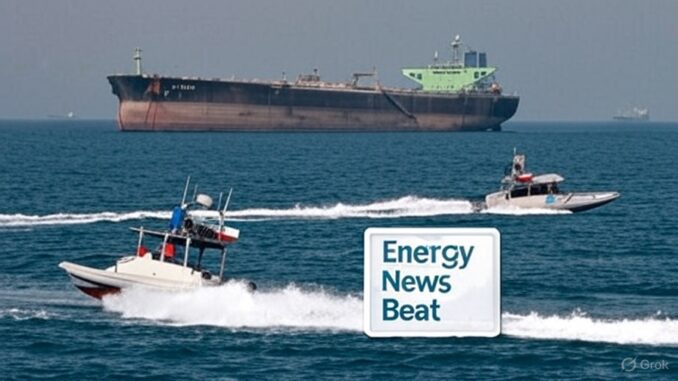
Traders are laser-focused on the Friday talks’ outcome, as any breakdown could escalate tensions, disrupt Iranian exports, or close key routes like the Strait of Hormuz.
Recent incidents, including a U.S.-shot Iranian drone and gunboat confrontations, have amplified supply worries.
Broader factors include OPEC+ production policies, U.S. shale output (forecast flat at 13.6 million bpd in 2026 before declining), and demand from China and India.
Volatility is expected to rise, with the VIX historically up 5.5% in February.
Inflows into oil ETFs, like WisdomTree’s WTI product seeing $200 million recently, signal bets on sustained rallies.
Traders also eye Venezuela’s instability post-U.S. strike and global inventory data for signs of oversupply.
In summary, while short-term gains persist amid Iran uncertainty, the 2026 outlook favors moderation unless disruptions materialize. As negotiations unfold, the energy sector remains on edge, with profound implications for global supply chains and economic stability.
Get your CEO on the podcast: https://sandstoneassetmgmt.com/media/
Is oil and gas right for your portfolio? https://sandstoneassetmgmt.com/invest-in-oil-and-gas/