As winter storms continue to batter the United States, the vulnerabilities of an energy grid increasingly dependent on intermittent renewables like wind and solar are becoming painfully clear. Recent cold blasts have not only tested the limits of power demand but have also highlighted how policies favoring renewables are driving up costs for consumers while compromising reliability. With Arctic weather triggering record natural gas withdrawals and forcing traditional power sources to pick up the slack, it’s time to rethink how we price wind, solar, and storage to ensure grid resiliency. Drawing from the latest data and assessments, this article explores the real-world impacts of this imbalance and calls for a rebalanced approach that prioritizes affordability and stability.
The Winter Storm Reality Check: Renewables Falter When Needed Most
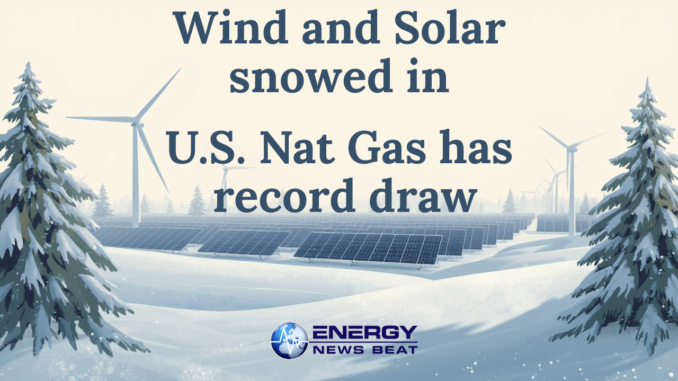
Winter Storm Fern, which swept across the U.S. in January 2026, exposed the shortcomings of renewables during extreme cold. In regions like the Midwest (MISO) and Texas (ERCOT), wind generation operated at just 7-16% of its potential output during peak demand periods, while solar managed only 25%.
This underperformance left significant supply gaps, forcing coal plants to ramp up production by a staggering 31% compared to the previous week to keep the lights on.
Meanwhile, an Arctic blast led to the largest-ever U.S. natural gas storage withdrawal of 360 billion cubic feet in the week ending January 30, 2026, as heating demand surged and production was disrupted.
Natural gas, a reliable baseload fuel, stepped in to meet the shortfall, underscoring its critical role in maintaining grid stability during harsh weather.These events aren’t isolated. The North American Electric Reliability Corporation (NERC) has repeatedly warned that over half of America faces elevated risks of blackouts in both summer and winter due to rising electricity demand, premature coal plant retirements, and a shift toward weather-dependent resources.
Policies that subsidize wind and solar while accelerating the shutdown of coal and nuclear plants have created a fragile system. For instance, in New England during Fern, petroleum—typically a minor player—became a primary energy source alongside natural gas as demand spiked.
This reliance on fossil fuels during crises reveals the myth of a seamless transition to renewables without adequate backups.
January 2026 Energy Mix: Fossil Fuels and Nuclear Dominate Amid Cold Snaps
Looking at the U.S. grid generation for January 2026, the data paints a clear picture of continued dependence on traditional sources. While full monthly figures from the U.S. Energy Information Administration (EIA) are still emerging, recent trends and forecasts indicate that coal, natural gas, and nuclear accounted for the bulk of electricity production during the cold months. In the week of Winter Storm Fern, coal-fired generation alone surged 31% week-over-week, compensating for renewables’ shortfalls.
Broader EIA forecasts for 2026 show natural gas holding steady at around 1,696 billion kilowatthours (BkWh) annually, representing 39% of total generation, while coal contributes about 16% and nuclear 18%.
These dispatchable sources—capable of ramping up on demand—made up roughly 73% of the energy mix, even as renewables like wind and solar grew to about 19% combined in recent months.
In winter, when solar output dips due to shorter days and wind can stall in cold, calm conditions, this reliance intensifies. For the first 11 months of 2025 (the latest detailed data available), renewables provided 25.7% of U.S. electricity, but fossil fuels and nuclear dominated during peak winter demands.
|
Energy Source
|
Share of U.S. Generation (2026 Forecast)
|
Role in January 2026 Cold Snaps
|
|---|---|---|
|
Natural Gas
|
39%
|
Primary backup for heating and power surges; record storage withdrawals.
|
|
Coal
|
16%
|
Output increased 31% during Fern to fill renewable gaps.
|
|
Nuclear
|
18%
|
Steady baseload, unaffected by weather.
|
|
Wind + Solar
|
19% (combined)
|
Underperformed at 7-25% potential; minimal contribution in extreme cold.
|
|
Other Renewables (Hydro, etc.)
|
6-7%
|
Stable but limited by seasonal factors.
|
This mix highlights a key issue: while renewables are expanding rapidly—solar is projected to grow 21% in 2026— they fail to deliver when reliability matters most.
Demand from data centers is expected to boost peak loads by 224 GW in summer and 245 GW in winter by 2030, further straining the grid without more resilient sources.
Hidden Costs: Natural Gas Turbines Bear the Brunt, Consumers Foot the Bill
The integration of wind and solar isn’t just unreliable—it’s expensive. As per NERC’s 2025 Long-Term Reliability Assessment, adding intermittent renewables forces natural gas turbines to cycle frequently, starting and stopping to balance the grid.
Designed for steady operation, these turbines now face hundreds of starts per year, leading to thermal stress, corrosion, and doubled failure rates in older units.
In high-penetration areas like the Western Interconnection, this “deeper load following” accelerates aging and hikes maintenance costs significantly.
Crucially, these expenses aren’t shouldered by wind or solar operators; instead, they’re passed directly to consumers through higher energy bills.
Tighter supplies from resource shortfalls and plant retirements push wholesale prices up, exacerbating affordability issues. NERC notes that variable renewables amplify winter supply gaps, with solar performing poorly in short days and wind inconsistently during cold snaps, potentially leading to blackouts as early as 2026 winters.
Rebalancing Pricing for a Resilient Grid
To address this, we must reprice wind, solar, and storage to account for their impact on reliability and resiliency. Current policies allow renewables to “stand down” reliable generators without compensating for the added costs, creating economic distortions.
NERC recommends new pricing programs that charge these sources for the resilience they rely on, such as backup from gas and coal.
This could include capacity payments adjusted for actual performance during extremes or fees for cycling-induced maintenance.
Critics of energy policy, including those highlighting bipartisan subsidies for renewables, argue that mandating carbon-free goals in states like Colorado and Michigan endangers grids.
Rescinding regulations that hasten coal retirements and keeping deactivation plans flexible are steps in the right direction, as urged by NERC.
A balanced mix—leveraging the strengths of coal, nuclear, and natural gas alongside smarter renewable integration—would prevent Americans from being left out in the cold.
In conclusion, the events of January 2026 serve as a stark reminder: overreliance on renewables isn’t just risky—it’s costly. By rebalancing pricing to reflect true grid contributions, we can build a more affordable, resilient energy future. For more insights, tune into the Energy News Beat podcast, where we dive deeper into these critical issues.
New NERC Grid Risk Assessment for 2026: Breaking Down the Challenges Ahead
The Electricity Pricing Needs Be Restructured
Sources: theenergynewsbeat.substack.com, nationalreview.com, Grok, electrek.co, eia.gov
Get your CEO on the podcast: https://sandstoneassetmgmt.com/media/
Is oil and gas right for your portfolio? https://sandstoneassetmgmt.com/invest-in-oil-and-gas/