In a strategic move amid persistently low oil prices and the looming specter of a global oil glut, Saudi Aramco has successfully raised $4 billion through a four-tranche bond issuance, marking its first entry into the global debt markets this year.
The state-owned oil giant, the world’s largest crude exporter, issued bonds with maturities of three, five, 10, and 30 years, attracting over $21 billion in investor orders and allowing for tightened pricing spreads.
This fundraising effort comes as Brent crude hovers around $60 per barrel, well below levels needed to balance many oil-dependent economies, underscoring the pressures facing Saudi Arabia and the broader OPEC cartel.
The Purpose Behind the $4 Billion Raise
Aramco’s bond sale is primarily aimed at funding its ambitious capital investments and maintaining hefty dividend payouts to shareholders, including the Saudi government, which owns the majority stake.
The company has been ramping up borrowing to support these commitments, following previous issuances like a $3 billion sukuk in September 2025 and a $5 billion bond in May 2025.
With oil prices languishing due to ample global supply and sluggish demand growth, Aramco is leveraging its strong credit profile—bolstered by robust investor demand—to secure low-cost financing. This approach helps sustain operations and expansion plans, including upstream exploration, downstream refining, and diversification into natural gas and renewables, without solely relying on volatile oil revenues.
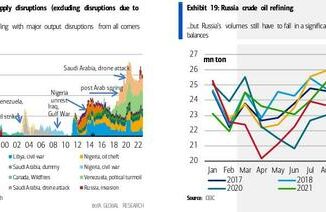
The oil glut threat exacerbates these challenges. Forecasts indicate a growing surplus in 2026, driven by non-OPEC production increases from countries like the U.S., Brazil, and Guyana, alongside OPEC+’s decision to unwind supply cuts faster than anticipated.
This oversupply could push prices even lower, potentially averaging $57 per barrel for Brent, according to some analysts, intensifying the strain on producers like Saudi Arabia.
Not all oil is the Same.
We are looking at the demand side of the equation, and floating storage, or oil on the water in tankers, does not equal demand. Refineries will need different types of oil depending on their demand. Saudi Arabia’s leadership understands this, and this is part of their new pricing matrices rolling out in 2027. Jack Prandelli on X has a great post and was a recent guest on the Energy News Beat Podcast with Stu Turley.
🛢️ Oil isn’t oversupplied…. The wrong oil is
Q1 shows a +2.7 mb/d global stockbuild.
Sounds bearish.
But look closer.• Light sweet is tight, #WTI and #Brent reflect it
• Medium sour is long,Much of it sanctioned and stuck offshore
• Floating barrels ≠ usable barrels… pic.twitter.com/Vg7c7FFJMc
— Jack Prandelli (@jackprandelli) January 27, 2026
Venezuela’s Shifting Role and Its Ripple Effects on OPEC
Adding complexity to the global oil landscape is the evolving situation in Venezuela, an OPEC founding member whose oil sector is now under significant U.S. financial oversight. Following the U.S. military intervention and capture of former President Nicolás Maduro in early 2026, the Trump administration has assumed control over Venezuela’s oil exports and revenues.
Proceeds from Venezuelan crude sales—estimated at 30-50 million barrels initially—are being funneled into U.S.-controlled accounts, including some held in Qatar, to advance U.S. foreign policy goals and benefit both American and Venezuelan interests.
An executive order issued in January 2026 safeguards these funds from judicial claims, centralizing U.S. discretion over their distribution.
This de facto U.S. stewardship of Venezuelan oil could profoundly impact how OPEC and Saudi Arabia perceive oil prices. Venezuela’s production, which has plummeted due to years of mismanagement, sanctions, and underinvestment, now stands to potentially rebound with proposed reforms loosening state control and inviting foreign investment—particularly from U.S. firms.
If successful, this could add hundreds of thousands of barrels per day to global supply, further pressuring prices downward and challenging OPEC’s market management efforts. For Saudi Arabia, the swing producer in OPEC, this introduces uncertainty: increased Venezuelan output under U.S. influence might dilute the cartel’s pricing power, prompting Riyadh to reassess its strategies for supply restraint or market share defense. Moreover, with the U.S. effectively acting as a proxy in Venezuelan oil affairs, OPEC dynamics could shift toward greater accommodation of Western interests, potentially leading to more stable but lower price environments that favor consumers over producers.
Saudi Arabia’s Energy Transition and the Evolving Global Oil Landscape
Balancing Budget Needs with Price Stability Preferences
This bond raise and the Venezuelan developments feed into ongoing debates about Saudi Arabia’s fiscal vulnerabilities. Analysts estimate the kingdom’s fiscal breakeven oil price—the level needed to balance its budget—at around $90 to $108 per barrel in 2026, far above current market levels.
With projected deficits potentially reaching 6.6% of GDP if prices remain depressed, Saudi Arabia faces a “policy trilemma” of managing oil output, debt, and spending cuts.
The narrative that Riyadh requires $85 oil (or higher) to meet budgetary demands holds true, as low prices force increased borrowing—like this $4 billion issuance—to bridge gaps.
However, as highlighted in a recent episode of the Energy News Beat Podcast featuring host Stu Turley and guest Doug Sandridge, Saudi leadership also prioritizes steady oil prices over volatile highs.
Sandridge, drawing from his 16-day visit to Saudi Arabia, noted that the kingdom is shifting toward production and demand-driven pricing matrices, aiming for stability to support long-term investments in exploration, development, and infrastructure.
This preference for predictability aligns with Saudi Arabia’s role as a global market stabilizer, avoiding short-term windfalls like those pursued by Venezuela in the past. Instead, Riyadh focuses on retaining revenues within Aramco for sustainable growth, even as it diversifies into non-oil sectors, which now contribute about 55% to GDP.
In essence, Aramco’s $4 billion raise reflects a pragmatic response to the oil glut threat, while Venezuela’s U.S.-influenced resurgence could reinforce Saudi Arabia’s push for stable, rather than elevated, prices. As global energy transitions evolve—not as a replacement of fossil fuels but an addition of diverse sources—Saudi Arabia’s strategies will be pivotal in navigating these turbulent markets.
Sources: theenergynewsbeat.substack.com, semafor.com, energy.gov
Get your CEO on the podcast: https://sandstoneassetmgmt.com/media/
Is oil and gas right for your portfolio? https://sandstoneassetmgmt.com/invest-in-oil-and-gas/