


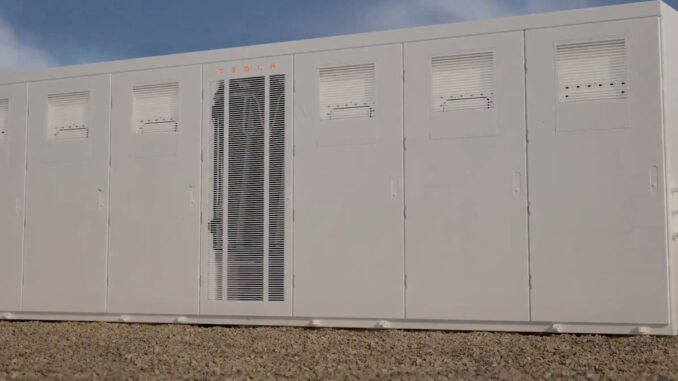
In a major boost for U.S. energy independence and domestic manufacturing, the U.S. Department of the Interior has officially confirmed that Tesla and LG Energy Solution have signed an agreement to establish a $4.3 billion LFP (lithium iron phosphate) prismatic battery cell manufacturing facility in Lansing, Michigan. Production is slated to begin in 2027.
The American-made cells will directly power Tesla’s Megapack 3 energy storage systems, which are manufactured at the company’s new Megafactory in Houston, Texas. This partnership creates a fully domestic battery supply chain for Tesla’s rapidly expanding energy storage business — a game-changer for grid resilience, renewable integration, and national energy security.
Why This Deal Matters: A Win for U.S. Battery Production
The facility (LG Energy Solution’s Lansing plant, formerly a GM joint venture now fully owned by LG) will produce high-performance LFP cells optimized for utility-scale storage. The $4.3 billion supply agreement (signed in mid-2025 and running through at least 2030, with possible seven-year extensions) marks Tesla’s strategic shift away from Chinese suppliers amid rising tariffs and supply-chain risks.
This is huge for building storage and battery manufacturing capacity right here in the United States. Michigan will see thousands of new jobs, while the U.S. gains critical manufacturing infrastructure in a sector long dominated by overseas production.
Here is the factory in Michigan that LG Energy Solution will convert/retool to manufacture LFP cells for Tesla’s new Megapack 3, which will be built in Houston.
Instead of relying on cells from China, Tesla will use American-made cells. Smart. https://t.co/VGFOnSn56s pic.twitter.com/y2coYXTHBO
— Nic Cruz Patane (@niccruzpatane) March 17, 2026
Importance for Tesla
Supply-chain security and cost control: Tesla secures a reliable, U.S.-based source of LFP cells for its Megapack 3, reducing exposure to import tariffs and geopolitical risks.
Scaling the energy business: The Houston Megafactory is ramping to 50 GWh annual capacity. Domestic cells will accelerate deployments of the next-generation Megapack 3 (5 MWh usable AC energy per unit, LFP chemistry, extreme temperature tolerance from -40°C to 60°C, and drastically simplified design with 78% fewer connections).
New product innovation: Tesla is launching Megablock — a plug-and-play 20 MWh medium-voltage system built around Megapack 3. It delivers 23% faster installation, up to 40% lower construction costs, 91% round-trip efficiency, and the ability to commission 1 GWh in just 20 business days (enough to power 400,000 homes).
Importance for Consumers
Cheaper, cleaner, more reliable power: More Megapacks mean utilities and businesses can store excess solar/wind energy and dispatch it during peak demand, flattening electricity prices and reducing reliance on expensive fossil-fuel peaker plants.
Fewer outages and blackouts: Grid-scale storage stabilizes voltage and frequency, preventing the rolling blackouts seen in California and Texas.
Virtual power plants and savings: Consumers connected to Tesla’s ecosystem (via Powerwall or utility programs) benefit from lower bills through time-of-use arbitrage and energy sharing.
Importance for Investors
Tesla’s energy storage growth engine: Energy revenue is exploding — Megapack deployments hit record highs in early 2026. This deal removes a key production bottleneck and positions Tesla as the dominant player in the $50B+ annual utility-scale storage market.
LG Energy Solution upside: A massive, multi-year contract with the world’s leading storage company validates LG’s U.S. LFP expansion and strengthens its balance sheet.
Broader sector tailwinds: The announcement reinforces U.S. policy support for domestic clean-tech manufacturing, potentially unlocking more incentives and driving valuation multiples for Tesla, energy storage suppliers, and related infrastructure plays.
How These Power Units Will Be Used
Tesla’s Megapack 3 and new Megablock systems are utility-scale and commercial-grade — not for individual homes (that’s the Powerwall’s job). Primary applications include:
Grid stabilization: Standalone utilities use them to balance voltage, frequency, and capacity; replace gas peaker plants; and integrate massive amounts of renewables.
Data centers: Especially AI and hyperscale facilities are facing extreme power swings (up to 90% fluctuations). Megapacks provide instant backup, smooth GPU workloads, and prevent costly downtime — a growing priority as AI demand strains the grid.
Commercial & Industrial businesses: Factories, warehouses, and large facilities gain reliable power, lower demand charges, and the ability to sell excess energy back to the grid during peaks.
Megablock advantage: The pre-engineered 20 MWh blocks (248 MWh per acre footprint, 25-year life, >10,000 cycles) allow utilities to deploy gigawatt-scale storage at unprecedented speed — think “Lego blocks for the grid.”
This Michigan factory is a landmark moment. It cements Tesla’s leadership in energy storage, strengthens America’s battery manufacturing base, and accelerates the transition to a resilient, renewable-powered grid. For the energy sector, investors, and everyday consumers, the message is clear: U.S.-made storage is here — and it’s scaling fast. Stay tuned to Energy News Beat for more on how this will reshape power markets in 2027 and beyond. If you are going to use solar or wind, you have to have storage. I am recommending that the U.S.-made storage be tied to all wind and solar projects and priced into their newly defined “Levelized Cost of Electricity”. As wind and solar have had a pass and never charged for grid resialncy, and it needs to be redefined.
Source: tesla.com, tomshardware.com,X, Grok
Get your CEO on the #1 Energy Podcast in the United States: https://sandstoneassetmgmt.com/media/
Is oil and gas right for your portfolio? https://energynewsbeat.co/invest/





Be the first to comment