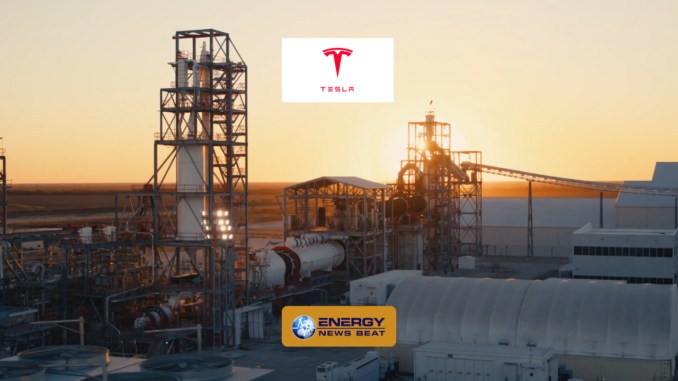
In a groundbreaking move that’s set to reshape the landscape of electric vehicle (EV) production and bolster North America’s energy independence, Tesla has officially ushered in operations at its state-of-the-art Lithium Refinery near Corpus Christi, Texas. Announced via X on January 14, 2026, this facility represents a pivotal step toward securing critical battery minerals domestically, reducing reliance on foreign suppliers, and accelerating the transition to sustainable energy. As Tesla North America stated in the announcement, “Our Lithium Refinery ushers in energy independence for North America. Regionalized access to critical battery minerals brings jobs, cuts emissions & helps accelerate our mission.”
@Tesla
With the sun setting on outdated supply chains dominated by overseas producers, Tesla’s refinery is poised to deliver a grand slam for the continent’s energy future.
Tesla Lithium Refinery https://t.co/tBKoBpHZHa
— Tesla (@Tesla) January 14, 2026
A Timely Update from Tesla’s Recent Earnings Insights
During Tesla’s Q3 2025 earnings call on October 23, 2025, the company highlighted its progress in vertical integration, including expectations for the Texas lithium refinery to begin production in Q4 2025.
This timeline aligns perfectly with the January 2026 announcement, confirming that the facility has now ramped up, feeding raw materials through its systems and marking the first large-scale deployment of an innovative refining process in the U.S. While the Q3 transcript didn’t delve deeply into specifics, Tesla’s broader updates emphasized the refinery’s role in addressing supply chain vulnerabilities amid growing EV demand and tariff pressures on imported materials.
The energy storage segment also shone, with record deployments underscoring the refinery’s importance in supporting Tesla’s expanding battery ecosystem.

Production Capacity: Powering a Million EVs Annually
At full throttle, the refinery is designed to produce battery-grade lithium hydroxide sufficient for approximately 50 gigawatt-hours (GWh) of battery capacity per year—enough to power around one million electric vehicles.
This output positions Tesla as the largest lithium processor in North America, dwarfing combined capacities from other regional producers.
The plant processes spodumene ore and other intermediate feedstocks, including recycled batteries and manufacturing scrap, converting them into high-purity lithium chemicals essential for EV batteries. Initial operations began with raw material inputs in December 2024, and volume production kicked off in early 2025, with the facility now hitting its stride in 2026.
Equivalent to about 50,000 tonnes of lithium carbonate equivalent (LCE), this scale addresses a critical bottleneck in the EV supply chain, where lithium demand is projected to surge as adoption accelerates.
Cool Environmental Features: A Greener Path to Lithium
What sets Tesla’s refinery apart is its pioneering acid-free refining process, a first for industrial-scale operations in the U.S.
Traditional lithium refining often relies on sulfuric acid and other harsh chemicals, generating toxic waste and high emissions. Tesla’s approach eliminates these, using less-toxic reagents that produce inert byproducts like sand and analcime—materials that can be repurposed for construction, such as in concrete applications.
This not only minimizes environmental impact but also avoids sulfate-based waste, setting a new standard for sustainable mineral processing.
By localizing production, the facility cuts transportation emissions associated with importing refined lithium from overseas, particularly China, which dominates global supply. Water management is optimized too, with efficient recycling systems to reduce usage in an arid region. Overall, this refinery embodies Tesla’s commitment to eco-friendly innovation, proving that energy dominance doesn’t have to come at the planet’s expense.
Implications for Investors: A Bullish Boost for TSLA
For investors, this development is a clear win, reinforcing Tesla’s vertical integration strategy that locks in cost advantages and supply stability.
By controlling more of the battery supply chain, Tesla mitigates risks from volatile lithium prices and geopolitical tensions, such as tariffs on Chinese imports that impacted the company by hundreds of millions in recent quarters.
Analysts see this as a catalyst for long-term growth, potentially enhancing margins in the energy and automotive segments. With Tesla’s stock already responding positively to autonomy and energy storage milestones in the Q3 2025 report, the refinery’s ramp-up could drive further upside, especially as EV production scales toward affordable models in 2026.
It’s a strategic hedge against market fluctuations, making TSLA an even more attractive play in the clean energy space.
Benefits for Consumers: Affordable, Reliable EVs Ahead
Consumers stand to gain from faster, cheaper access to EVs. With domestic lithium production ramping up, Tesla can reduce battery costs, paving the way for more affordable vehicles without compromising quality.
This means shorter wait times for popular models like the Model Y and Cybertruck, as supply chain bottlenecks ease. Environmentally conscious buyers will appreciate the greener production footprint, knowing their vehicles contribute less to global emissions from the ground up. As Tesla integrates this lithium into its Gigafactories, expect innovations like longer-range batteries and faster charging to become standard, making sustainable mobility more accessible for everyday drivers.
Strengthening Energy Security: A Strike Against Foreign Dependence
On a broader scale, the refinery is a home run for North American energy security. By onshoring critical mineral processing, Tesla reduces vulnerability to supply disruptions from dominant players like China, which controls much of the world’s lithium refining.
This move supports thousands of local jobs, stimulates economic growth in Texas, and aligns with national goals for energy independence.
In an era of rising geopolitical risks and tariff wars, domestic production ensures a stable flow of materials for EVs, grid storage, and renewables—key to combating climate change and securing the continent’s energy future. As Tesla’s announcement aptly puts it, this isn’t just about batteries; it’s about accelerating a mission that powers North America forward.
As Stu Turley on the Energy News Beat has said many times, Tesla will be the premier EV company because it is a technology company first that happens to make EVs. We will be covering this on the Energy News Beat Stand up tomorrow.
Tesla’s Lithium Refinery isn’t just operational—it’s a symbol of innovation, resilience, and dominance in the energy arena. As the EV revolution charges ahead, this facility ensures North America stays in the game, swinging for the fences.
Sources: X, Grok, investors.com, argusmedia.com, VectorVest