ENB Pub Note: This is an excellent article from Andrew Korybko’s Substack newsletter. Stu Turley will be covering this on the next Energy News Beat Stand Up. Turkey has long sought to become a natural gas hub, and it understands that controlling the flow of energy gives it power. Andrew brings out some critical points. Countries are starting to realize that energy security begins at home, and if it is financed by someone else, then you lose control.
Russia wouldn’t just lose tens of billions of dollars’ worth of yearly revenue if the US’ plans succeed, but tensions with Turkiye might become unmanageable if the complex energy interdependence that tied them together till now is broken, which could destabilize the South Caucasus and Central Asia.
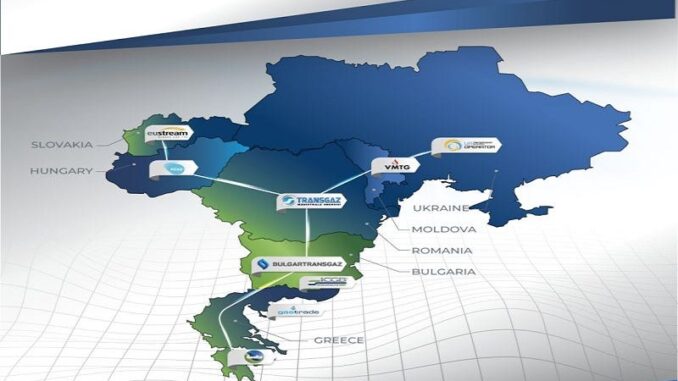
Zelensky announced last month that Ukraine will import American LNG from Greece via the “Vertical Gas Corridor” pipeline. This project complements Poland’s joint LNG plans with the US and to a lesser extent Croatia’s to lay the basis for American LNG completely replacing Russian gas in Central & Eastern Europe (CEE) one day. Although it’s much more expensive, policymakers on the continent are going along with this on energy security pretexts, but US pressure upon them likely played a major role in their decision.
The US’ latest energy power play could also put an end to Russia’s Turkish gas hub plans. These were announced in late 2022 after talks between Putin and Erdogan, but Bloomberg reported last June that they’d been shelved due to technical difficulties in supplying CEE from Turkiye as well as disagreements between it and Russia. Neither party confirmed their report, but now that the US captured more of the CEE market through the “Vertical Gas Corridor” pipeline, the odds of this hub being built have declined.
The Duran’s Alex Christoforou wrote an insightful post on X about this, which importantly noted that the “Eastern Mediterranean (Israel and Cyprus) is watching the start of this vertical corridor closely as it can be utilized to sell future EastMed gas into Europe.” The “EastMed” refers to the proposed underwater pipeline of the same name for exporting Israel’s enormous offshore gas reserves to the EU. Its completion would likely eliminate the need for Russian gas in CEE for good when combined with US LNG.
To make matters even more concerning for Russia, Reuters reported last month that “Turkey’s gas shift threatens Russia and Iran’s last big European market”, which drew attention to how increased domestic production and LNG imports could greatly reduce Turkiye’s future need for Russian gas via TurkStream. Trump’s threatened sanctions on all those who continue importing Russian energy without provably weaning themselves off of it, which could take the form of up to 500% tariffs, could accelerate this trend.
Russia wouldn’t just lose tens of billions of dollars’ worth of yearly revenue if all the aforementioned American plans succeed, but tensions with Turkiye might become unmanageable if the complex energy interdependence that tied them together till now is broken. It’s already expected that Turkiye will inject Western influence into Central Asia through the new TRIPP corridor, thus posing challenges along Russia’s entire southern periphery, which will further complicate Turkish-Russian ties.
If their complex energy interdependence weakens by then, such as if their gas hub plans essentially remain frozen or are officially canceled and Turkiye begins importing less Russian gas from TurkStream, then Turkiye might be emboldened to more aggressively challenge Russia on this front. After all, the scenario of Russia cutting off gas exports in order to coerce concessions from Turkiye during a crisis would be less effective, which could result in more hardline Turkish positions that raise the risk of war.
Russia should therefore seek to revive their gas hub plans and reach an agreement with the US, perhaps as part of the grand deal that they’re trying to negotiate right now, to secure Russia’s gas market share in Turkiye and possibly restore part of it in CEE. That would almost certainly require Russia compromising on some of its maximalist goals in Ukraine, and the US’ word can’t be taken for granted since future presidents could rubbish any deal, but Russia should still consider this possibility instead of ruling it out.
Want to get your story in front of our massive audience? Get a media Kit Here. Please help us help you grow your business in Energy.