


By Stuart Turley, Energy News Beat Channel
In a dramatic escalation of the ongoing US-Iran conflict, two oil tankers were struck in Iraqi territorial waters in the northern Persian Gulf earlier tonight, adding to a series of maritime attacks that have disrupted global energy supplies. The incidents occurred approximately 5 nautical miles south of Al Basrah, near the al-Faw port and Umm Qasr anchorage area.
This marks the latest in a wave of strikes amid the broader “Tanker War of 2026,” which has seen at least 17 non-Iranian merchant ships targeted since late February, primarily in the Persian Gulf, Gulf of Oman, and Strait of Hormuz.
According to reports from the United Kingdom Maritime Trade Operations (UKMTO) and Iraqi port security officials, the vessels were hit by what appear to be Iranian remote-controlled explosive boats, a tactic increasingly employed in the region.
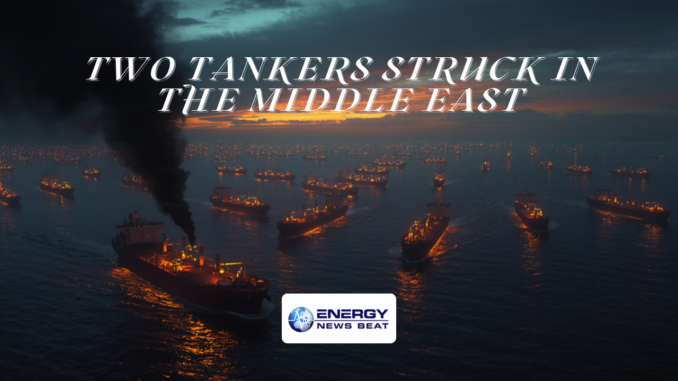
One of the tankers, identified as a U.S.-owned or managed vessel, caught fire following the attack, with footage showing massive flames engulfing the ship.
The second tanker was also damaged, though details on its ownership and extent of damage remain unconfirmed at this hour. All crew members—estimated at around 25 across both ships—were evacuated safely, with no casualties reported so far.
Initial assessments indicate no major oil spills or environmental impacts, but monitoring is ongoing.
This attack comes against the backdrop of intensified hostilities following Operation Epic Fury, a US-Israel coalition effort that has targeted Iranian assets and led to retaliatory strikes on shipping lanes.
Iranian forces have reportedly mined the Strait of Hormuz and deployed drone swarms, effectively closing the vital waterway to Western vessels.
As a result, over 200 ships, including oil and LNG tankers, are stranded in open waters off major Gulf producers like Iraq, Saudi Arabia, and Qatar.
Iraq has already reduced its oil output by 1.5 million barrels per day due to storage shortages and loading disruptions.
Oil prices surged in response to tonight’s events, with Brent crude climbing above $150 per barrel in after-hours trading, reflecting fears of prolonged supply interruptions.
The Strait of Hormuz, through which about 20% of the world’s oil passes, remains a critical chokepoint, and analysts warn that sustained closures could push prices to $200 per barrel as threatened by Iranian officials.
Visuals from the scene, shared by local Iraqi channels and international observers, depict the burning tankers amid a coordinated Iranian assault.
These strikes are part of a pattern seen in recent days. For instance, on March 5, a Bahamas-flagged tanker, the Sonangol Namibe, was hit near Kuwait, causing an oil leak and marking the northernmost attack in the conflict.
Earlier incidents include the US-flagged Stena Imperative struck in Bahrain on March 2, resulting in one death and two injuries, and the Maltese-flagged Prima hit by a drone in the Strait of Hormuz on March 7.
Insurance companies have begun canceling war risk coverage for vessels in the Gulf, further complicating shipping operations.
Major players like Maersk have suspended cargo acceptance in several Gulf states until further notice.
As investigations continue, the international community watches closely. The US and Iran show no signs of de-escalation, with President Trump stating the need to “finish the job” and Iran vowing further disruptions.
For the energy sector, this underscores the fragility of global supply chains—stay tuned to Energy News Beat for updates on how this impacts markets and production.Sources include Reuters, UKMTO, and verified reports from regional channels. All information is based on confirmed accounts as of 9:41 PM EDT on March 11, 2026.
Sources: reuters.com, cnbc.com, hellenicshippingnews.com,



Be the first to comment