In a dramatic turn of events on January 3, 2026, U.S. forces captured Venezuelan President Nicolás Maduro, sparking immediate reactions across global markets. President Donald Trump has vowed to involve American firms in reviving Venezuela’s beleaguered oil industry, which holds the world’s largest proven reserves but has seen production plummet from over 3 million barrels per day (bpd) to around 800,000 bpd due to years of mismanagement, sanctions, and neglect.
This development has fueled optimism among investors, leading to a surge in U.S. oil company stocks on January 5, 2026, as traders anticipate eased sanctions and new opportunities in Venezuelan fields. However, the rally comes amid falling oil prices and lingering uncertainties, raising questions about whether this is sustainable growth or merely a speculative bubble.Key U.S. Oil Companies Seeing Gains TodayWall Street’s energy sector led the charge in Monday’s trading session, with the S&P 500 Energy Index up 1.3%.
Major players with historical or potential ties to Venezuela, such as those involved in production, refining, and services, posted notable increases. Here’s a rundown of the top performers based on real-time market data and reports:
Chevron (CVX): Up 5.40% in early trading, making it the standout leader.
As the only remaining U.S. major operating in Venezuela, Chevron has been producing around 200,000 bpd through joint ventures with state-owned PDVSA, even under sanctions.
The company’s shares surged over 7% in pre-market before settling, reflecting investor bets on expanded access to the Orinoco Belt’s heavy crude reserves.
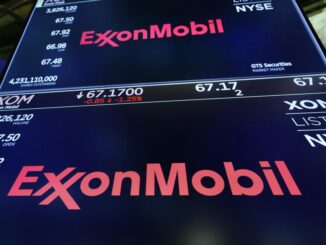
ExxonMobil (XOM): Rose 2.23%.
Exxon has a history of disputes with Venezuela, including a $1.6 billion arbitration win over expropriated assets in 2007, and could seek re-entry into offshore projects.
ConocoPhillips (COP): Gained 3.00-10%, depending on intraday fluctuations.
Conoco has outstanding claims against PDVSA for seized assets worth billions and stands to benefit from any U.S.-led restructuring.
Valero Energy (VLO): Jumped 11%.
As a refiner, Valero could capitalize on increased Venezuelan crude imports, which are well-suited for its Gulf Coast facilities designed for heavy, sour oil.
Marathon Petroleum (MPC): Up 10%.
Similar to Valero, Marathon’s refining operations could see cost advantages from cheaper Venezuelan feedstock.
Occidental Petroleum (OXY): Reported gains of around 4-5% in broader energy rallies.
While less directly tied, Occidental’s focus on Permian Basin efficiency might complement Venezuelan opportunities.
Oilfield Services Firms (e.g., Schlumberger (SLB), Halliburton (HAL)): Up 3-5%, as reviving Venezuelan fields would require massive infrastructure investments in drilling and maintenance.
These gains contributed to over $100 billion in added market value for U.S. oil stocks in a single session, driven by Trump’s statements that American companies will be “very much involved” in Venezuela’s transition.
Recent Earnings Reports: A Mixed Bag Amid Lower Oil Prices
The latest earnings from Q3 2025 (reported in October-November 2025) provide context for these companies’ financial health heading into this geopolitical shift. Overall, Big Oil saw modest profit declines of 2-12% year-over-year due to weaker crude prices and refining margins, but strong balance sheets and cost controls kept most in positive territory.
Here’s a snapshot:
|
Company
|
Q3 2025 Adjusted Net Income
|
Key Highlights
|
Year-Over-Year Change
|
|---|---|---|---|
|
Chevron (CVX)
|
~$3.4 billion (estimated actual post-Hess acquisition)
|
Strong upstream production offset by refining weakness; integrated model provides resilience.
reuters.com
|
Down ~2%.
forbes.com
|
|
ExxonMobil (XOM)
|
$4.0 billion in Energy Products (year-to-date)
|
Upstream earnings boosted by volume growth; total quarterly profit up despite market headwinds.
|
+3.87% for Q3; overall targeting $25B growth by 2030.
facebook.com
|
|
ConocoPhillips (COP)
|
Not specified in detail, but aligned with sector trends
|
Focus on low-cost production; dividends and buybacks remain priorities.
|
Down 2-12% sector average.
forbes.com
|
|
Occidental Petroleum (OXY)
|
$1.3 billion pre-tax in oil and gas
|
Improved from prior quarters due to higher volumes; debt reduction ongoing.
oxy.com
|
Increase excluding one-offs.
|
|
Valero Energy (VLO) & Marathon Petroleum (MPC)
|
Sector refiners saw margin squeezes
|
High utilization rates but volatile crack spreads; both maintained strong cash flows.
|
Modest declines amid Q1 2025 sector drop.
statista.com
|
These reports highlight a sector that’s leaner post-pandemic, with emphasis on shareholder returns via dividends (e.g., Chevron’s 4% yield) and buybacks. However, Q4 2025 results, due in early 2026, could reflect any pre-capture market softness.
What Investors Should Look For
For those eyeing these stocks, the Maduro capture opens doors to Venezuela’s untapped potential, estimated at needing $100 billion in investments to restore output to 2-3 million bpd.
Key positives include:Production and Reserve Access: Companies like Chevron could ramp up quickly, with former Chevron executive Ali Moshiri seeking $2 billion to acquire 20,000-50,000 bpd capacity and 500,000 barrels of reserves from PDVSA, targeting a 2.5x return in 5-7 years.
Watch for announcements on joint ventures or asset acquisitions under a Trump administration, favoring U.S. energy dominance.
Refining Margins: Refiners such as Valero and Marathon stand to gain from discounted Venezuelan heavy crude, potentially lowering input costs and boosting profits if global demand holds.
Long-Term Growth Metrics: Monitor free cash flow generation, debt levels (e.g., Occidental’s ongoing reductions), and capital expenditure plans. ExxonMobil’s goal of $25 billion in earnings growth by 2030 could accelerate with Venezuelan plays.
Market Sentiment Indicators: Track oil futures (Brent at ~$60/bbl today, down despite the news) and U.S. export data, as increased Venezuelan supply could suppress global prices long-term.
Risks and the Bubble Question
While the initial rally is exciting, caution is warranted. Oil prices actually dipped today—Brent crude fell to $60/bbl and WTI to similar levels—suggesting markets aren’t yet pricing in a supply boom.
Reviving fields could take years and billions, with devastated infrastructure requiring major overhauls.
Geopolitical risks loom large: Venezuela’s interim leader, Vice President Delcy Rodriguez, has pledged to uphold socialist policies, risking asset nationalizations as in the past.
China and Russia, with billions in existing oil claims, may contest U.S. moves, potentially leading to international disputes or supply disruptions.
Lingering U.S. sanctions on tankers could hinder exports, and broader economic impacts—like higher U.S. interest rates if oil volatility spikes—add uncertainty.
Is this a bubble? Possibly. The stock surge appears driven by hype rather than fundamentals, as global energy markets remain weak and Venezuelan recovery is far from guaranteed.
Investors should view this as a high-risk, high-reward play—diversify, set stop-losses, and await concrete policy details from the Trump administration before going all-in. As J.P. Morgan notes, U.S. control could reshape global energy, but only if executed amid these headwinds.
We do not give investors advice, and you should check with your CPA or other certified investment professionals.

Sources: VectorVest.com, Forbes.com, @RedboxWire, abcnews.go.com, energynewsbeat.co