In a significant victory for local landowners, Converse County District Judge F. Scott Peasley has ruled in favor of rancher Mike Stephens, effectively halting a controversial wind lease tied to the Pronghorn H2 green hydrogen project. The decision, issued on December 5, 2025, vacates Wind Lease No. WL-1620, which was approved by the Wyoming State Board of Land Commissioners in April. This ruling underscores ongoing tensions between renewable energy development and traditional land use in Wyoming’s rural communities.
Background on the Controversy
The Pronghorn H2 project, spanning approximately 15,500 acres of state trust lands in the northern Laramie Range, aimed to develop 267 wind turbines to power electrolysis for producing green hydrogen jet fuel. Unlike traditional wind farms that feed electricity into the grid, this initiative focused on off-grid hydrogen production, which Judge Peasley determined does not align with Wyoming’s statutory definition of wind energy leasing. The law requires wind energy to be converted into electrical energy and transmitted to a grid interconnection point via a substation—criteria the project failed to meet.
Local rancher Mike Stephens, through his family operation Stephens Land and Livestock LLC, challenged the lease, citing potential disruptions to his adjacent 172-acre homestead. Concerns included spoiled scenic views, increased traffic on rural roads, noise pollution, and construction impacts. Stephens’ attorney, Patrick Lewallen, argued that the project violated state board rules, emphasizing its divergence from grid-connected developments. In his ruling, Judge Peasley highlighted the grid requirement’s role in mitigating impacts on surrounding areas, stating there was no need to speculate on its purpose as it protects remote locales from undue development pressures.
The project also drew political fire. Wyoming Secretary of State Chuck Gray, the sole board member to vote against the lease, hailed the decision as “great news for the people of Wyoming” and a rejection of “woke wind” schemes. Conversely, Governor Mark Gordon supported the approval, citing economic opportunities and local backing. The state is now reviewing the ruling and considering an appeal to the Wyoming Supreme Court.
A related project, Sidewinder in Niobrara County, faces similar scrutiny, as it too lacks grid connectivity. Stephens noted the parallels, questioning the future of non-grid renewable ventures on state lands.
Companies Impacted
The Pronghorn H2 project is spearheaded by Focus Clean Energy, a private Boulder, Colorado-based developer founded in 2007. Specializing in wind, solar, storage, and hydrogen projects across the US Mountain West, Focus has a track record of over 1,745 MW in wind energy development. As a private entity, it does not release public earnings statements, but the company has emphasized its commitment to property rights and economic benefits, including lease payments already in the hundreds of thousands and projected millions more.
Focus partners with major players in the renewable sector, including Acciona Energía (a subsidiary of Spanish conglomerate Acciona) and Nordex Green Hydrogen (part of the German Nordex Group). These joint ventures handle turbine manufacturing, project ownership, and operations. Acciona Energía brings decades of experience in building clean energy facilities, while Nordex provides turbine technology.
Latest Earnings Statements
As public companies, Acciona Energía and Nordex Group provide insight into the financial health of key partners in the project.
Acciona Energía: In its 9-month 2025 trading statement, the company reported steady performance amid renewable sector growth. For the first half of 2025 (H1), earnings before tax reached €482 million, up from prior periods despite a €10 million rise in financial expenses. The parent Acciona group saw Q2 revenue increase 5% year-over-year to €9.2 billion, with strong EBITDA growth driven by renewable energy operations.
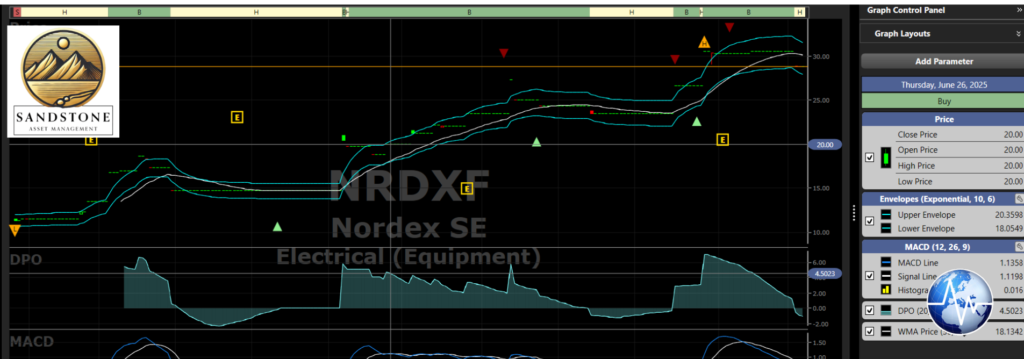
Nordex Group: The company delivered a robust third quarter in 2025 (3Q), with net income surging to €51.7 million from €3.9 million in the prior year. This was bolstered by significant margin expansion and positive free cash flow. In Q2 2025, Nordex reported EBITDA of €108 million (up 64% year-over-year) and an EBITDA margin of 5.8%, alongside €145.1 million in free cash flow. The order backlog stood at €14.3 billion, reflecting strong demand for wind turbines.
These figures indicate resilience in the broader renewable energy market, with both companies benefiting from global demand for wind and clean energy technologies.
What This Means for Investors
The ruling represents a setback for investors in green hydrogen and off-grid renewables, potentially delaying or derailing the Pronghorn H2 project, which was projected to attract $1.7 billion in private investment and generate $471 million in taxes over 35 years.
For Focus Clean Energy, as a private firm, this could strain project financing and partnerships, though its diversified portfolio in wind and solar may mitigate long-term risks.
Publicly traded partners like Acciona Energía and Nordex may see short-term volatility in stock prices due to regulatory hurdles in key markets like Wyoming. However, their strong earnings and global order backlogs suggest the impact could be limited, especially as the renewable sector outlook remains positive for 2026, with trends toward clean hydrogen hubs and energy storage.
Investors should monitor potential appeals, as a reversal could reinstate the lease and boost project momentum. Overall, this highlights risks in U.S. renewable permitting, where local opposition and strict state laws can override economic incentives.
Implications for Ranchers and Communities
For ranchers like Mike Stephens, the decision is a clear win, preserving the pristine landscapes and quiet rural lifestyle of Converse County. Stephens expressed relief, calling it “the best outcome we could ask for right now,” as it shields his homestead from industrial encroachment.
This ruling empowers other landowners to challenge similar developments, potentially setting a precedent for protecting agricultural and ranching interests against large-scale energy projects.
Communities in Converse and Niobrara counties face a mixed bag.
On one hand, halting the project avoids environmental and visual impacts, maintaining the area’s natural appeal. On the other hand, it forfeits substantial economic gains, including jobs in construction and operations, increased tax revenues for schools and infrastructure, and lease payments to the state. Proponents argued the project had local support, but opponents like Gray viewed it as harmful to Wyoming’s fossil fuel heritage. As the state weighs an appeal, the debate over balancing clean energy ambitions with community values continues to divide stakeholders.
This case exemplifies the evolving landscape of energy transition in the American West, where innovation meets resistance at the grassroots level. Stay tuned to Energy News Beat for updates on this and other developments in the sector.
A huge hat tip to the Cowboy State Daily at cowboystatedaily.com for their reporting. They are fantastic publications, and we recommend checking them out.
Want to get your story in front of our massive audience? Get a media Kit Here. Please help us help you grow your business in Energy. Our Ads also get through the ad blockers.

https://energynewsbeat.co/request-media-kit/
We have specials going on, so ask Stu for details.