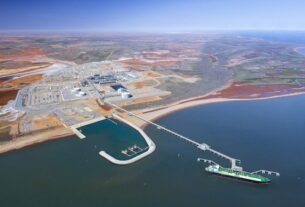
In the wake of escalating geopolitical tensions and a rapidly evolving global energy landscape, Russia is decisively pivoting its gas and oil exports eastward. This strategic shift, driven by lucrative opportunities in Asia amid disruptions from the ongoing Iran conflict, is reshaping international energy dynamics. As Deputy Prime Minister Alexander Novak recently confirmed, negotiations are underway to redirect liquefied natural gas (LNG) supplies from Europe to high-paying markets like China, India, Thailand, and the Philippines. Three LNG tankers have already been diverted mid-voyage to Asian buyers offering premium spot prices, highlighting Russia\’s pragmatic approach: follow the money.
This move comes as no surprise. With the European Union (EU) aggressively phasing out Russian energy imports—banning short-term LNG contracts from late April 2026 and aiming for a full prohibition on all Russian gas by the end of 2027—Russia is front-running the bans. The Iran war has exacerbated the situation, closing the Strait of Hormuz and taking 20% of global LNG offline from Qatar, creating a bidding war where Asia\’s deeper pockets consistently outbid Europe. As a result, European TTF gas prices surged 50% in a month to 52.81 euros per megawatt-hour by early March 2026, while Asian JKM spot prices exceeded $20 per million BTU.
Lingering EU Dependence on Russian Energy
Despite the EU\’s ambitious REPowerEU plan, which has slashed Russian gas imports from 45% of total EU supplies in 2021 to around 13% in 2025, the bloc remains a significant buyer. In January 2026, the EU accounted for 49% of Russia\’s LNG exports and 35% of its pipeline gas, paying Russia approximately €1.1 billion for fossil fuels that month.
Pipeline gas from Russia dropped to just 6% of EU imports in 2025, but combined with LNG, Russia still supplied 13% of the bloc\’s total gas needs.
Overall, EU imports of Russian fossil fuels fell 90% from 2021 levels by 2025, yet pockets of reliance persist, particularly in LNG from projects like Yamal, where France alone imported 41.7% of shipments to the EU in 2025.
Countries with strong historical ties to Russia, such as Hungary and Slovakia, have secured exemptions from broader EU sanctions. These landlocked nations continue to import Russian oil via the Druzhba pipeline, with Hungary sourcing over 92% of its crude from Russia in 2025—up from 61% pre-invasion.
Both countries opposed the EU\’s gas phase-out and plan to challenge it in the European Court of Justice, arguing it threatens their energy security.
Slovakia, for instance, issued a two-day ultimatum to Ukraine in February 2026 to repair pipeline damage from a drone strike, threatening to halt emergency electricity supplies if unmet.
Austria and Serbia also rely on Russian gas via routes like TurkStream, underscoring the uneven transition across Europe.
Economic and Market Impacts on the EU
Russia\’s eastward pivot is amplifying Europe\’s energy woes. With global LNG supply tightening due to the Iran crisis, Europe faces heightened competition for non-Russian cargoes from the US, Norway, and Qatar. The EU is projected to import a record 185 billion cubic meters of LNG in 2026, up from 175 billion in 2025, but at elevated costs.
This has driven industrial energy prices two to five times higher than in the US, fueling deindustrialization and economic strain.
A Hungarian Institute of International Affairs analysis estimates that sanctions-related energy price hikes have already caused 5.4 million job losses across the EU in the short term, with potential long-term losses reaching 32.3 million if policies persist.
GDP impacts are equally severe: a short-term hit of €388.9 billion (2.05% of GDP) and up to €2.24 trillion (11.8%) in the long run. Manufacturing and services sectors are hardest hit, as higher costs erode competitiveness and trigger spillover effects.
Energy security is also at risk. The EU\’s vulnerability was laid bare by the 2022 crisis, and while diversification has helped, reliance on volatile global LNG markets exposes the bloc to price spikes and supply disruptions. Studies show EU crude oil dependence on Russia dropped by up to 0.6% within a year of sanctions, but natural gas reductions have been slower due to infrastructure constraints.
Could This Spell the Downfall of the EU?
Talk of the EU\’s \”downfall\” due to energy policies is hyperbolic, but the strain is real. Critics argue that self-imposed sanctions have inflicted more harm on Europe than on Russia, whose oil and gas revenues fell 24% in 2025 but rebounded amid the Iran-driven price surge.
Russia\’s economy, buoyed by a war machine and Asian pivots, shows resilience, while Europe grapples with inflation, reduced growth, and internal divisions—exemplified by Hungary and Slovakia\’s dissent.
Yet, the EU\’s unity has held, with policies sparking a \”new shift to energy security\” focused on sovereign control. REPowerEU emphasizes renewables, efficiency, and diversified imports, aiming for independence by 2027. This could strengthen the bloc long-term, but short-term pains risk political fragmentation if economic hardships mount.
Ukraine\’s Pipeline Strikes and Waning Support
Ukraine\’s drone attacks on Russian oil infrastructure, including the Druzhba pipeline in early 2026, have disrupted flows to Europe, costing Russia over $13 billion in 2025 alone.
These strikes aim to cripple Moscow\’s war funding but have backfired diplomatically. Hungary and Slovakia, already pro-Russia leaning, have protested vehemently, with Slovakia halting emergency power to Ukraine in retaliation.
The US has also warned Kyiv against hits affecting American interests, such as Kazakh oil via Russian ports.
This escalation could erode Western support for Ukraine. As energy prices rise and European economies suffer, public and political fatigue may grow, pressuring leaders to prioritize domestic stability over aid. If attacks continue, they risk alienating key allies like Hungary, potentially fracturing the EU consensus on Ukraine support.
New Trading Blocs are Forming
If you have been following Energy News Beat, we have been tracking trends and even made predictions about the new trading blocs forming. As more countries follow Net Zero, they seem to be heading down a different path than one of success and wealth creation. But rather central control of the populations and deindustrialization, with a focus on having China as the main manufacturing force. The new trading blocs for success will be a realignment of the Middle East Gulf states, Russia, India, Japan, and the United States. How South America and Africa plays into this will be tied to oil and the new control systems being put in place. We are watching a major shift in the global oil, gas, and energy markets play out in real time.
It is also apparent that those following Net Zero will double down on Wind, Solar, and Storage just to \”get away from oil\”. But who is going to tell them that of the 6,000 products made from oil or natural gas wind, solar and energy storage can make …. Zero. We are seeing this trend play out as people are saying the Iran war will accelerate the move to wind and solar.
A New Era of Sovereign Energy Focus
Russia\’s pivot underscores a global realignment toward energy security rooted in national control. For the EU, this means accelerating renewables and diversification to mitigate vulnerabilities. Sovereign nations are increasingly prioritizing reliable, controllable sources—be it nuclear, domestic fossil fuels, or green tech—over interdependent imports. While Russia\’s strategy bolsters its budget amid crises like Iran, Europe\’s policies, though painful, may forge a more resilient future. The question remains: can the EU weather the storm without fracturing?
Sources: bloomberg.com, aljazeera.com, themoscowtimes.com, nytimes.com, sciencedirect.com, reuters.com, hungarianconservative.com
Get your CEO on the #1 Energy Podcast in the United States: http://energynewsbeat.co/energy-news-beat-media-kit/
Is oil and gas right for your portfolio? http://energynewsbeat.co/invest/