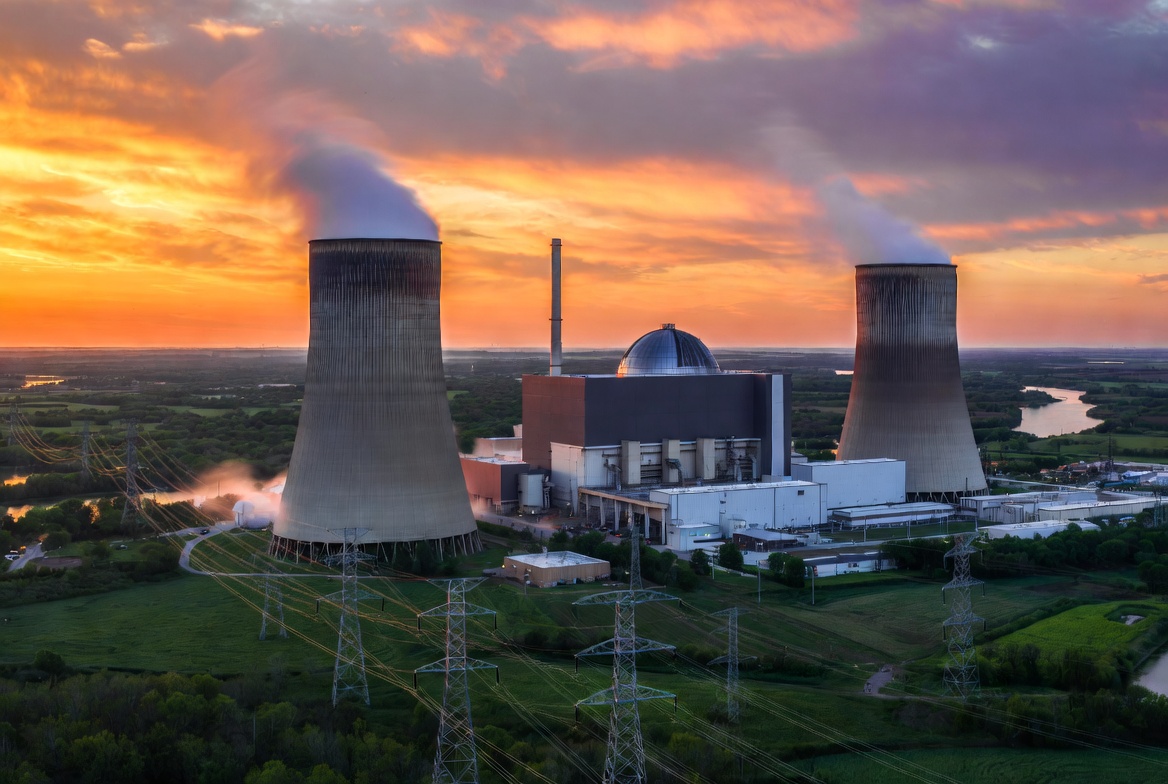
The U.S. nuclear fleet has seen dozens of reactors permanently shut down over the decades, driven by economics, aging infrastructure, regulatory decisions, and events like the 1979 Three Mile Island accident. As of 2026, the country operates around 94 commercial reactors with roughly 97 GW of net capacity. However, more than 40 commercial power reactors have been decommissioned (or are in advanced decommissioning phases), representing a historical total capacity exceeding 20 GW.
With surging electricity demand from AI data centers, manufacturing electrification, and grid reliability needs, attention has turned to restarting recently closed plants. While most decommissioned reactors are too far advanced in the decommissioning process (e.g., fuel removed, structures dismantled, or in long-term SAFSTOR/DECON), a small number of recently shut-down units show realistic restart potential. Currently, three stand out: Palisades in Michigan, Three Mile Island Unit 1 (now Crane Clean Energy Center) in Pennsylvania, and Duane Arnold in Iowa.
If successful, these could add approximately 2.25 GW of carbon-free baseload power—equivalent to powering over 2 million average U.S. homes or offsetting significant fossil fuel generation—by the end of the decade.
This article examines all major decommissioned commercial nuclear reactors by state (drawing primarily from U.S. Energy Information Administration data), identifies restart candidates, and assesses the potential generation impact.
Overview of Decommissioned Reactors by State
The following summarizes decommissioned commercial power reactors (primarily those >10 MW net) grouped by state, based on EIA shutdown data. Capacities are net MWe (electrical). Statuses include DECON (immediate dismantlement), SAFSTOR (delayed decontamination), ISFSI Only (spent fuel storage only), or completed/license terminated. Smaller experimental or early reactors are noted where relevant. Total decommissioned commercial fleet: ~40+ reactors.
California (multiple units, high total capacity): GE Valecitos (24 MW, BWR, 1963)
Humboldt Bay 3 (63 MW, BWR, 1976)
Rancho Seco 1 (873 MW, PWR, 1989)
San Onofre 1 (436 MW, PWR, 1992)
San Onofre 2 (1,070 MW, PWR, 2013)
San Onofre 3 (1,080 MW, PWR, 2013)
Total ~3.5 GW; most in DECON or advanced stages.
Connecticut: Haddam Neck (560 MW, PWR, 1996, ISFSI Only)
Millstone 1 (641 MW, BWR, 1998, SAFSTOR)
Colorado: Fort St. Vrain (330 MW, HTGR, 1989, ISFSI Only)
Florida: Crystal River 3 (860 MW, PWR, 2013, DECON/SAFSTOR)
Illinois: Dresden 1 (197 MW, BWR, 1978, SAFSTOR)
Zion 1 & 2 (1,040 MW each, PWR, 1998, DECON)
Iowa: Duane Arnold (615 MW, BWR, 2020, SAFSTOR; see restart section below)
Maine: Maine Yankee (860 MW, PWR, 1997, ISFSI Only)
Massachusetts: Pilgrim 1 (677 MW, BWR, 2019, DECON)
Yankee-Rowe (167 MW, PWR, 1991, ISFSI Only)
Michigan: Big Rock Point (67 MW, BWR, 1997, ISFSI Only)
Fermi 1 (65 MW, FBR, 1972, SAFSTOR)
Palisades (~805 MW, PWR, 2022; see restart section below)
Minnesota: Elk River (22 MW, BWR, 1968, DECON completed)
Nebraska: Fort Calhoun (484 MW, PWR, 2016, DECON/SAFSTOR)
Hallam (75 MW, Sodium-Graphite, 1964, ENTOMB)
New Jersey: Oyster Creek (636 MW, BWR, 2018, DECON/SAFSTOR)
New York: Indian Point 1 (257 MW, PWR, 1974, DECON)
Indian Point 2 (873 MW, PWR, 2020, DECON)
Indian Point 3 (965 MW, PWR, 2021, DECON)
Shoreham (820 MW, BWR, 1989, license terminated)
Ohio: Piqua (12 MW, OCM, 1965, ENTOMB)
Oregon: Trojan (1,095 MW, PWR, 1992, ISFSI Only)
Pennsylvania: Peach Bottom 1 (40 MW, HTGR, 1974, SAFSTOR)
Saxton (28 MW, PWR, 1972, license terminated)
Shippingport (60 MW, PWR, 1982, DECON completed)
Three Mile Island 1 (~835 MW, PWR, 2019, SAFSTOR; see restart below)
Three Mile Island 2 (880 MW, PWR, 1979, DECON; accident-damaged, not restartable)
Puerto Rico: BONUS (17 MW, BWR, 1968, ENTOMB)
South Carolina: CVTR (17 MW, PTHW, 1967, DECON)
South Dakota: Pathfinder (190 MW, Superheat BWR, 1967, license terminated)
Vermont: Vermont Yankee (620 MW, BWR, 2014, DECON)
Wisconsin: Kewaunee (566 MW, PWR, 2013, DECON/SAFSTOR)
La Crosse (48 MW, BWR, 1987, DECON)
Other/Experimental: Scattered small units in various states (e.g., early test reactors).
Many older units (pre-1980s shutdowns) are fully decommissioned or in ISFSI-only mode with spent fuel stored onsite. Restart feasibility drops sharply once major dismantling begins or licenses are terminated.
Reactors in Restart Preparations or Eligible for Restart
Restarting a decommissioned reactor is unprecedented in U.S. history but technically feasible for recently closed plants where the reactor vessel, systems, and licensing basis remain largely intact. The Nuclear Regulatory Commission (NRC) has issued new guidance (e.g., Inspection Manual Chapter 2562) to handle transitions from decommissioning to operations. Only three plants are actively pursuing or in preparation for restart as of 2026:
Palisades Nuclear Plant (Michigan, ~805 MW PWR): Shut down in 2022 for economic reasons. Holtec International purchased it and is actively refurbishing. Milestones include moving to “operating” status with NRC. Targeted restart: early 2026 (first U.S. decommissioned plant restart). Backed by state funding and federal loans.
Three Mile Island Unit 1 / Crane Clean Energy Center (Pennsylvania, ~835 MW PWR): Shut down in 2019. Constellation Energy is investing ~$1.6 billion in upgrades under a 20-year power purchase agreement with Microsoft for data centers. Targeted restart: 2027 (accelerated timeline). DOE loan support. (Note: TMI-2 remains damaged and non-restartable.)
Duane Arnold Energy Center (Iowa, ~615 MW BWR): Shut down in 2020 after derecho damage. NextEra Energy and Google signed a 25-year PPA. Regulatory reviews underway; targeted restart: early 2029. Expected to create hundreds of jobs and deliver significant economic benefits.
No other decommissioned reactors currently have active restart plans. Older plants (e.g., San Onofre, Indian Point units, Zion) face prohibitive costs, regulatory hurdles, and advanced decommissioning progress.
Potential Electrical Generation Impact
If all three restart successfully: ~2.25 GW added to the grid (Palisades ~805 MW + TMI-1/Crane ~835 MW + Duane Arnold ~615 MW).
This represents roughly 2–3% of current U.S. nuclear capacity and provides reliable, carbon-free baseload power 24/7.
Equivalent to powering ~2+ million homes or displacing output from several large natural gas or coal plants.
Broader restarts/uprates across the fleet could contribute to DOE goals of expanding nuclear by 5+ GW by 2030.
Challenges include first-of-a-kind NRC licensing, refurbishment costs (often $1B+ per plant), supply chain issues for parts/staff, and local opposition. The success of these pilots could pave the way for more, but most of the decommissioned fleet remains permanently offline.
Conclusion
While the U.S. has dozens of decommissioned nuclear reactors across nearly every state with nuclear history, only a handful—primarily the three recent closures—are positioned for restart. Their combined ~2.25 GW potential offers a fast, relatively low-cost path to meet exploding clean energy demand. As AI and electrification reshape the grid, these projects could mark the beginning of a nuclear renaissance focused on existing assets rather than solely new builds.
Appendix: Sources and Links
- U.S. Energy Information Administration (EIA) – Nuclear Reactor Shutdown List: https://www.eia.gov/nuclear/reactors/shutdown/ (core data on all shutdown reactors by state, capacity, dates, and status).
eia.gov
- Nuclear Regulatory Commission (NRC) – Power Reactor Sites Undergoing Decommissioning: https://www.nrc.gov/info-finder/decommissioning/power-reactor/index (current status and locations).
nrc.gov
- Nuclear Energy Institute (NEI) – Decommissioning Status for Shutdown U.S. Nuclear Plants: https://www.nei.org/resources/statistics/decommissioning-status-for-shutdown-us-plants (MWt, locations, detailed statuses).
nei.org
- Bulletin of the Atomic Scientists – “What it will take to restart decommissioned US nuclear plants” (Oct 2024): https://thebulletin.org/2024/10/what-it-will-take-to-restart-decommissioned-us-nuclear-plants-a-primer/ (technical primer on Palisades and TMI-1).
thebulletin.org
- Reuters – “US eyes 7% more nuclear power through restarts, upgrades” (Aug 2025): https://www.reuters.com/business/energy/us-eyes-7-more-nuclear-power-through-restarts-upgrades-2025-08-07/ (overview of restart potential).
reuters.com
- Additional restart coverage: World Nuclear News, Utility Dive, Iowa Public Radio (Duane Arnold updates, 2025–2026).
All data current as of May 2026; restart timelines subject to regulatory approval.