In a decisive move that underscores its strategic pivot amid ongoing regional tensions and its recent departure from OPEC, the United Arab Emirates is accelerating infrastructure to dramatically expand its oil export capacity, bypassing the Strait of Hormuz. On May 15, 2026, Abu Dhabi’s Crown Prince Sheikh Khaled bin Mohamed bin Zayed Al Nahyan directed the Abu Dhabi National Oil Company (ADNOC) to fast-track construction of a second West-East pipeline to the Port of Fujairah. This expansion will double the UAE’s Hormuz-bypass export capacity by 2027, providing a critical lifeline for its crude shipments and signaling long-term confidence in independent energy policy.
The existing Habshan–Fujairah oil pipeline (also known as the Abu Dhabi Crude Oil Pipeline or ADCOP), commissioned in 2012, runs approximately 360-406 km from Abu Dhabi’s Habshan fields to Fujairah on the Gulf of Oman. It currently has a nameplate capacity of 1.5 million barrels per day (bpd), with operational flexibility up to around 1.8 million bpd. This overland route—mostly onshore with a short offshore section—has already proven its value during the 2026 Strait of Hormuz crisis, serving as one of the few reliable export channels when shipping through the strait was severely disrupted following the Iran-related conflict that began in late February 2026.
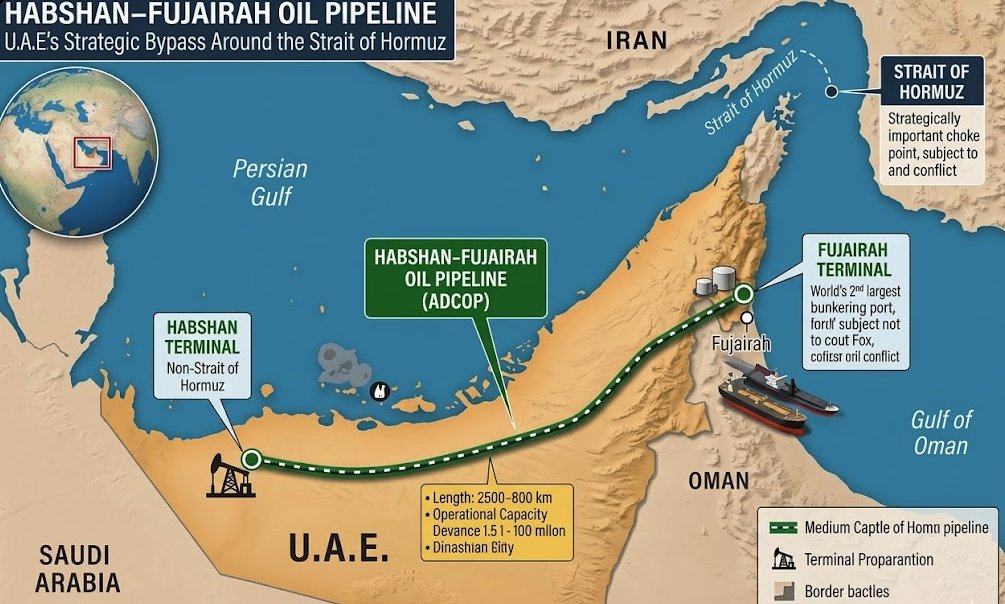
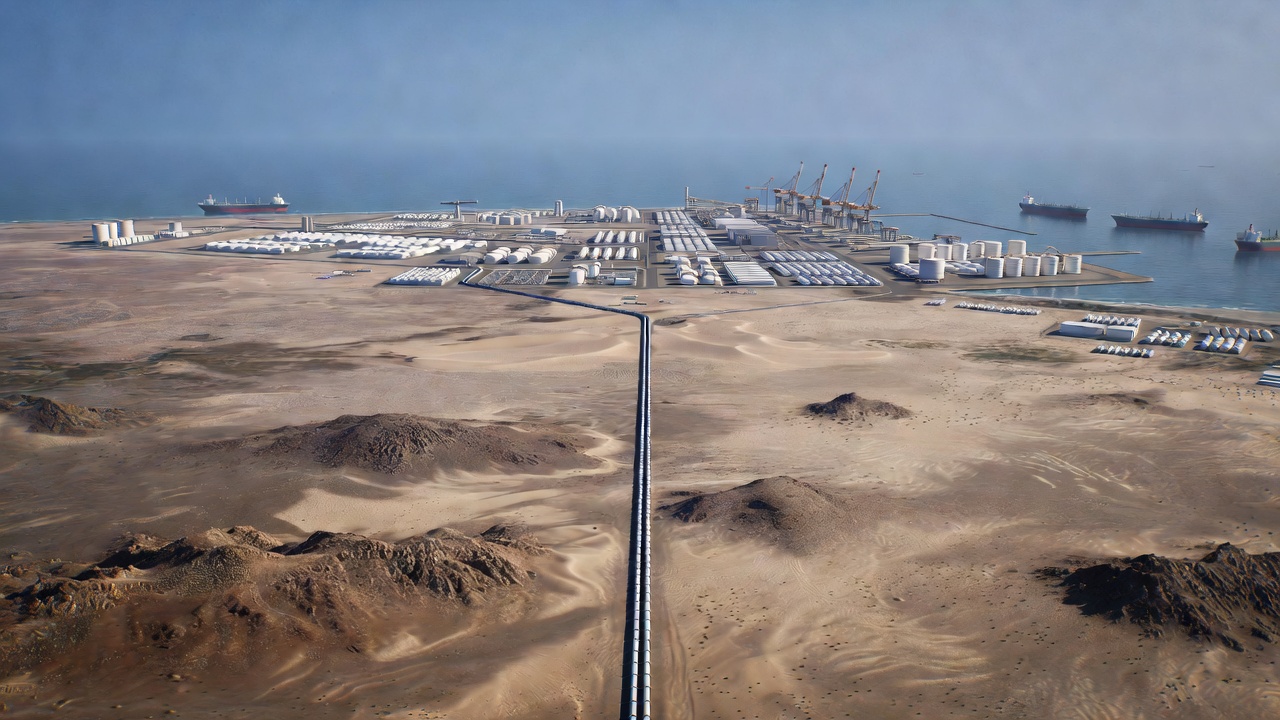
The new second pipeline, construction of which began in 2024, will effectively double Fujairah’s crude export throughput to an estimated 3–3.6 million bpd once operational in 2027. ADNOC has been ramping up utilization of the existing line during the disruptions, with exports via Fujairah surging as a percentage of total shipments. Fujairah’s role as a major storage, refining, and export hub on the Indian Ocean side further cements its strategic importance for Asia-bound cargoes.
This infrastructure push comes just weeks after the UAE’s formal exit from OPEC (and OPEC+) effective May 1, 2026. Previously constrained by quotas of roughly 3.0–3.5 million bpd despite having built out significant upstream capacity, the UAE is now free to pursue full production potential. ADNOC’s current crude production capacity stands at approximately 4.85 million bpd, with a stated target of 5 million bpd by 2027 (advanced from an earlier 2030 timeline) through ongoing $150 billion-plus investments in upstream projects. Some analysts project output could reach 4.4 million bpd as early as next year and climb toward 5 million bpd (or higher in optimistic scenarios) by the end of the decade once export bottlenecks ease.
In the near term, the Hormuz closure has forced ADNOC to curtail exports and seek creative workarounds, including limited tanker transits with transponders off and ship-to-ship transfers. The Fujairah bypass has been a game-changer, though the existing pipeline’s capacity has limited full monetization of production. With the expansion, the UAE will be positioned to bring significantly more oil to global markets independently—potentially an additional 1.5–2 million bpd or more via the secure bypass route alone, depending on utilization and overall output ramps. This represents a major increase in non-OPEC (or post-OPEC) supply from one of the world’s most reliable producers.
What This Means for the UAE, Investors, and Consumers
For the UAE, the strategy delivers enhanced energy security and economic resilience. By reducing dependence on the volatile Strait of Hormuz—through which roughly one-fifth of global seaborne oil normally flows—the country protects vital oil revenues that underpin its economy and diversification ambitions (Vision 2031 and beyond). Fujairah’s growth as an international hub will create jobs, attract investment, and strengthen the UAE’s standing as a dependable energy supplier even amid geopolitical headwinds. The move also aligns with broader regional efforts, such as Saudi Arabia’s East-West pipeline expansions, collectively eroding the strait’s strategic leverage over Gulf producers.
Investors stand to benefit from ADNOC’s accelerated growth trajectory. The company’s upstream expansions, pipeline projects, and related infrastructure (including Fujairah terminal upgrades) represent tangible opportunities in a now-unconstrained environment. ADNOC has already raised billions through listings and partnerships; further capacity utilization could drive higher revenues, dividends, and project pipelines. Globally, an increased reliable supply from the UAE may moderate price volatility, offering a hedge against future chokepoint risks for energy portfolios focused on midstream, shipping, and Asian refining plays.
For global consumers, the implications are largely positive over the medium term. A UAE capable of ramping production and exports without OPEC constraints or Hormuz vulnerabilities adds flexible, non-cartel supply to the market. This could help stabilize or ease oil prices once full flows resume, benefiting households, airlines, and industries worldwide—particularly in major importers like India, China, Japan, and South Korea that already rely heavily on UAE and Fujairah-sourced crude. In the immediate crisis, the bypass has helped prevent even sharper supply shocks.
In summary, the UAE’s doubling down on Fujairah exports is more than an infrastructure upgrade—it is a geopolitical and commercial masterstroke. By engineering away reliance on a contested chokepoint while unleashing production potential, Abu Dhabi is securing its future as a top-tier energy player. As the second West-East pipeline comes online in 2027, expect the UAE to deliver more barrels, more reliably, to a world that desperately needs them.
Appendix: Sources and Links
- Jack Prandelli (
@jackprandelli
) X post (May 15, 2026): https://x.com/jackprandelli/status/2055209596336091314 (original context for the announcement).
unherd.com - “UAE’s West-East Pipeline expansion to become operational in 2027, doubling oil export capacity,” The National (May 15, 2026): https://www.thenationalnews.com/business/energy/2026/05/15/uaes-west-east-pipeline-expansion-to-become-operational-in-2027-doubling-oil-export-capacity/
thenationalnews.com
- “UAE to double oil export capacity bypassing Strait of Hormuz by next year,” The Hindu BusinessLine (May 15, 2026): https://www.thehindubusinessline.com/markets/commodities/uae-to-double-oil-export-capacity-bypassing-strait-of-hormuz-by-next-year/article70982400.ece
thehindubusinessline.com
- “Free from Opec, how much can the UAE raise oil output capacity?” AGBI (May 3, 2026): https://www.agbi.com/analysis/oil-and-gas/2026/05/free-from-opec-how-much-can-the-uae-raise-oil-output-capacity/
agbi.com
- Additional supporting coverage from Reuters, Bloomberg, and industry analysis on UAE OPEC exit and pipeline details (April–May 2026).
Energy News Beat will continue monitoring developments as ADNOC executes this ambitious timeline.