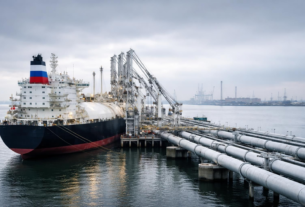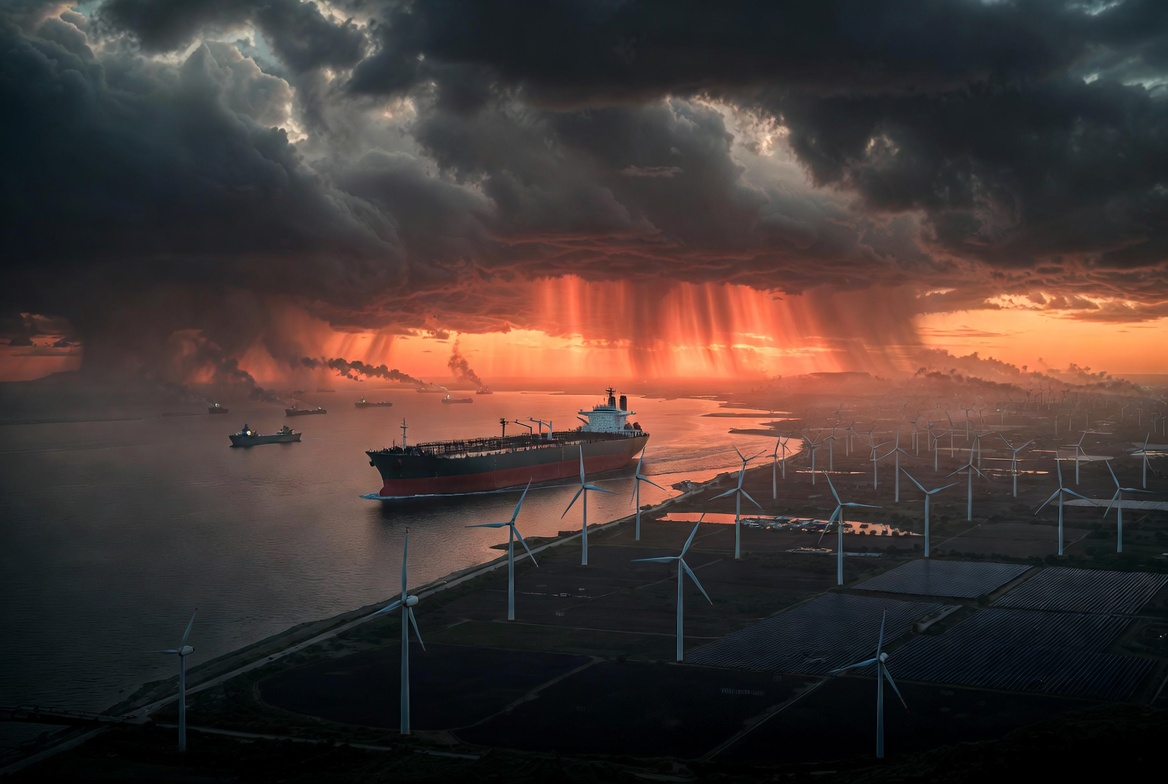
The world is once again staring down the barrel of an energy crisis. With the Strait of Hormuz effectively closed amid escalating tensions from the Iran conflict, global markets are in panic mode over potential disruptions to oil and liquefied natural gas (LNG) supplies. Prices are spiking, supply chains are under threat, and governments are scrambling. Yet this isn’t just another headline—it’s a stark reminder of a deeper truth that the “energy transition” crowd has long ignored or downplayed.
Despite trillions poured into wind, solar, and other renewables, the global economy’s dependency on oil, gas, and coal has not been meaningfully reduced. Renewables have added some capacity, primarily to electricity grids in select regions, but they remain a sideshow when real shocks hit. The hydrocarbons that power transportation, industry, heating, and the vast majority of primary energy demand are still king—and the world panics when they’re threatened.
This reality was laid bare in a recent Financial Times analysis titled “The energy shock is not over yet.” Energy commentator Art Berman captured it perfectly in his May 26, 2026, post on X: “FT admits the energy transition was a flop. The Iran War proves that renewables are a sideshow. The world panics when oil & LNG disappear. Renewables did nothing to reduce dependency on hydrocarbons. Just another unnecessary layer of complexity on top.”
Berman’s point cuts through the green narrative: the transition hasn’t delivered energy security or independence from fossils. It has simply layered expensive, intermittent sources on top of an existing system without displacing the reliable backbone.
The $10 Trillion Experiment That Delivered Just 3% More Energy
On the Energy News Beat podcast, we have repeatedly highlighted the staggering inefficiency of the green push. As we discussed in episodes covering U.S. Energy Secretary Chris Wright’s remarks and the broader global picture, the world has spent roughly $10 trillion on wind, solar, batteries, and related technologies over the past two decades. The return on that investment? A mere 3% increase in global primary energy supply.
Wind and solar have grown impressively in electricity generation in some markets—reaching double-digit shares in places with heavy subsidies and favorable policies. But when you look at total primary energy (the full picture that includes oil for transport, gas and coal for industry and heating), fossils still account for roughly 80–86% of supply. Oil hovers around 30%, coal near 28%, and natural gas about 23%. Wind and solar combined contribute only about 3–4% of the world’s total energy.
This isn’t a failure of technology alone—it’s a failure of expectations. Renewables have not replaced hydrocarbons; they’ve mostly supplemented growing overall demand. And when geopolitical shocks like the Hormuz closure hit, the system reverts to what works: oil tankers, LNG carriers, and coal plants. No amount of solar panels or wind turbines can reroute a supertanker or keep factories running through weeks of supply disruption.
Why the Transition Hasn’t Reduced Dependency
Several hard realities explain this outcome:
Intermittency and infrastructure limits: Wind and solar produce power only when the sun shines or wind blows. Without massive, cost-effective storage or overbuilt grids, they can’t provide the 24/7 reliability that modern economies demand. Transmission bottlenecks and land-use conflicts only compound the problem.
Primary energy vs. electricity: Much of the transition talk focuses on electrifying everything, but electricity is only about 20% of final energy consumption globally. The rest—transport, heavy industry, aviation, shipping—still runs overwhelmingly on oil, gas, and coal derivatives.
Growing demand outpaces green additions: Global energy consumption continues to rise, especially in developing economies. New renewable capacity is absorbed into that growth rather than displacing existing fossil infrastructure.
Geopolitical proof in real time: The current Hormuz crisis is Exhibit A. Markets aren’t panicking over missing solar output—they’re worried about missing oil and LNG barrels. Europe, Asia, and beyond are turning back to coal and whatever fossil supplies they can secure, exactly as they did during previous shocks.
The FT piece underscores that the energy shock isn’t over—and, critically, the transition hasn’t insulated us from it. Renewables haven’t made the world less vulnerable; they’ve just added cost and complexity while hydrocarbons remain indispensable.
A Call for Pragmatic Realism
At Energy News Beat, our mission has always been clear-eyed analysis over ideology. The data from our podcasts, backed by sources like the Energy Institute Statistical Review, IEA figures, and real-world market behavior, shows that energy security requires all-of-the-above thinking—oil, gas, coal where needed, nuclear for baseload, and renewables where they make economic sense without massive subsidies or grid distortions.
The $10 trillion experiment proves that wishful thinking doesn’t rewrite physics or geology. The energy transition, as currently pursued, has not lessened our dependency on oil, gas, and coal. It has simply made the system more expensive and fragile in some ways while leaving the core vulnerabilities intact.
As the Hormuz situation evolves, expect more volatility, higher prices, and renewed calls for “accelerated transition.” But the real lesson is simpler: until we can produce, transport, and store energy at scale without relying on hydrocarbons for the heavy lifting, they remain the foundation. Ignoring that reality doesn’t make it go away—it just makes the next shock hurt more.
The energy shock isn’t over yet. And it won’t be until policymakers confront the data instead of the dream.
Appendix: Links and Sources
- Art Berman X post (May 26, 2026): https://x.com/aeberman12/status/2059223748310343902
- Financial Times article: “The energy shock is not over yet” – https://www.ft.com/content/36345a2b-e7bc-4077-8e88-5874cf9a723d
- Energy News Beat Podcast episode discussing $10T spend and 3% gain (with reference to Strait of Hormuz): “The world has spent 10 Trillion on Green Energy to only have gained 3%” – Available on Apple Podcasts, Spotify, YouTube, and other platforms (e.g., https://getpodcast.com/podcast/energy-news-beat-podcast/the-world-has-spent-10-trillion-on-green-energy-to-only-have-gained-3-_bfd54e22f6). Related episodes also cover U.S. Energy Secretary Chris Wright’s comments and global energy data.
- Supporting data references: Energy Institute Statistical Review of World Energy, IEA World Energy Outlook reports, Our World in Data energy mix visualizations (publicly available as of 2025–2026 data).
This article reflects analysis from the Energy News Beat team and draws directly from the referenced sources and our ongoing podcast discussions.