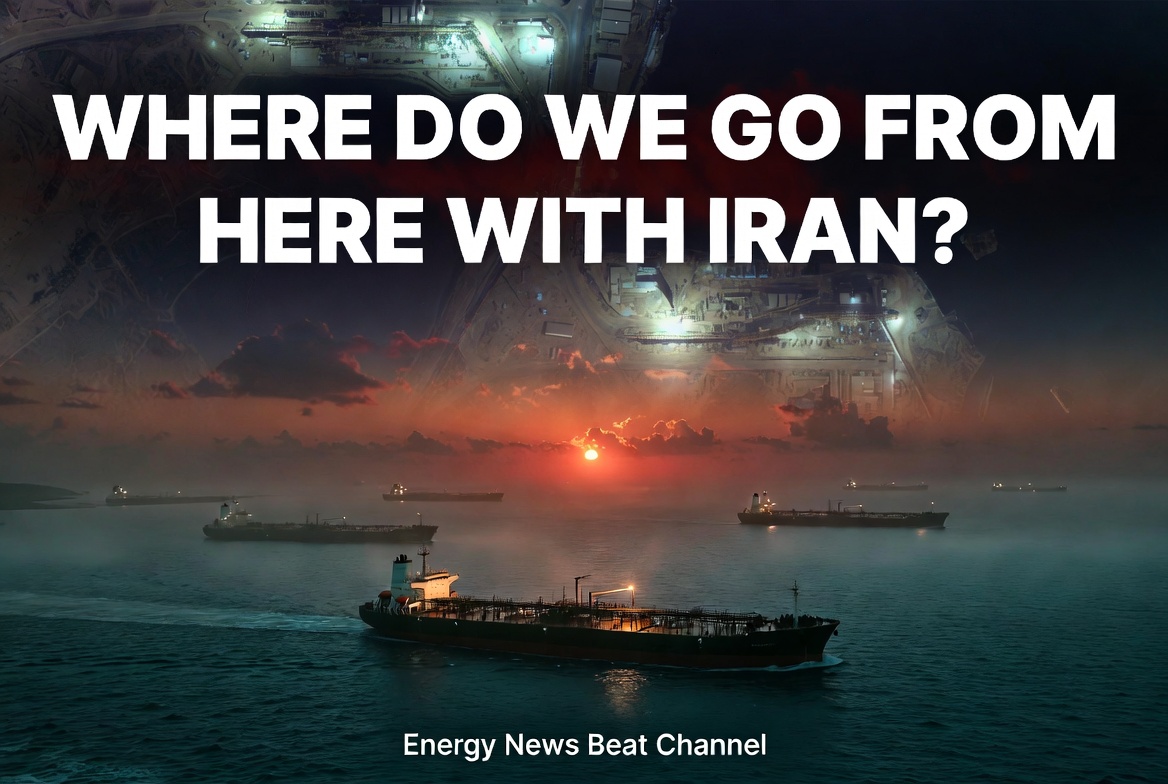
The fragile truce between the United States and Iran is unraveling. Renewed attacks on commercial shipping in the Strait of Hormuz, fresh U.S. strikes on Iranian targets, satellite evidence of Iran rebuilding damaged nuclear sites, and mixed signals from Washington and Tehran have once again put global energy markets on edge. The central question for the energy sector is no longer “what happened,” but “where do we go from here?”Nuclear Rebuilding Signals from Iran
On July 10, 2026, CNN published exclusive satellite imagery (analyzed with the Institute for Science and International Security) showing Iran appears to be actively repairing and reconstructing suspected nuclear facilities struck earlier in the year.
Key sites include:
- Parchin — clear signs of repair and reconstruction activity in June–July imagery.
- Pickaxe Mountain (suspected underground nuclear site) — vehicles moving in and out of tunnels in recent weeks.
This activity raises serious questions about whether Iran violated the memorandum of understanding (MOU) signed with the U.S. in late June 2026.
Escalating Rhetoric and the Mario Nawfal Interview
In a July 11 interview posted by Mario Nawfal, former CIA analyst Larry Johnson assessed the situation bluntly: Washington reportedly gave Iran until tomorrow (July 12) to declare the Strait of Hormuz open and toll-free, admit the recent ship attacks were a “mistake,” or face serious consequences. Johnson rated the odds of compliance as “no way” or “no way in hell,” predicting possible strikes within 24 hours. Trump’s own messaging has been contradictory — stating Iran wants to keep talking while also declaring the ceasefire over. Multiple tracks of talks (Islamabad, Switzerland, Jordan) are reportedly underway even as redeployment orders are reportedly being countermanded on the ground. The political ceiling in Tehran remains extremely low, with hardline voices (including references to Khomeini’s grandson) framing any negotiation with America as treason.

Image above linked to the interview.
Attacks in the Gulf – Last 30 Days (Mid-June to July 11, 2026)Iranian forces have conducted multiple attacks on commercial vessels, primarily in or near the Strait of Hormuz. The U.S. has responded with direct strikes on Iranian targets.
Key incidents include:
June 14, 2026: Attack on the Hong Kong-flagged vessel Bochim Marengo in the Strait of Hormuz (drone or missile suspected).
June 25, 2026: IRGC Navy attack on a vessel southeast of Oman/Duqm area.
July 6–7, 2026 (the most significant recent cluster): Iran attacked three commercial vessels in/near the Strait of Hormuz in Oman’s territorial waters:
- Al-Rakiyat (Qatari LNG tanker) — struck, fire reported.
- Wedyan (Saudi crude oil tanker) — damaged with oil spill.
- Cyprus Prosperity (Liberia-flagged crude tanker).
The U.S. Central Command described these as a “clear violation” of the ceasefire. In response, the U.S. launched new strikes against Iranian targets and revoked the waiver that had allowed Iranian oil sales under the interim deal.
Shipping traffic through the Strait has plummeted. On July 9, confirmed crossings dropped to just 22 vessels (pre-war average: 125–140), with most traffic now favoring the Iranian route.Oil Price Response
Oil prices reacted sharply but have since moderated:
- Following the July 6–7 ship attacks and subsequent U.S. strikes, Brent crude surged more than 3%, trading above $76–78 per barrel.
- By July 9–10, prices eased approximately 2% as markets priced in active mediation efforts to prevent full-scale war. Brent settled around $76 per barrel on July 10.
The market remains highly sensitive to any further escalation around Hormuz, which handles ~20% of global oil trade.
China’s Buying Behavior and Analyst OutlookChina — traditionally Iran’s largest oil customer — has not ramped up purchases aggressively during this latest flare-up. Chinese imports of Iranian crude more than halved in June to around 650,000 barrels per day. Independent “teapot” refiners in Shandong have instead snapped up larger volumes of non-sanctioned crude from Iraq, the UAE, and Qatar. Iranian oil at sea has been building up. The U.S. has warned of potential 100% tariffs on Chinese entities buying Iranian oil; Beijing has pushed back, asserting its right to buy from any supplier.
Analyst consensus for the rest of 2026 remains divided:
- Some forecasts (e.g., J.P. Morgan) see Brent averaging around $60/bbl for the full year if disruptions remain targeted and short-lived.
- Other banks and polls have hiked 2026 forecasts (some into the $85–90+ range), citing prolonged Hormuz risks and slower supply recovery.
- Short-term volatility is expected; a sustained closure or major escalation could push prices significantly higher.
UAE Hits All-Time Production Highs
While others hesitated, the UAE has aggressively capitalized on the chaos. According to the IEA’s July 2026 report, UAE crude output reached a record 4.1 million barrels per day in June — nearly double March levels and surpassing the previous 2020 peak. The country exited OPEC earlier this year and used its own tanker fleet to maintain exports despite Hormuz disruptions.
OPEC+ Outlook for H2 2026
OPEC+ continues its gradual unwinding of cuts. On July 6, 2026, seven member countries (including Saudi Arabia, Russia, Iraq, etc.) agreed to raise output by an additional 188,000 barrels per day starting in August 2026. The group is monitoring market conditions closely but faces the reality that geopolitical risk (especially Hormuz) now overshadows quota decisions. The UAE’s exit and independent ramp-up further complicate the cartel’s cohesion.
Iraq’s Mediterranean Pipeline – Potential Game-Changer
In a major positive development for supply security, reports emerged on July 11 that the Trump administration, Iraq, and Syria are preparing to announce the revival of the historic Kirkuk–Baniyas pipeline (running from northern Iraq to Syria’s Mediterranean port of Baniyas). The pipeline, dormant since the 1980s, would initially carry ~300,000 barrels per day (with higher potential capacity) and provide Iraq with a direct export route to the Mediterranean, bypassing the Strait of Hormuz entirely. The deal is expected to be unveiled next week during Iraqi Prime Minister Ali al-Zaidi’s visit to the White House.
This would be a significant strategic win for securing Iraqi (and potentially other Gulf) exports and reducing Iran’s leverage over Hormuz.
Where Do We Go from Here?
The situation remains highly fluid. Active mediation is underway, but hardline positions in Tehran, domestic political pressures in Washington, evidence of nuclear site rebuilding, and repeated attacks on shipping make de-escalation fragile. Energy markets are pricing in a “managed conflict” scenario for now — volatility without total shutdown. However, any further major incident in the Strait of Hormuz or escalation of strikes could quickly reverse the recent price moderation.
Key watchpoints for the coming weeks:
- Whether Iran meets the reported U.S. deadline on Hormuz.
- Outcome of the upcoming Iraq–U.S.–Syria pipeline announcement.
- Actual Chinese buying behavior versus rhetoric.
- OPEC+’s next moves amid rising non-OPEC supply (UAE, U.S. shale, etc.).
The energy world is adapting — through diversification, alternative routes, and record output from nimble producers like the UAE — but the underlying risk from Iran remains the dominant variable for the second half of 2026 and beyond.
Appendix: Sources & Links
- CNN Exclusive on Iran nuclear sites rebuilding (July 10, 2026): https://www.cnn.com/2026/07/10/world/video/investigates-polglase-iran-nuclear-sat-imagery
- Mario Nawfal interview with Larry Johnson (July 11, 2026): https://x.com/MarioNawfal/status/2075766146335121805
- Axios on Iran attacks on three ships (July 7, 2026): https://www.axios.com/2026/07/07/iran-resumes-hormuz-attacks-us-officials
- Al Jazeera / CNN coverage of July ship attacks and U.S. response.
- IEA via Rigzone / Bloomberg / Oilprice.com on UAE record output (July 10, 2026).
- Reuters on China shifting away from Iranian oil and OPEC+ August increase.
- Middle East Eye on Iraq–Syria–U.S. Mediterranean pipeline plans (July 11, 2026).
- Trading Economics / MarketWatch for recent Brent prices.
- Institute for the Study of War (ISW) updates on maritime activity in the Strait.
Energy News Beat Channel will continue monitoring developments closely. Stay tuned for updates.