

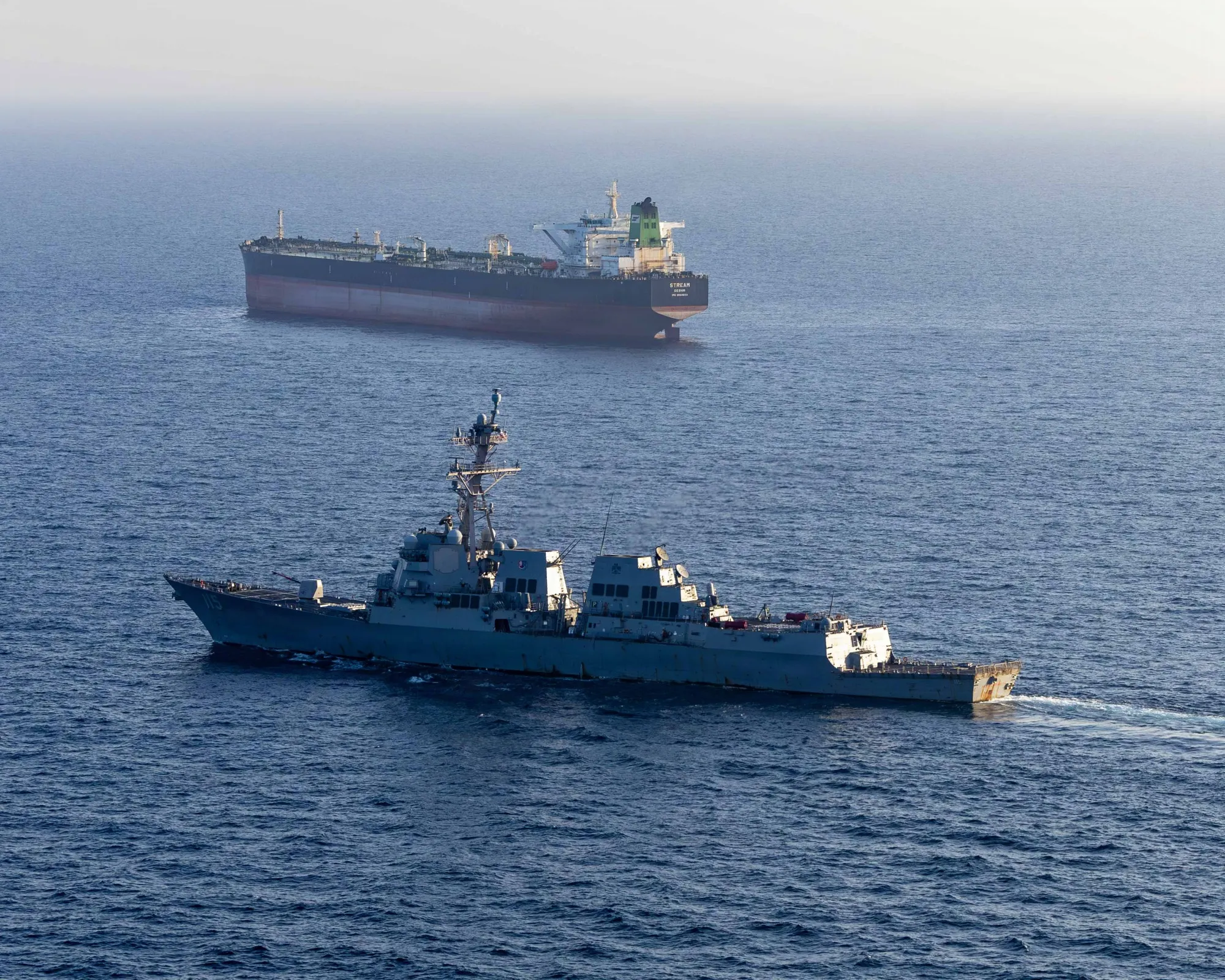
US military surveillance has documented nearly 1,000 commercial vessel transits through the Strait of Hormuz in the roughly two months since the US-Iran ceasefire took effect on April 8, 2026. The figure, shared by an official familiar with US Central Command operations, exceeds private-sector estimates that rely primarily on ship transponders (AIS data). Military analysts tracked the movements using a combination of air, sea, and space surveillance assets originally deployed during the conflict.
The bulk of the counted vessels are large cargo and container ships. The tally deliberately excludes smaller traditional craft such as dhows. This sustained level of activity signals a gradual reopening of the world’s most critical energy chokepoint, which normally carries about one-fifth of global oil and LNG supplies, even as private tracking data undercounts traffic due to vessels operating with transponders switched off.
LNG Tankers and “Dark” Transits
Shipping data and social-media tracking have repeatedly shown LNG and oil tankers using AIS “dark” tactics—turning off or spoofing transponders—to navigate the strait amid heightened risks. In late May 2026, for example, two supertankers (the VLCCs Eagle Veracruz carrying Saudi crude and Nissos Keros carrying UAE crude) and at least one LNG tanker (Umm Al Ashtan, loaded at Das Island) successfully exited the strait with transponders off, bound for India and China. Similar dark transits were reported earlier in the month, including the Qatari LNG carriers Fuwairit, Al Rayyan, and Al Hamra.
Regarding the specific group of five LNG tankers recently positioned in the Gulf of Oman and waiting to attempt a westbound transit back into the Persian Gulf: X discussions and shipping intelligence as of June 3 noted a fifth empty LNG tanker heading toward the Gulf of Oman outside the strait, joining others amassing there (primarily Qatari and ADNOC-related vessels). These empty carriers are positioning for potential loaded return voyages once conditions allow. However, as of the latest reports (early June), not all have successfully crossed. At least two Qatari-laden LNG carriers recently aborted their eastbound exit attempts and reversed course, underscoring persistent caution even post-ceasefire.
US Central Command’s higher count compared with AIS-based estimates directly reflects these dark operations: military surveillance captures vessels that commercial trackers miss.
Renewed Tensions and Other Strikes in the Gulf
While commercial crossings have continued since the April ceasefire, regional tensions have not fully subsided. In the first days of June 2026, Iran launched missile and drone attacks targeting US bases and Gulf-state infrastructure, including Kuwait International Airport and facilities near Bahrain. US forces responded with self-defense strikes on Iranian military sites on Qeshm Island in the Strait of Hormuz area. CENTCOM reported intercepting multiple incoming threats, while commercial shipping slowed sharply in response, with some days seeing only a handful of transits.
These incidents highlight the fragility of the ceasefire and the ongoing risk to energy flows. Despite the challenges, the US-tracked transit numbers demonstrate that the strait has not returned to the near-total paralysis seen in the peak conflict months, when hundreds of tankers were stranded on both sides.
Market Implications
The resumption of roughly 1,000 crossings since mid-April has helped prevent a total collapse in Gulf energy exports, keeping oil prices from spiking to extreme levels (as noted in recent public comments by former President Trump). LNG flows remain more constrained than crude, however, with Qatari and UAE exporters still facing insurance and routing hurdles. Global buyers continue to monitor real-time AIS gaps and military updates closely, as any renewed closure could quickly tighten Asian and European gas markets.
Energy News Beat will continue tracking vessel movements, dark-fleet activity, and any escalation in the Gulf. The strait remains open—but far from routine.
(All accessed or referenced June 6, 2026)
- Bloomberg original article (June 5, 2026): “US Forces See Nearly 1,000 Hormuz Crossings Since Ceasefire” – https://www.bloomberg.com/news/articles/2026-06-05/us-forces-see-nearly-1-000-hormuz-crossings-since-ceasefire?srnd=phx-industries-energy
- Reuters (May 25, 2026): Oil and LNG tankers exit Hormuz – https://www.reuters.com/business/energy/vessels-carrying-middle-east-oil-lng-exit-hormuz-head-pakistan-china-2026-05-25/
- Reuters (May 28, 2026) coverage of three tankers with transponders off (widely shared on X) – referenced via https://www.reuters.com/business/energy/three-oil-lng-tankers-exit-hormuz-with-transponders-off-2026-05-28/
- Additional shipping reports on Qatari LNG aborts and Gulf of Oman positioning (early June) – MarineTraffic/Facebook and Kpler data summaries.
- Recent strike reports:
- RFERL (June 3–5 coverage): Iran-US exchanges, strikes on Kuwait/Bahrain, US response on Qeshm Island – https://www.rferl.org/a/iran-united-states-drone-attacks-kuwait-peace-talks/33771717.html
- Wikipedia summary of 2026 events (for context on earlier strikes) and ongoing crisis – https://en.wikipedia.org/wiki/2026_Iranian_strikes_on_Arab_countries
- X posts and discussions (Latest mode, May–June 2026):
- Tanker dark transits and LNG movements (e.g.,@TheCradleMedia,@ShipNews,@IDNFinancials).
- Empty LNG tankers in Gulf of Oman (e.g.,@SStapczynski,@researchUSAI,@CruxBriefHQ).
- Broader Hormuz updates referencing US counts and recent incidents.
All data drawn from publicly available shipping intelligence, official statements, and verified media. Energy News Beat relies on cross-checked sources for accuracy in this volatile region.