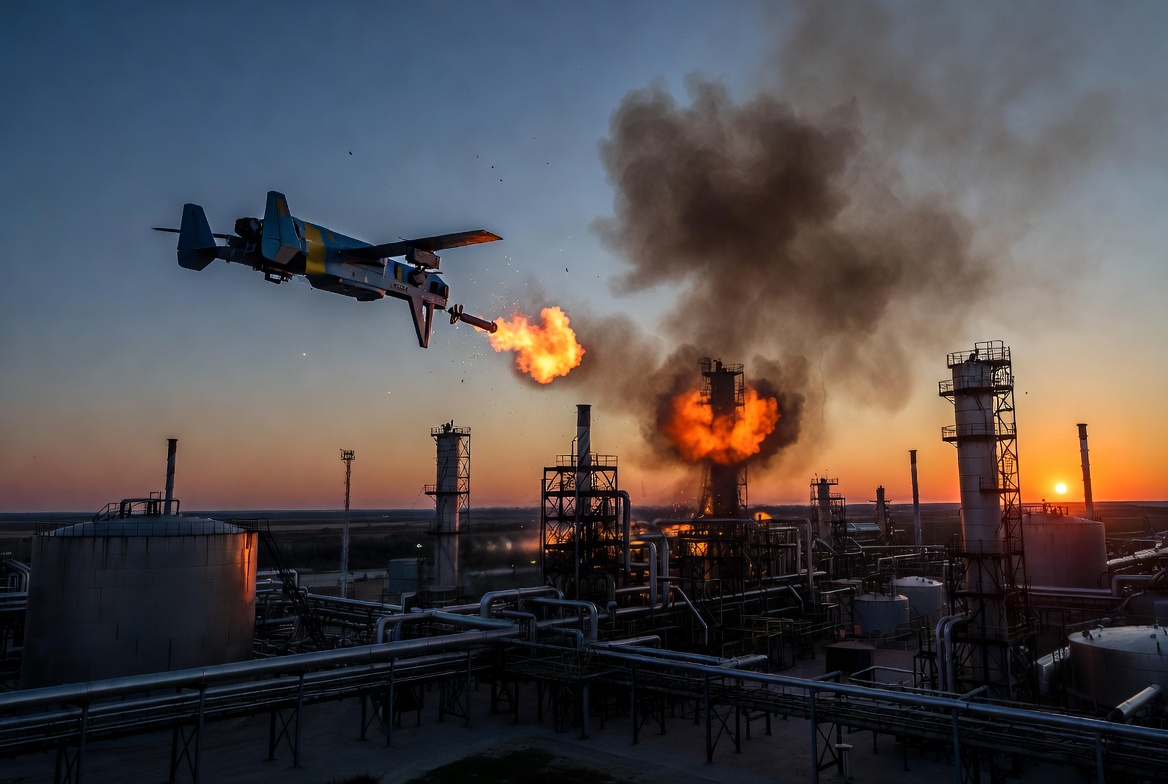
Russia is preparing to sharply reduce its crude oil exports in June, diverting more barrels to the domestic market as refinery disruptions, regional fuel shortages, and persistent Ukrainian drone strikes take a heavy toll on production and logistics.
According to preliminary industry and trading data reported by Reuters and cited in OilPrice.com, crude loadings from Russia’s key western ports—Primorsk, Ust-Luga, and Novorossiysk—are expected to fall to 1.7 million barrels per day (bpd) in June, down from 2.5 million bpd in May.
At the same time, Moscow plans to ramp up refinery throughput by 250,000 to 400,000 bpd this month to ease seasonal demand and shortages in several regions.
Russian Deputy Prime Minister Alexander Novak has publicly acknowledged that national oil production has fallen since the start of the year—the first such admission from Moscow highlighting operational strain. Crude output already dropped 300,000–400,000 bpd in April, one of the steepest monthly declines since the pandemic.
Current Export Numbers (Latest Available Data as of June 2026)Crude Oil: Seaborne crude exports held relatively steady in May at approximately 4.036 million bpd (preliminary estimates), but the June cut in western port loadings signals a clear downward shift. Earlier 2026 monthly averages hovered around 3.6–3.66 million bpd in April–May before the latest disruptions.
Refined Products:Gasoline: Exports suspended since April 2026 due to domestic shortages.
Jet Fuel (Aviation Fuel): Fully banned through November 30, 2026, following refinery damage.
Diesel: Exports rebounded to around 900,000 bpd earlier in 2026 (December 2025–January 2026 data), but Moscow is now weighing further curbs as refinery runs hit multi-year lows.
Natural Gas: Pipeline and LNG exports remain more resilient than oil. April 2026 saw LNG revenues rise 25% month-on-month to €58 million per day, with pipeline gas revenues up 15% despite a 7% volume drop. Annual pipeline exports were revised downward to 115 bcm in 2025 forecasts, with a modest 118 bcm planned for 2026. Europe (via TurkStream) and Asia (China, Japan) continue to receive volumes, though overall exports are far below pre-war peaks.
Who Are Russia’s Customers for Refined Products and Crude?
Russia’s export markets have shifted dramatically since 2022 sanctions, with Asia and key non-Western buyers absorbing the bulk:
Crude Oil: China remains the dominant buyer at 49–51% of exports, followed by India (37–38%), Turkey (6%), and a small EU share (~5% in April). In recent months, India briefly overtook China as the top single destination at times, with combined India-China demand forming a floor of nearly 4 million bpd.
Refined Products (gasoline, diesel, jet fuel, etc.): Turkey is the largest buyer at 26%, followed by China (13%), Brazil (11%), and Singapore (8%). These flows support refiners and domestic fuel needs in emerging markets.
Who Will This Impact?
The June export cuts will primarily hit Russia’s core customers in Asia and the Global South:
China and India could face tighter crude supply, potentially pushing them toward higher-priced alternatives from the Middle East or elsewhere and narrowing the discount on Russian Urals crude.
Turkey, Brazil, and Singapore—key refined-product importers—may see reduced diesel and other distillate availability, risking higher regional fuel prices.
Global Markets: Reduced Russian barrels (especially refined products amid existing bans) could tighten diesel and jet-fuel balances worldwide, supporting higher crack spreads and contributing to upward pressure on oil prices. Refinery disruptions already account for over 30% of Russia’s gasoline capacity and 25% of diesel output being affected by prior strikes.
Domestic Russian fuel shortages are the priority, meaning producers are foregoing spot domestic sales to meet export commitments where possible—further underscoring feedstock constraints.
Updates on Putin-Zelensky Meeting and Potential End to the War
Ukrainian President Volodymyr Zelensky sent an open letter to Vladimir Putin in early June 2026, proposing direct face-to-face talks on neutral ground to negotiate an end to the war. The letter included offers of a full ceasefire and an “all-for-all” prisoner swap.
Putin rejected the proposal outright, stating he sees “no point” in such a meeting, calling Zelensky’s letter “rude,” and questioning Zelensky’s legitimacy. Putin reiterated that any talks must follow a ready-made peace deal and his long-standing preconditions (territory, neutrality, demilitarization).
Broader peace efforts remain stalled. Previous rounds of U.S.-brokered talks (including in Geneva and the UAE) produced prisoner swaps but no breakthroughs on core issues such as the occupied territories or NATO membership. Russia continues to demand full control of annexed regions and Ukrainian neutrality, while Ukraine insists on full territorial restoration and security guarantees. As of June 8, 2026, no ceasefire is imminent, and Ukrainian drone strikes on Russian energy infrastructure—including the recent hit on the Grushovaya transshipment base near Novorossiysk—continue unabated.
Feedback on a potential end to the war remains cautious. While some diplomatic channels (including U.S. pressure for a timeline) have kept dialogue alive, fundamental disagreements and ongoing battlefield realities suggest any resolution is still months or years away. The latest export cuts are a direct consequence of the conflict’s escalation into energy infrastructure, illustrating how the war continues to reshape global energy flows.
- OilPrice.com article (primary source): https://oilprice.com/Latest-Energy-News/World-News/Russia-Slashes-Oil-Exports-As-Fuel-Shortages-And-Drone-Attacks-Bite.html (June 8, 2026)
- CREA Monthly Analysis of Russian Fossil Fuel Exports (March & April 2026): https://energyandcleanair.org/ (multiple reports)
- Reuters, Bloomberg, IEA, and KSE Institute reports on export volumes and revenues (2026 data).
- BBC, AP, CNN, Al Jazeera coverage of Zelensky-Putin letter and response (June 2026): https://www.bbc.com/news/articles/cpqpqx5qe40o and related outlets.
- CEIC Data, EIA, and additional market trackers for historical and 2025–2026 export baselines.
Energy News Beat will continue monitoring these developments as drone activity, refinery runs, and diplomatic overtures evolve. Stay tuned for updates.