

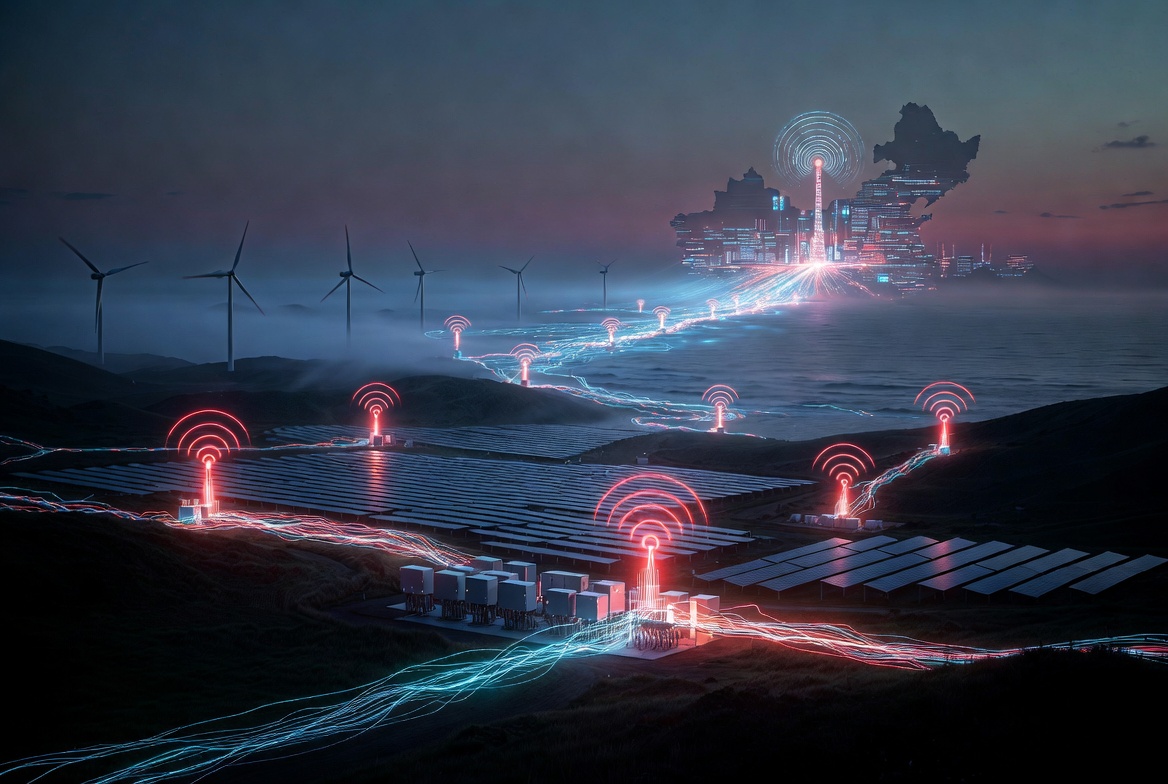
The Trump administration is drafting restrictions that would effectively ban imports of new foreign-made energy inverters used in solar projects and battery storage systems, citing risks that China could use the devices to disrupt U.S. power supplies.
According to an exclusive Reuters report published June 30, 2026, the Federal Communications Commission (FCC) is leading the effort, which could be issued as early as this year. The move targets inverters that connect solar and battery systems to the grid and is driven by longstanding national security concerns over Chinese supply chain dominance and potential remote interference capabilities.
The development follows the European Commission’s May 2026 decision to bar Chinese-made inverters from publicly funded energy projects and revives a stalled 2025 White House effort (previously directed at the Commerce Department) that was paused amid U.S.-China diplomatic engagement.
Rogue Communication Devices Raise Alarm
A key catalyst for heightened scrutiny came in May 2025, when U.S. experts conducting security assessments of grid-connected equipment discovered undocumented “rogue” communication devices — including cellular radios — inside some Chinese solar inverters and batteries from multiple suppliers. These components were not listed in product documentation or bills of materials.
The hidden devices could allow remote circumvention of firewalls, enabling potential shutdowns, setting changes, or other manipulations of inverters. Experts described the risk starkly: “That effectively means there is a built-in way to physically destroy the grid.” Coordinated remote actions on a large scale could destabilize power grids, damage infrastructure, and trigger widespread blackouts.
Uri Sadot, CEO of SolarDefend and formerly with SolarEdge, warned that remotely controlling a sufficient number of home or utility-scale inverters “could have catastrophic implications to the grid for a prolonged period of time.” Former NSA Director Mike Rogers noted that China sees value in placing core U.S. infrastructure at risk of disruption.
China dominates global inverter production, led by firms such as Sungrow Power Supply and (until U.S. sanctions) Huawei. Over 200 GW of European solar capacity — equivalent to more than 200 nuclear plants — relies on Chinese inverters. In the U.S., major utilities, including Florida Power & Light, have already begun shifting away from Chinese inverters.
Trump’s 2020 Executive Order Set the Precedent
This latest push builds directly on earlier Trump administration actions targeting foreign equipment in the U.S. power grid. On May 1, 2020, President Trump signed Executive Order 13920, “Securing the United States Bulk-Power System.”The order declared that the unrestricted acquisition or use of bulk-power system electric equipment (including transformers, generators, protective relaying, industrial control systems, and more) designed, developed, manufactured, or supplied by persons owned by, controlled by, or subject to the jurisdiction of foreign adversaries constitutes an “unusual and extraordinary threat” to U.S. national security, foreign policy, and economy.
It prohibited certain new transactions involving such equipment when the Secretary of Energy determines they pose undue risks of sabotage, subversion, or catastrophic effects. It also directed identification of existing risky equipment already in the grid and recommendations for isolation, monitoring, or replacement “as soon as practicable.”The Wall Street Journal reported at the time that the order reflected a consensus among senior intelligence officials that foreign adversaries, including China and Russia, had secured hidden footholds in the electric system that could be used to cause blackouts.
Around the same period, reports emerged of the U.S. Department of Energy diverting at least one Chinese-built grid transformer for inspection over suspected malware concerns.
Broader Pattern of Vulnerabilities and Policy Response
The 2025 discovery of rogue devices in inverters is the most prominent recent example of hidden communication capabilities in Chinese energy equipment. It aligns with broader concerns about supply-chain risks in critical infrastructure, where Chinese law requires companies to cooperate with intelligence services.
The FCC’s approach mirrors its recent country-neutral bans on new foreign models of drones (December 2025) and routers (March 2026), where no waivers have been granted to Chinese firms. The Department of Defense is already prohibited under the Fiscal Year 2026 National Defense Authorization Act from procuring solar photovoltaic cells, modules, or inverters from foreign entities of concern, including many Chinese manufacturers.
Europe is moving in parallel: Lithuania has restricted remote Chinese access to larger solar, wind, and battery installations, while the EU considers further blacklisting of high-risk suppliers under its Cybersecurity Act.
Implications for Green Energy
While the proposed U.S. inverter restrictions aim to protect grid sovereignty and resilience, they come as the country scales up renewable energy. Reduced reliance on Chinese inverters — which have gained market share through aggressive pricing — could accelerate domestic manufacturing but may temporarily slow project timelines if alternative supply chains are not yet scaled.
Senator Tom Cotton (R-Ark.) welcomed potential action: “Relying on China for inverters puts our entire electrical grid at risk.’ I fully support any effort to ban these dangerous products.”Chinese officials have pushed back, arguing that such measures overstretch the concept of national security and unfairly target Chinese companies.
- Reuters, June 30, 2026: “EXCLUSIVE: US is working on ban targeting Chinese energy inverters, sources say” — https://www.reuters.com/legal/litigation/us-working-ban-targeting-chinese-energy-inverters-sources-say-2026-06-30/
- Reuters, May 14, 2025: “Rogue communication devices found in Chinese solar power inverters” — https://www.reuters.com/sustainability/climate-energy/ghost-machine-rogue-communication-devices-found-chinese-inverters-2025-05-14/
- Executive Order 13920, May 1, 2020: “Securing the United States Bulk-Power System” — https://trumpwhitehouse.archives.gov/presidential-actions/executive-order-securing-united-states-bulk-power-system/ (also available via Federal Register)
- Wall Street Journal, May 1, 2020: “U.S. Moves to Address ‘Extraordinary Threat’ From Some Foreign Electric Gear” — https://www.wsj.com/articles/u-s-moves-to-block-imports-of-some-power-equipment-11588346518
- Additional supporting context drawn from public reports on EU actions (May 2026), DoD NDAA FY2026 restrictions, and expert commentary cited in the above primary sources.
The situation remains fluid — the draft ban could still be modified or delayed. Energy New Beat Channel will continue monitoring developments on this critical intersection of national security and the clean energy transition.
