In a significant setback for one of the most ambitious AI infrastructure projects in the United States, Blackstone-backed QTS Realty Trust has decided to abandon its portion of the Prince William Digital Gateway (also known as the PW Digital Gateway) in Northern Virginia’s Prince William County. The move comes just days after Bloomberg reported the decision on July 2, 2026, marking the effective end of plans for what was envisioned as the world’s largest data center campus.
The sprawling project, spanning roughly 2,100 acres in total (with QTS targeting more than 800 acres), was planned for up to 37 data center buildings across approximately 22 million square feet. It sat on the edge of the historic Manassas National Battlefield and near protected lands, promising massive economic activity but facing intense local resistance.
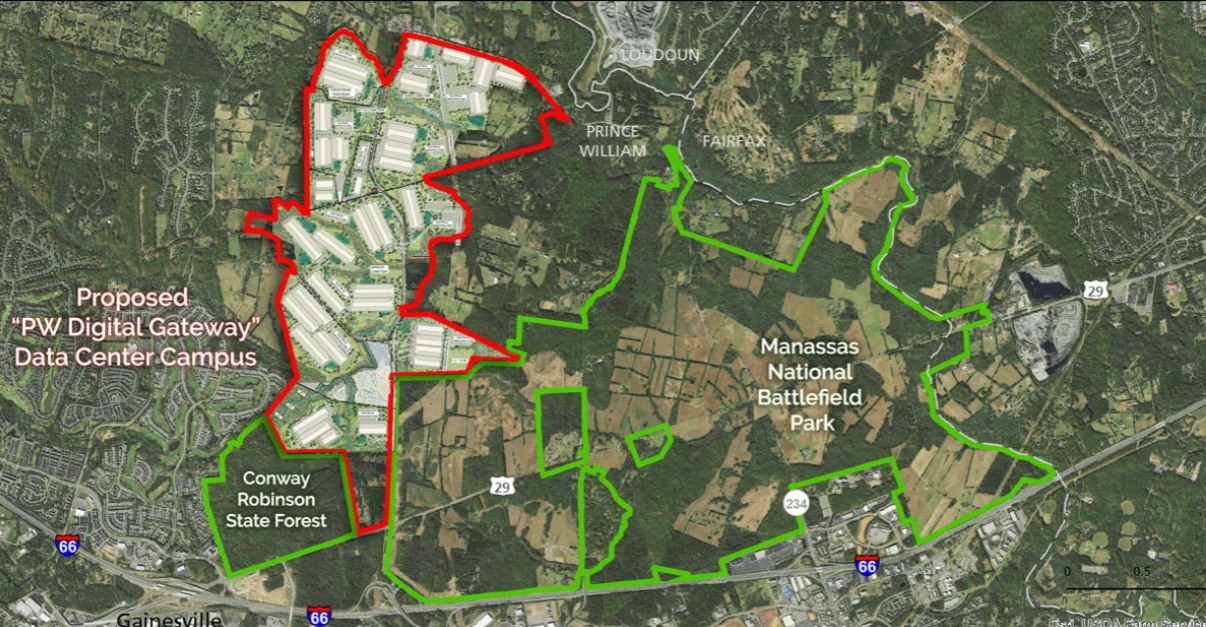
Aerial view/map of the proposed Prince William Digital Gateway data center campus (red outline for proposed development areas).
The Legal and Regulatory Saga
The project’s troubles escalated after a Virginia circuit court ruled in 2025 that zoning approvals were invalid due to improper public notice (failing to meet the required six-day separation between notices). This was upheld by the Virginia Court of Appeals in March 2026. The county’s Board of Supervisors then unanimously withdrew from defending the project in April 2026, halting its appeal efforts after spending over $1.7 million in taxpayer funds.
Compass Datacenters (backed by Brookfield), the other major developer, had already exited in May 2026, citing compounding regulatory hurdles and legal actions. QTS, left without a cost-sharing partner for utility upgrades, ultimately concluded that continuing the fight was not worthwhile. Attorneys planned to notify the court of the withdrawal as early as this week.
Blackstone acquired QTS in 2021 and has positioned itself as a dominant player in data centers. However, this specific greenfield mega-project has now collapsed amid grassroots opposition, zoning technicalities, and shifting local politics—including Virginia’s new energy consumption tax on data centers.
Is This a Lone Blackstone Issue or a Systemic Problem?
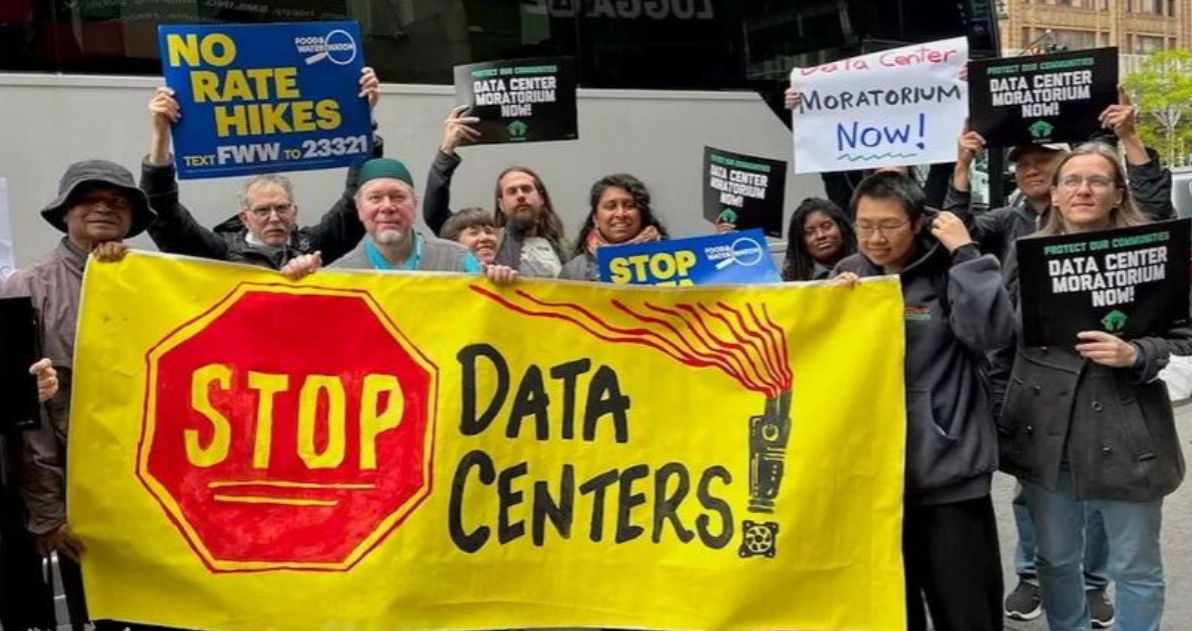
This withdrawal is not isolated to Blackstone or QTS. It reflects broader, mounting headwinds facing the AI-driven data center boom across the U.S.: Community opposition is surging.
A March 2026 Gallup poll found that 7 in 10 Americans (71%) oppose constructing AI data centers in their local area, with 48% strongly opposed. Concerns center on energy and water use, pollution, noise, traffic, and quality-of-life impacts. Opposition exceeds that for local nuclear plants in some polls.
Example of public protests against data center developments.
Cancellations and delays are accelerating. Data center project cancellations quadrupled to 25 in 2025 (from 6 in 2024). Reports indicate $18 billion in projects blocked and $46 billion delayed due to local opposition in recent years, with some trackers citing even higher figures ($64B+ affected). Power grid bottlenecks (7–10 year wait times for connections in key markets), electrical component shortages, and regulatory pushback are major culprits.
Power infrastructure lags demand. The AI buildout requires enormous electricity—equivalent to powering entire cities. Grid constraints and rising energy costs/taxes are forcing developers to reassess projects.
Blackstone itself is not retreating from data centers overall. The firm manages one of the world’s largest portfolios (reportedly $150B+ in data centers and facilities under construction, plus a large prospective pipeline). It has pursued expansions elsewhere (e.g., partnerships in Pennsylvania, Japan, and a joint venture with Google) and recently sold stakes in three other Virginia data centers to Digital Realty Trust for $3.5 billion.
Blackstone executives, including CEO Stephen Schwarzman, have described the business as “conservative” picks-and-shovels infrastructure with long-term leases to investment-grade hyperscalers, not speculative bubble activity.
Are We Facing an AI Bubble?
The Prince William collapse highlights real risks of over-hype and execution challenges in the AI infrastructure supercycle, but it does not signal an imminent full bubble burst:
Bull case: Long-term demand for computing remains strong as AI models advance and adoption grows. Hyperscalers (Microsoft, Google, Amazon, Meta, etc.) continue massive capex. Data centers leased to creditworthy tenants on 10–20 year terms offer more resilience than pure AI software plays.
Bear case/risks: Enormous capex by Big Tech may outpace near-term monetization and utilization. Some analysts warn of potential overbuild, especially in speculative greenfield projects without secured power or pre-leases. Delays erode returns on debt-funded investments. Public and political backlash could slow permitting nationwide. Valuation froth in AI-related equities adds vulnerability.
The situation resembles early maturation pains rather than collapse: selective pullbacks from troubled sites, while disciplined players shift toward stabilized assets, power infrastructure, and regions with better grid access. Cancellations are rising, but core demand drivers persist.
Impacts on Consumers
- Higher electricity bills: Data centers strain local grids, prompting utilities to invest in new generation/transmission or pass costs to ratepayers. Virginia’s data center tax is one example of shifting burdens.
- Environmental and quality-of-life effects: In areas where projects proceed, concerns include water consumption (for cooling), potential air/noise pollution, and increased traffic. Blocked projects preserve rural landscapes and historic sites but forgo potential tax revenue and jobs.
- Slower AI benefits rollout: Delays in infrastructure could temper the pace of new AI services, cloud improvements, or efficiency gains that ultimately reach consumers.
Impacts on Investors
Data center developers and REITs/PE firms (e.g., Blackstone, Digital Realty, others): Higher risk premiums for new builds. Winners will be those with secured power, pre-leased capacity, or a focus on existing/stabilized assets. This specific loss is minor for Blackstone given portfolio scale, but it underscores execution risks.
Hyperscalers: Rising capex with potential delays or higher costs. If utilization or ROI disappoints, capex discipline could tighten.
Broader opportunities: Utilities, power generators (gas, nuclear/SMRs), transmission companies, and equipment suppliers stand to benefit from the need to upgrade infrastructure. Selective PE/REIT exposure to “picks and shovels” remains attractive for long-term holders.
Market sentiment: Reinforces narratives around AI bubble risks, potentially pressuring tech/AI stocks in the short term while highlighting resilient infrastructure plays.
Bottom Line
The collapse of the Prince William Digital Gateway is a high-profile casualty of legal technicalities, fierce local opposition, and infrastructure bottlenecks—not a Blackstone-specific failure. It exemplifies systemic pressures on the AI data center boom: rapid demand colliding with slow grid buildout, rising community resistance, and economic realities of delays.
While not the death knell for AI infrastructure, it signals that the easy phase of unchecked expansion is ending. Investors and developers must navigate higher hurdles with greater discipline. Consumers may face higher energy costs in the near term, but could benefit from more sustainable, community-accepted development long-term.
The energy transition and digital transformation remain intertwined—power availability will increasingly dictate which AI dreams become reality.
Appendix: Sources and Links
- ZeroHedge original article: https://www.zerohedge.com/technology/worlds-largest-data-center-campus-verge-collapse-after-blackstone-unexpectedly-pulls-out
- Bloomberg/Yahoo Finance on QTS abandonment (July 2, 2026): https://finance.yahoo.com/technology/articles/blackstone-qts-said-abandon-virginia-185842048.html and related reports
- Reuters on Blackstone’s $3.5B Virginia data center stake sale to Digital Realty: https://www.reuters.com/legal/transactional/digital-realty-buy-blackstones-data-center-stake-deal-valuing-assets-78-billion-2026-06-29/
- Construction Dive on rising cancellations: https://www.constructiondive.com/news/data-center-project-cancellations-power-public-pushback/818157/
- Data Center Watch report on blocked/delayed projects: https://www.datacenterwatch.org/report
- Gallup poll on opposition to local AI data centers (May 2026 release): https://news.gallup.com/poll/709772/americans-oppose-data-centers-area.aspx
- Additional context from Blackstone statements, SemiAnalysis critiques on delay statistics, and local reporting on the Digital Gateway legal battle (e.g., Prince William County sites, Bisnow, E&E News).
All information current as of July 3, 2026.