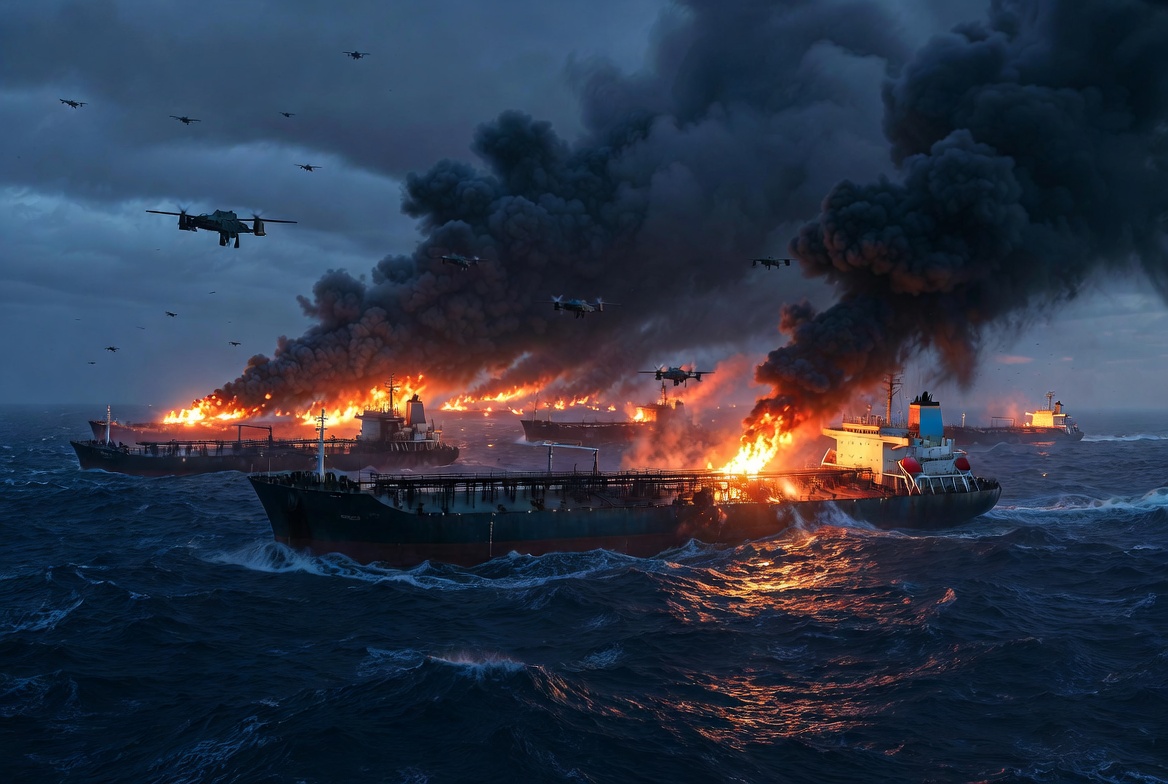
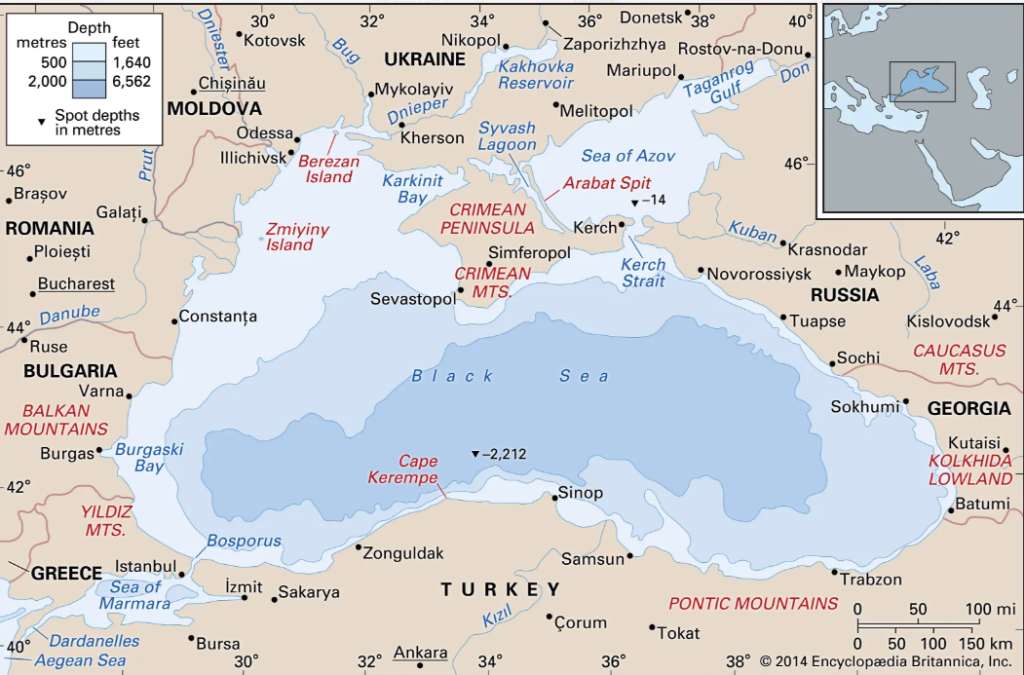
In a major overnight operation, Ukrainian drone forces struck eight Russian “shadow fleet” tankers in the Sea of Azov that were delivering fuel to occupied Crimea. The attack, described by Ukrainian commanders as achieving “industrial-scale results,” marks the latest and most concentrated blow in Kyiv’s sustained campaign to disrupt Russia’s energy exports and logistics supporting its war effort.
Ukraine’s Unmanned Systems Forces and the 414th Separate Unmanned Strike Aviation Brigade (“Magyar’s Birds,” Kairos unit) targeted the vessels on the night of July 6–7. Commander Robert “Madyar” Brovdi reported that the tankers — each with a deadweight of around 7,000 tons and under international sanctions — were carrying gasoline from the Taganrog area toward Crimea. The drones also hit a dry cargo ship and a ferry in the same convoy.
Named vessels included Venera-3, Sanar-1, Sanar-17, Klymena, Teti, Alexei Savrasov, Penelopa, and one additional tanker. Drone footage released by Ukrainian forces showed direct hits, with the tankers reportedly badly damaged and on fire. The operation reportedly extended to the Kerch oil depot, a Nebo-U radar, two S-400 launchers, and up to 58 other military sites, triggering blackouts and exacerbating fuel shortages across Crimea.
Russia has not publicly confirmed the losses.
Ongoing Ukrainian Strikes on Russian Oil Assets in 2026
The Sea of Azov attack fits into a broader and intensifying Ukrainian long-range drone and missile campaign against Russian energy infrastructure throughout 2026. Key targets have included:Refineries: Multiple strikes on major facilities such as Tuapse (hit at least four times in short periods), Yaroslavl (NORSI, Russia’s fourth-largest), Moscow’s Kapotnya refinery (multiple hits in June), Sloviansk, Kirishi (KINEF, second-largest), Omsk (one of Russia’s largest, struck in a deep raid), and refineries in Tatarstan, Volgograd, Saratov, and Afipsky. Nearly 200 drone strikes on Russian oil refineries occurred in the first half of 2026 alone — 11 times more than the same period in 2025. Over 50 reported attacks on refineries, depots, terminals, and related infrastructure since late March 2026.
Export Terminals and Ports: Strikes on Baltic Sea hubs Primorsk and Ust-Luga (which together handle a large share of Russia’s seaborne crude exports), Novorossiysk, Tuapse, and facilities near St. Petersburg/Kronstadt.
Shadow Fleet Tankers: Repeated attacks on sanctioned vessels used to evade Western oil price caps and sanctions. Earlier 2026 incidents included the WEST Horizon (June, Black Sea), FINA A (June, Black Sea), and others. The July 7 strike represents the largest single-night operation against the fleet.
Other Assets: Oil depots, pumping stations, and related infrastructure.
Ukrainian forces have conducted thousands of strikes on Russian industrial targets overall, with hundreds focused on the oil and gas sector.
The resulting fuel crisis in Russia
These attacks have significantly reduced Russia’s refining capacity at peaks, with drops of 13% or more in refined product output and claims of up to 25–42% capacity impacts at times. Gasoline production has fallen sharply (around 25% year-on-year in some reports), leading to widespread shortages.
As of early July 2026, fuel supply disruptions and rationing affect nearly all of Russia’s regions (over 50 officially reporting issues, with unofficial reports covering almost the entire country). Long queues form at gas stations; some regions have imposed sales limits or declared states of emergency (notably occupied Crimea in June, which banned civilian fuel sales at points). The crisis has spread from occupied Ukrainian territories to mainland Russia, impacting tourism, logistics, and daily life.
Russian Retaliation: Strikes on Ukrainian Gas Stations and Energy Infrastructure
Russia has responded with intensified attacks on Ukrainian energy and civilian fuel infrastructure. In particular, Russian forces have escalated strikes on retail fuel (gas) stations in Ukraine, especially in frontline regions such as Dnipropetrovsk, Chernihiv, Zaporizhzhia, Sumy, and Kharkiv.
On or around July 1, 2026, Russia struck five gas stations in the Dnipropetrovsk region (killing at least one civilian woman) and four in the Chernihiv region in a single night.
Attacks have become near-daily in affected regions.
Over the past two months (as of early July 2026), more than 150 Ukrainian gas stations have been attacked by Russian drones, according to industry sources.
These strikes aim to disrupt civilian fuel supplies and create hardship, in addition to broader Russian missile and drone campaigns targeting Ukraine’s power grid and energy facilities.Economic Impact: Losses to Russian Energy Revenues and GDPUkrainian strikes have inflicted measurable financial damage:KSE Institute estimated approximately $1.76 billion in lost Russian oil export earnings over just two weeks in late March–early April 2026 from strikes on key Baltic and Black Sea ports.
Refinery throughput and refined product output have fluctuated sharply downward, with Russia shifting more crude to exports while facing domestic shortages. Insurers previously estimated over $13 billion in sector losses from 2025 strikes alone.
Broader effects include reduced fossil fuel revenues (below levels expected from Brent prices at times), higher domestic transport and goods costs, and pressure on the overall economy. Russia’s central bank and government have acknowledged impacts on 2026 GDP growth, with forecasts revised downward (e.g., from around 1.3% toward 0.4% or lower in some projections). The fuel crisis compounds existing challenges from sanctions, war spending, and labor shortages.
Exact cumulative GDP percentage loss attributable solely to energy strikes is not precisely quantified in public analyses (as multiple factors are at play), but the campaign represents a sustained drain on Russia’s war-financing oil revenues and domestic stability.
Implications
Ukraine’s deepening strikes on Russian oil logistics — from refineries deep inside Russia to shadow fleet tankers supplying occupied Crimea — are directly pressuring Moscow’s ability to sustain its military campaign while creating visible domestic fuel shortages. Russia’s retaliatory focus on Ukrainian civilian gas stations highlights the tit-for-tat nature of the energy war.
Global energy markets have so far absorbed the disruptions without major price spikes, but sustained reductions in Russian refining and export capacity could influence supply dynamics, insurance costs for shadow fleet operations, and long-term revenue for the Kremlin.
Appendix: Key Sources and Links
- Reuters: Ukraine strikes eight Russian shadow fleet tankers (July 7, 2026) — https://www.reuters.com/world/europe/ukraine-strikes-eight-russian-shadow-fleet-tankers-kyiv-says-2026-07-07/
- Ukrainska Pravda: Ukrainian drones hit eight Russian shadow fleet tankers in the Sea of Azov (July 7, 2026) — https://www.pravda.com.ua/eng/news/2026/07/07/8042787/
- Wikipedia: Ukrainian attacks on the Russian shadow fleet (updated entry on July 7 strike)
- Reuters summary of Ukrainian attacks on Russian energy sites (June 26, 2026) — https://www.reuters.com/business/energy/ukraine-attacks-russian-energy-sites-what-has-been-hit-2026-06-26/
- United24 Media / FT analysis: Nearly 200 refinery strikes in H1 2026
- KSE Institute: $1.76B export earnings loss estimate (April 2026 assessment)
- Reuters: Russia attacks retail fuel stations in Ukraine (July 1, 2026) — https://www.reuters.com/world/russia-attacks-retail-fuel-stations-ukraine-killing-one-official-says-2026-07-01/
- Le Monde / industry sources: >150 Ukrainian gas stations attacked in past two months
- Various reports on fuel crisis and GDP impacts from CNN, Washington Post, Carnegie Endowment, Al Jazeera, and Russian central bank statements (June–July 2026)
This article is compiled from open-source reporting as of July 7, 2026. Developments in the Russia-Ukraine conflict evolve rapidly; readers should consult primary sources for the latest updates.