Energy News Beat Channel – Breaking Analysis
July 13, 2026
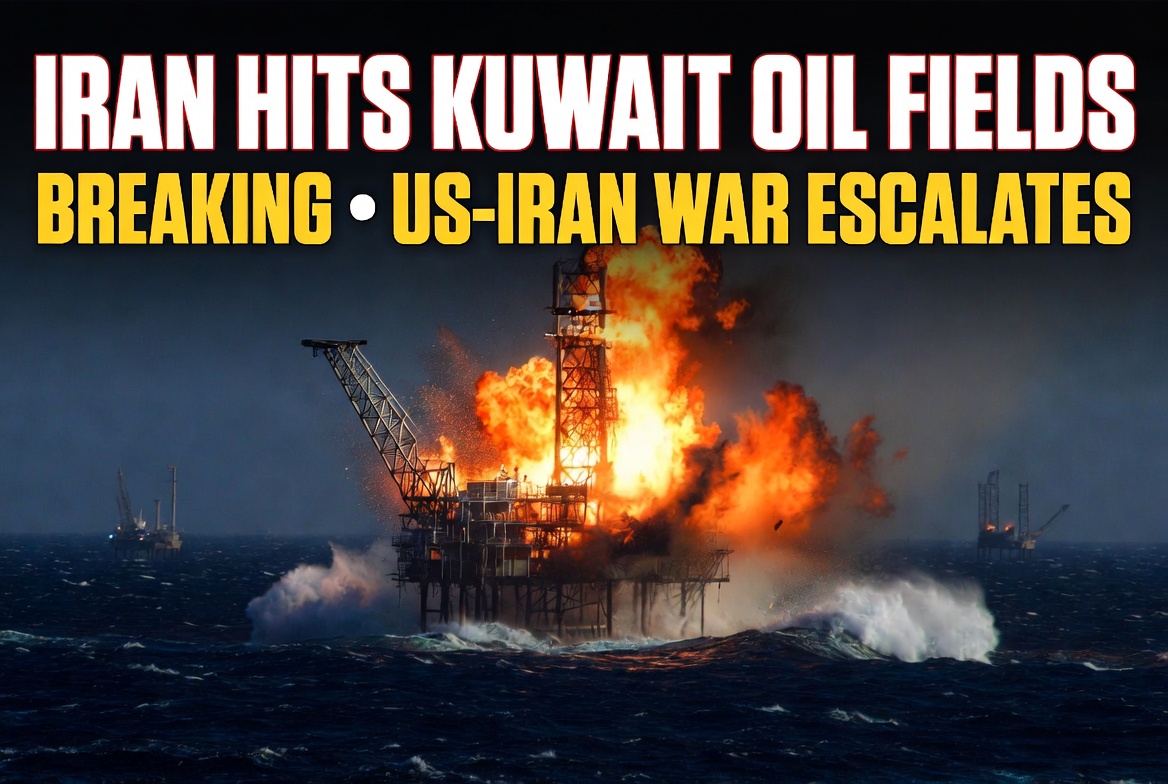
In the latest escalation of the ongoing US-Iran conflict, Kuwait reported attacks on three northern land border posts and an offshore drilling platform belonging to the Kuwait Oil Company. The platform was struck by a hostile drone, causing material damage and injuring one worker.
Kuwait’s Defense Ministry described the incidents as a “cowardly attack” and “hostile, criminal attack,” noting that its forces were actively intercepting aerial threats. The attacks occurred during a fresh round of exchanges between US and Iranian forces.
Details of the Kuwait Attack and Damage
Border posts: Three northern land border posts sustained material damage.
Offshore drilling platform: Targeted by a drone. Reports confirm material damage but no fires, major structural collapse, or immediate large-scale production shutdown mentioned in initial statements. One worker was injured; no fatalities reported.
Attribution: Kuwait did not explicitly name the perpetrator in its statement, but the incident fits the pattern of Iranian retaliatory actions following US strikes. Iran’s Islamic Revolutionary Guard Corps (IRGC) has claimed strikes on US-linked sites in the region, including Kuwait.
This latest incident on the offshore platform contrasts with earlier phases of the 2026 conflict, when Iranian drones repeatedly struck Kuwaiti refineries (such as Mina Al-Ahmadi), causing fires and more significant operational disruptions.
Broader Iranian Attacks “Tonight” / Recent Wave
Following US airstrikes on Iranian targets, Iran launched waves of missiles and drones targeting or affecting multiple Gulf states and allies hosting US interests. Reports indicate Iran struck or threatened sites in at least five other countries besides Kuwait:
- Bahrain: Attacks claimed on US military sites; air raid sirens and explosions reported.
- Qatar: Missile/drone threats intercepted; falling shrapnel injured at least three people (including a child).
- UAE: Drone and missile activity reported; some intercepts near areas like Dubai; mixed reports on whether projectiles reached territory.
- Oman: Iran claimed strikes on US naval support/refueling platforms (e.g., Duqm port area).
- Jordan: Multiple missiles landed; damage reported at facilities like Prince Hassan Air Base (hangar and runway hits); no casualties confirmed in initial reports.
Total: Iran has been linked to actions affecting six countries in this recent wave (Kuwait + Bahrain, Qatar, UAE, Oman, Jordan). Iran framed these as responses to US strikes and asserted control over the Strait of Hormuz (claiming it closed “until further notice”).
US Strikes and Bombs Dropped
In retaliation and to degrade Iranian capabilities (especially regarding shipping in the Strait of Hormuz), the US conducted significant airstrikes:
Latest round (overnight into July 12/13): US Central Command struck approximately 140 Iranian military targets. These included missile and drone sites, naval capabilities, ammunition storage, communication networks, and coastal surveillance locations.
This was the third round this week; combined strikes exceeded 300 targets across recent nights.
President Trump stated the US “hit them very hard last night.” No US service members were reported injured in the latest exchanges.
Potential Impact on Oil Prices if More Gulf Oil Sites Are Hit
The Gulf region remains critical to global oil supply. Kuwait, Saudi Arabia, UAE, and others rely heavily on offshore and onshore infrastructure, with much of the region’s exports transiting the Strait of Hormuz (a chokepoint for ~20% of global oil trade at times).Immediate risks: Further hits on Kuwaiti or other Gulf offshore platforms, refineries, or export terminals could reduce production and exports. Even limited damage raises insurance costs for tankers and prompts force majeure declarations or output cuts (as seen earlier in the conflict when production from several Gulf nations dropped significantly).
Price reaction: Markets are already volatile. Brent crude has fluctuated in the $76–79 range recently amid strike news, with spikes following escalations (earlier in the war, prices surged past $100–120 when Hormuz threats intensified).
- NDTV: “3 Border Posts, Offshore Oil Platform Attacked In Kuwait, 1 Injured” – https://www.ndtv.com/world-news/us-iran-war-update-3-border-posts-offshore-oil-platform-attacked-in-kuwait-1-injured-11762403
- ABC News Australia: “Strikes hit Kuwait oil platform as US-Iran war continues” – https://www.abc.net.au/news/2026-07-13/strikes-hit-kuwait-oil-platform-as-us-iran-war-continues/106908216
- CNN Live Updates (via aggregated reports): Details on 140 US targets and multi-country Iranian response – https://www.cnn.com/2026/07/12/world/live-news/iran-war-trump
- Reuters: “US says it struck 140 Iranian military targets Saturday” – https://www.reuters.com/world/middle-east/us-says-it-struck-140-iranian-military-targets-saturday-2026-07-12/
- Al Jazeera: Coverage of Iranian attacks across Gulf states – https://www.aljazeera.com/news/2026/7/12/missiles-and-drones-fired-at-gulf-states-after-night-of-us-strikes-on-iran
- Arab News and other regional reports confirming countries targeted (Bahrain, Qatar, UAE, Oman, Jordan, Kuwait).
- Trading Economics / market reports on Brent crude prices (~$76–79 range with volatility).
- Historical context from Wikipedia summaries and earlier Guardian/Al Jazeera reports on refinery attacks (e.g., Mina Al-Ahmadi).
This article is for informational purposes. Energy News Beat Channel recommends verifying with primary sources for investment or operational decisions. Updates will follow as new information emerges.
If more sites hit:
Analysts expect sharp upward pressure. A sustained disruption could add $10–30+ per barrel (or more in worst-case scenarios involving major producers or prolonged Hormuz issues), driven by supply fears, geopolitical risk premium, and potential OPEC+ responses. Asian importers (China, India, etc.) would feel the brunt first.
Broader effects: Higher energy costs could fuel global inflation, affect refining margins, and benefit upstream producers while pressuring consumers and downstream sectors. De-escalation or successful intercepts would likely ease prices quickly.
Energy markets are closely watching Kuwaiti output reports and any updates on the affected platform’s operational status.
Outlook
This incident underscores how the US-Iran conflict has spilled into Gulf energy infrastructure, raising risks for global oil supplies. While the latest Kuwait damage appears contained so far, repeated or expanded targeting of oil and gas assets could significantly tighten markets.
Developments are fluid — further updates on damage assessments, production impacts, and diplomatic efforts will be critical.