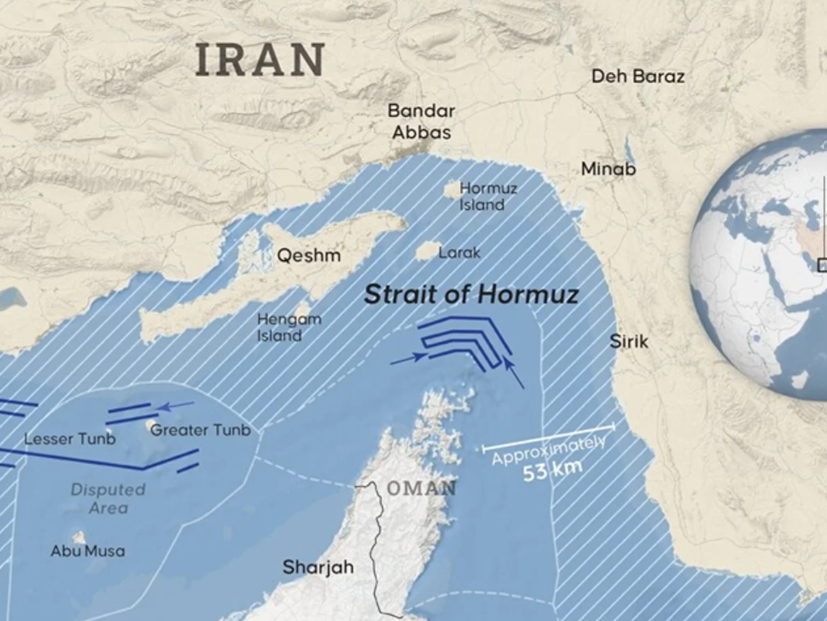
Brent crude fell 3.6% to $94.00 per barrel on Monday, November 9, 2026, with WTI dropping about 3% to $88.09, extending last week’s steep 16% slide in Brent—the sharpest weekly drop since the start of the COVID-19 pandemic. The move was driven by reports that Qatar’s prime minister was en route to the White House carrying an Iranian proposal for an interim deal to reopen the Strait of Hormuz.Oilprice
According to two diplomatic sources who spoke to Israeli media, Iran has signed off on Qatari-brokered terms. Tehran would reopen Hormuz and halt attacks on Gulf tankers. In exchange, Washington would lift its naval and economic blockade of Iran and release $8 billion in Iranian funds frozen in Qatar. Iran would drop its demand to control the strait and charge transit fees, but it still refuses to put its nuclear program on the table. Neither government has confirmed the terms. Treasury Secretary Scott Bessent, Commerce Secretary Howard Lutnick, Secretary of State Marco Rubio, and Secretary of War Pete Hegseth are reportedly opposed to a deal along these lines.Oilprice
President Trump said on Sunday that renewed U.S. strikes on Iran are “highly unlikely” if negotiations produce a strong agreement. Rubio, speaking the same day, called Iran’s demands “outrageous and ridiculous” and said the two sides are not close to a breakthrough. Iranian Foreign Minister Abbas Araghchi stated that Iran’s offer to reopen Hormuz within two days stands, provided the war ends on all fronts. Over the weekend, shipping through Hormuz came under fire again, with both sides reporting attacks on vessels, and the Iran-aligned Houthis claimed a strike on Saudi Aramco’s offices in Riyadh.Oilprice
Physical Gulf benchmarks told a more mixed story. Murban crude rose 3.4% to $99.17 in Asian trading even as paper benchmarks sold off, reflecting ongoing tightness and risk in actual flows. U.S. natural gas edged up 0.8% to $3.02/MMBtu.Oilprice
A Familiar Pattern of Collapse
This is not the first such framework. A similar U.S.-Iran memorandum reached in Switzerland earlier in 2026 collapsed after an Iranian attack on oil tankers in the strait. Earlier in the year, a 14-point memorandum of understanding (sometimes referenced in connection with talks in Switzerland or related venues) set up a 60-day window for further talks, sanctions relief, and partial reopening of Hormuz. That window expired without a lasting deal; Iran later asserted greater control claims, and attacks resumed or continued in various forms. Oil prices initially plunged on the optimism of those earlier steps before the war premium rebuilt as commitments frayed.Oilprice
The longer history of nuclear diplomacy reinforces the skepticism. Under the 2015 Joint Comprehensive Plan of Action (JCPOA), Iran agreed to sharp limits on enrichment, centrifuges, and stockpiles in exchange for sanctions relief, with IAEA verification. The IAEA initially confirmed compliance, but the U.S. withdrew in 2018 under the first Trump administration, citing the deal’s failure to address missiles, proxies, and sunset clauses. Iran then progressively exceeded the limits, enriched to 60%, restricted inspectors, and accumulated material that raised breakout concerns. Earlier European-led efforts in the 2000s also saw suspensions followed by resumed enrichment and non-compliance findings. Trust on both sides has been repeatedly broken—Washington by unilateral withdrawal and shifting conditions, Tehran by expanding the program once economic pressure eased or in response to it. Current proposals that omit the nuclear file entirely fit the pattern of front-loading economic relief while deferring the core security issue.Wikipedia
Senior U.S. officials have previously framed non-negotiable red lines around keeping Hormuz open, addressing highly enriched uranium, and preventing a nuclear weapon. A deal that explicitly sidelines the nuclear program while releasing billions and lifting the blockade is viewed by critics inside and outside the administration as potentially rescuing the regime under economic strain (IRGC salary cuts, suspended militia funding, reduced fuel supplies, and the last tanker cargoes already sold) without extracting lasting concessions. One reported assessment to Trump noted the pressure on Iran and warned against rewarding disruption that had helped drive U.S. fuel prices higher.Israelhayom
What Analysts Are Saying
Market participants are pricing de-escalation hopes more aggressively than hard evidence of a breakthrough. Analysts note that oil continues to trade lower on hopes of a U.S.-Iran deal rather than concrete progress. Ole Hansen of Saxo Bank highlighted that Trump’s comments that fresh strikes are highly unlikely have added to the downside pressure. UBS’s Giovanni Staunovo pointed to weakness in the physical market supported by still-elevated flows out of the Middle East as another weighing factor.Marketscreener
Sugandha Sachdeva of SS WealthStreet observed that despite optimism around a diplomatic breakthrough, underlying geopolitical risks remain elevated and renewed military escalation cannot be ruled out. The market is pricing a relatively optimistic de-escalation scenario even though no comprehensive agreement has materialized. Tim Waterer of KCM Trade described Trump’s tone as more measured but said the market is still waiting to see whether the recent midterms produced a lasting shift or just a temporary change. JPMorgan has flagged a growing oil glut, with a surplus estimated around 1.1–1.4 million barrels per day in recent months amid recovering Middle East flows, other production gains, and weak demand.Straitstimes
Energy consultancies such as FGE NexantECA have assessed the chances of a durable U.S.-Iran deal as low in the near term, with escalation risks remaining high and any recovery in Hormuz flows likely gradual at best rather than a clean reopening. Physical market observers (including Kpler) have noted that some normalization of flows has occurred through operational adaptations, escorts, and ship-to-ship transfers even without a comprehensive political deal, but full restoration of pre-conflict volumes and security remains distant.Oilprice
In short, the $8 billion proposal is being treated as a potential near-term pressure valve for prices, but the omission of the nuclear program, the reported opposition from key Cabinet officials, the fresh attacks, and the recent collapse of a similar memorandum make it look like a classic non-starter for a lasting resolution. Markets are discounting the war premium on hope; history and the structure of the reported terms suggest that premium can reappear quickly if talks again stall or attacks continue.
Appendix: Sources and Links
- OilPrice.com (Charles Kennedy, Nov. 9, 2026): https://oilprice.com/Latest-Energy-News/World-News/Oil-Sinks-to-94-as-Irans-8-Billion-Hormuz-Deal-Heads-to-Trump.html
- Israel Hayom ($8 billion lifeline reporting): https://www.israelhayom.com/2026/11/09/8-billion-lifeline-iranian-deal-set-to-land-on-trumps-desk/
- Al Jazeera (Rubio/Trump comments): https://www.aljazeera.com/news/2026/11/9/rubio-says-war-on-iran-unpopular-but-necessary-to-stop-nuclear-threat
- The Straits Times (analyst comments, prices): https://www.straitstimes.com/business/oil-steadies-after-trump-signals-restraint-on-iran-hormuz-risks-persist
- Capital Brief (disputed report details): https://www.capitalbrief.com/briefing/oil-prices-fall-on-disputed-report-iran-eased-hormuz-demands-1e1fa85e-20d0-4fc7-a395-b1101609b5d4/
- Reuters/MarketScreener coverage of price moves and analyst views (Ole Hansen, Giovanni Staunovo, etc.)
- Britannica and Wikipedia summaries of JCPOA history and post-2018 developments
- OilPrice.com (FGE NexantECA assessment): https://oilprice.com/Latest-Energy-News/World-News/FGE-NexantECA-Sees-Slim-Chance-of-US-Iran-Deal.html
- Additional context from prior 2026 MoU reporting (Maritime Executive, CNBC, Reuters) on the earlier Switzerland/related framework that collapsed, and Kpler/analyst notes on managed rather than deal-dependent normalization of flows.