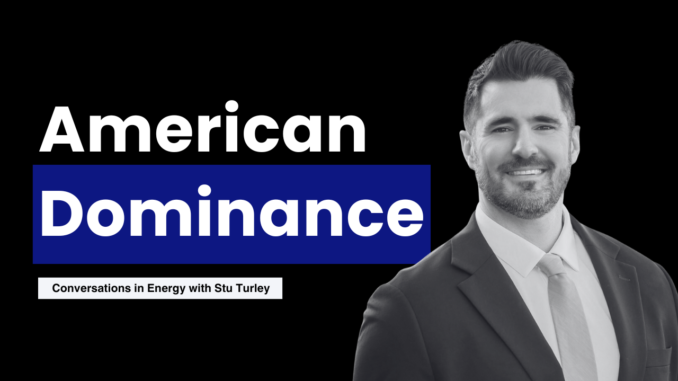
In this episode of Energy Newsbeat – Conversations in Energy, host Stu Turley sits down with Adam Ferrari, CEO of Phoenix Energy, to talk about “American oil” in action—from drilling record-setting four-mile laterals in the Bakken and delivering strong well economics even at $60 oil, to Phoenix’s transparent, yield-focused model that lets everyday investors track real production and returns. Adam shares how Phoenix grew from a small, scrappy mineral-buying team into a 40,000 BOPD operator with ambitions to reach 100,000 BOPD, why long laterals and nimble engineering are key in a soft price environment, and how global capital increasingly sees U.S. barrels as the safest bet for energy security. The conversation also hits on U.S. energy dominance, the role of private mineral ownership, permitting and policy challenges in places like California, and Adam’s broader mission to change public perception of oil and gas as an essential, long-term partner in affordable, reliable energy.
American ingenuity will make the difference, and companies like Phoenix Energy will set the curve. Oil demand will only remain strong, and we need more domestically produced oil for our National Security reasons.
Check out Phoenix Energy here: https://phoenixenergy.com/
Sound only from our feed for Apple, Spotify, and others.
Highlights of the Podcast
00:00 – Intro
00:33 – Record 4-Mile Bakken Laterals
02:11 – Economics of Longer Laterals
04:06 – Bakken Oil vs Gas Mix
04:38 – How Phoenix Energy Started
07:51 – Foreign Capital & Energy Security
10:00 – Oil & Gas vs Wind/Solar Returns
12:07 – Peak Oil Demand Pushed Out
14:35 – Oil Value & Phoenix at 40k BOPD
16:24 – Phoenix’s Transparency Strategy
18:36 – Path to 100k BOPD + Powder River
21:18 – Engineering Innovations
22:53 – North Slope & Global Supply
23:58 – California Policy & Mike Umbro
26:40 – Private Ownership & U.S. Advantage
30:09 – Operating & Living in California
35:19 – Politics & Blue-Collar Energy Jobs
36:17 – Would Phoenix Drill in California?
37:56 – 2025–2026 Outlook
38:58 – Final Thoughts & Mission
Doomberg next week.
Working on the Interview With David Blackmon and Doomberg on January 6th at 12:30 Central, talking about the Global Oil and Gas Markets. We will also talk about Doomberg’s article on Nuclear. This should be a good one as we have several key discussion points.
1. Because…Reasons
Trump Media gets into the nuclear fusion business.
2. Crude Analysis
The traditional ways of judging oil markets have become obsolete.
3. China Speed
Has the world’s largest oil importer finally unlocked shale
Here is a YouTube Link. https://youtube.com/live/WKxuQCeJMDU

Also, a fun note: Energy News Beat ranked #3 globally in 2025 for Energy Podcasts. We want to thank all of our listeners and Subscribers helping us get to the #3 spot in the world for Energy.
Stuart Turley – President and CEO of Sandstone Group [00:00:07] Hello everybody. Welcome to the Energy News Beat Podcast. My name’s Stu Turley, President and CEO of the Sandstone Group. I’ve got Adam Ferrari here. He is the CEO over there at Phoenix Energy. And I mean we are having a great talk here before this show. Welcome to the podcast. How are you today?
Adam Ferrai – Chief Executive Officer – Phoenix Energy [00:00:23] Stu, I’m doing great. Happy to be here. Let’s talk about American oil. That’s kind of the mantra we live by here. And anytime I get to chat with a fellow industry fundant, I’m up for it. So
Stuart Turley – President and CEO of Sandstone Group [00:00:33] I tell you what, this is kind of cool. I’m looking at your LinkedIn that you had post up here in the Wilson Basin record four mile long lateral. We keep saying, we keep hearing, oh, there’s a death in the industry. We’re now reached peak Permian. We’ve now reached peak oil. And then people like you come in with this kind of numbers.
Adam Ferrai – Chief Executive Officer – Phoenix Energy [00:00:53] Yeah, we well, I would just say this. We’re we are one of the smaller operators onshore in America, but we tend to view ourselves as somebody that’s always pushing the technological envelope. And results like your citing there on the nice toin pad prove that we’re doing just that. We’re proud of the fact that nobody’s ever done that. We drilled a pad five four we drilled five four mile horizontals from one pad. And we brought those wells online a couple of months ago. Nobody had ever done that in the Bakken. And we take a lot of pride in that because if you look at the Bakken and who the players are in that basin, you have Continental, you have EOG, you know, the who’s who in terms of onshore US oil production. And so we’ve done things that they haven’t even done. And we’re we’re proud of that. But we’re also happy that other people are taking note and they’re also, you know, we’re competitive. We want to go out there and do things that have never been done and add value. And now other people are starting to push the envelope. And we have this, we have an internal rivalry with Cord in terms of who has the fastest three and four mile laterals. We’re both neck and neck. So I’ll say CORD has a phenomenal drilling team when they’ve been there forever. Our drilling team is right up there with them, and we’re really proud of that.
Stuart Turley – President and CEO of Sandstone Group [00:01:58] How’s the well economics? ‘Cause I’m doing some crayon math in my head on this, and if you got one pad and you’re doing five, four laterals running out of it, your well economics have gotta be improving.
Adam Ferrai – Chief Executive Officer – Phoenix Energy [00:02:11] They are. So we we like to think of it like this. If if all else is equal, if the rock is the same and you know you’re doing it the same time of year, if you go from two to three, there’s clearly a value add in terms of rate of return on your capital. And if you go from three to four, if you can execute without any train wrecks, there’s definitely a value increase. And when we went into the first four milers, so like I said, nobody had ever done a full pad of them. We did it. I was a little bit nervous about the completion side and getting casing to bottom and some of the things because we have mastered, I would say the folks that are really good at extended reach drilling in the pocket have mastered three mile development. And it’s, I would say only marginally more risky than a two-miler, but going to four, there is some unique risk factors going from three to four that I would say we haven’t fully solved yet. Our first pad, knock on wood, was flawless. So if you don’t have any, if you don’t stub your toe, yes, the economics are clearly better on a four-mile. It’s pretty simple. I mean, you have less facilities, less service equipment, less downhole equipment. And so there’s just massive savings purely from an equipment standpoint. And we always kind of say our mantra is the next foot of lateral you drill, it’s always going to be the cheapest foot of lateral you drill for the most part. So yes, the economics are better. However, I want to caveat that. Right. We’ve drilled several two mile pads over the last two years in the Bachin, where it was the only thing we really could do given how the field had been developed historically. And we are still making positive returns, even at sixty dollar oil on two mile laterals. We’re not thrilled about the returns, I’ll be very candid, but it can still be done. And so I think we view ourselves as every chance we can to push the technological envelope and achieve better drilling and completion results on longer laterals. We always push for that. But if we still have to go back and do a one, you know, a two miler, we’re happy to do that too.
Stuart Turley – President and CEO of Sandstone Group [00:03:59] How is the mix up in the Balkan for oil and natural gas mix? It’s not very gaseous.
Adam Ferrai – Chief Executive Officer – Phoenix Energy [00:04:06] It’s not. It’s a so the Bakken I’ll just say this. The gas in North Dakota’s a by product. And if you get any money for your gas, you’re doing good. North Dakota’s all about the oil. All about the oil percent. Yeah, yeah. There’s no gassy play. There’s no gassy target in North Dakota or Montaga.
Stuart Turley – President and CEO of Sandstone Group [00:04:20] I yeah, I just just interviewed the folks up there in Pennsylvania and they got gas everywhere. I mean, you know. So now as we sit back and take a look, the economics, well economics, you love the Balkan. What prompted you, Adam, to start where you are with Phoenix? How did Phoenix get rolling?
Adam Ferrai – Chief Executive Officer – Phoenix Energy [00:04:38] Yeah. So that’s kind of a long story given our time constraint. I’ll I’ll try to give the short version. So I’m an engineer by background. I was a completions engineer for most of my ENP career. I did a little drilling. I kind of joke with my drilling team. I know enough to be dangerous. But about 10 years ago, give or take, I kind of went off on my own and learned the land side of the business. And I just wanted to take what I had learned with major oil companies and go invest my own capital and my own knowledge and try to make something happen. And Phoenix is called the third iteration of some of my more entrepreneurial pursuits. And Phoenix was founded with a small group of people. And I joke about this a lot. We had a big, a big vision, but we didn’t have much money. But what we did bring to the table was tenacity. We had a really solid plan to go execute on it. And if you now fast forward almost seven years in business, you know, we had lofty goals. And even those lofty goals were, you know, sort of we had broke some of those goals that we had set. So the foundations were humble. You know, I would say a lot of people that had specific knowledge in their area of expertise. And we pursued a mineral strategy right out of the gate. We believed that minerals were sort of a unique opportunity in the Rocky Mountain region to add value for both the mineral owner and our investors over time. And then once we kind of, I would say, not perfected it, but built out one of the most robust mineral buying machines in the Rockies that had ever been built. The natural progression was to go a little bigger. And that’s what led to operating. I mean, my background, I was an engineer for large operators like BP, you know, Newfield. If if that name rings a bell, they’re no longer, they’re no longer around. But I always wanted to do that. And once we had the capital and we had the team, that was sort of a natural evolution. And when we put our operative position together in the Bachin, you know, people have asked me now, how did you get your position? Well, coming out of COVID, not many people were very excited about drilling. And we had all this title that we had established and built, and we had all these opportunities to go put together and operate a position. So we just did it. And we put together the position. And at the time, we didn’t know if we were going to drill it or exit the position, but we ended up putting an ops team together, which I would say that our team is, if not the best, one of the most seasoned operating teams in the Bachin. Put the team together and we just started drilling. And we picked up one rig two years ago now. And now we’re running three. And we’d like to, we’d like to add a fourth. So our our our goal is very simple. We’re not a company, you know, this industry is dominated by private equity backed startups that want to get in and get out. And they have a very prescriptive methodology to how they add value. On our approach, we’re not in that arena. We’re over here forming capital in a very unique way with a long term perspective. When we go to drill units, we’re fully drilling them out. We’re not trying to leave meat on the bone for the next buyer, and which we think is the best way to develop your acreage. So we’re building assets that hopefully we maintain for the next 30 to 40 years. And that’s a very different model to a lot of what you see today in the oil industry. It’s oil and gas is dominated by the large publics and then the PE backed startups that want to sell to the large publics after they prove up some acreage. So we’re we’re just something different, and we’re really proud of that fact. And I think it’s enabled us to be very nimble in a soft oil environment. And I know I’m kind of running on a little bit there, but that’s
Stuart Turley – President and CEO of Sandstone Group [00:07:51] No, it makes sense to me because it you Adam, you are a different beast. And and I I am I’m sitting there trying to ask a figure out about four or five other things because when you sit back and take a look at it, the A I mean, we even have foreign investors now investing in they’re trying to get energy security is as close as you can get to the wellhead. Sure. And we have Japan investing in all the way to the well head. We have Saudi Arabia and everybody else investing, trying to buy molecules all the way to the wellhead. So you’re coming. I’m sitting here kind of going, that kind of makes sense.
Adam Ferrai – Chief Executive Officer – Phoenix Energy [00:08:26] I can give you a specific specific example, Stu, of and I can’t name a name because I I gotta be a little cautious. We’re public, but you can look in our files and see that we do have an institutional lender is a first-lean credit provider and their household name. They were featured. Actually, I’m not gonna say that. Dan will be upset with me if he hears this. But they were featured on a TV show a little unfairly. But Fortress is a partner of ours in terms of their credit provider, and they’ve been great for us. And there’s a group that they’ve worked with out of Korea. And I’ll tell you a short version of the story, but they want to invest in American energy because it’s safe and secure, as opposed to some of the international energy products that are less safe and less secure. And I I’ve heard this directly from them in the last three months, and it’s very relevant to your comment. I think that when people think about their future and energy security, America is is there a more secure place to harvest energy from on planet Earth? The answer is no. And so I think for a lot of American companies, that’s a a great opportunity for the future. This industry needs a massive amount of capital. And in a world where banks have been historically maybe a little more unreliable for that source of capital, because they send tend to change with the whims, right? You know, international investors have noticed what an opportunity there is in America. And we’ve seen that directly recently, and that was very cool for me to kind of experience that. I worked offshore a little bit too, but my whole career has been, you know, for 20 years, the American oil and gas industry. And and to see out, you know, international capital flowing in and wanting to flow in more is exciting. It’s good for it’s good for American oil and the
Stuart Turley – President and CEO of Sandstone Group [00:10:00] Everyone here for oil and gas investors, when we sit back and take a look, I’m I’ve got I love having 10 screens because I got my day trading going on. I’m working on this and that. And when you sit back and take a look, energy security starts at home, but energy growth and economics grows when you industrialize and you can export what you’re you’re building. And in the United States case, we’re exporting LNG. It’s gonna be the biggest thing that we export. Yeah, we’re gonna need a lot more molecules to export on the LNG side. We’re gonna need a lot more oil and gas. And the energy investing in the United States, like you just mentioned, is so critical. You know what the difference between wind and solar and oil and gas is right now?
Adam Ferrai – Chief Executive Officer – Phoenix Energy [00:10:45] Yeah. Lay it on me.
Stuart Turley – President and CEO of Sandstone Group [00:10:47] Try to get try to get returns out of a broken down solar farm. I mean, it ain’t gonna happen when Texas, you see the wind farm go right on through and all of a sudden it’s got all it’s just destroyed. Well investors are getting their money back.
Adam Ferrai – Chief Executive Officer – Phoenix Energy [00:11:01] A hundred percent. I mean, at the end of the day, when we first started this, another thought that kind of popped in our head that was really basic was investors want yield. Oil and gas is one of the best hard assets in the history of mankind for producing yield. And our whole model was let’s connect those two groups under one roof without a bunch of middlemen. And that was the basis for our capital formation thesis. We know how to generate yield. And even in a soft commodities market for oil and natural gas, the yields are still there. And they’re far superior, as you have mentioned, to solar and wind, who can’t really produce meaningful yield without subsidies. And that’s probably another debate, but I think you’ve covered that at length with other guests. But that’s just factually obvious and true. And so yeah, there is a demand still for oil and gas because it’s still a it produces significant yield for investors, and that’s something that a lot of people require. So
Stuart Turley – President and CEO of Sandstone Group [00:11:52] You know, the other side of this coin i is truly a a a problem that we have coming aro around the corner here. And that is when we sit back and take a look at peak demand peak oil has now been pushed out. You know, forget that.
Adam Ferrai – Chief Executive Officer – Phoenix Energy [00:12:06] Two. Merci.
Stuart Turley – President and CEO of Sandstone Group [00:12:07] Yeah, 20 five, it’s gone. Bye bye. You know, it’s it’s not we’re good. If we’re gonna power anything, it’s gonna be flat out. You know, we’re we’ve we spent trillions on wind and solar, and yet we’ve only gained about four percent of it actually energy in there. That’s right. We are short trillions of dollars in growth. Adam, when we take a look at normal decline curves, we need trillions of dollars in the industry. And I’m almost a permable, I’m over here in the corner. I got a permable, I gotta go feed him every once in a while. He’s in the backyard. Love a good bull, you know. He keeps keeps the neighbors away. But when you sit back and think, the normal decline curves have not had the investment like like you all have been doing. You invested when you found the good properties, yep. And you can make money at 60.
Adam Ferrai – Chief Executive Officer – Phoenix Energy [00:13:01] So we’re we’re kind of a permable too. It probably doesn’t surprise you. I think every oil man’s a permable to some extent, but I think we’re a realist too. Is the market soft note? Yeah, it’s soft. But I there’s so many positive points out there that are clear that we can measure. And I think a lot of the negative points have been proven that they haven’t come to fruition. So what are the positives in the oil market? We consume more oil today than we ever have in the history of mankind. And it doesn’t appear that that’s going down. And you mentioned the IEA or you mentioned revised forecasts. We talk about this every quarter with our investor base. The IEA has a horrendous track record of forecasting oil demand. They’re always revising it up. And they finally had to eat some crow and acknowledge, okay, peak oil, it’s not happening till maybe 2050 now, when they had previously stated things as silly as 2021. And so at least we have to have we have to speak about the reality of the world we live in. Oil is required and we need more of it. And there has been a lack of investment in it over the last several years, primarily driven by groups like the IEA and some of the narratives they’ve put out. And that’s why for me, Chris Wright is sort of on my leaderboard, because he is the breath of fresh air that we needed in Washington. He’s a realist and he’s a very competent, seasoned professional. He knows the industry like the back of his hand, and he’s out there finally speaking truth. We need all energy and we need more of it, period. And so yeah, I view America as being central to this sort of renaissance in energy, whether it’s natural gas. And I joke about this too. The natural gas guys have been calling for a natural gas boom for like 20 years. So I I’d love for them to finally get their day.
Stuart Turley – President and CEO of Sandstone Group [00:14:35] I think they’re getting close because they they’re all cheering five dollars, yay!
Adam Ferrai – Chief Executive Officer – Phoenix Energy [00:14:40] Maybe, but it’s just the the value is still in oil. We can talk about gas versus oil and LNG, but if you want real returns, it’s still on on the darker side, the black side of the barrel. It’s not the it’s not the gas stream. But we need a little more of everything. And so we’re we’re filling a, you know, we’re a 40,000 barrel a day producer, which even saying that, I’m incredibly proud of the fact that we got here from zero, but it’s a drop in the bucket. And I think you’ve kind of alluded to that. We need to find another source. And I do think, you know, you see the majors now, the offshore narrative is it’s it’s shifted a little bit. I remember I started my career offshore. The infamous Makando blowout happened, and then there was this exodus, if you will, and everyone went onshore because those were low risk, easy barrels to get, and you could ramp that fast. Well, now 10 years later, most people have acknowledged, I don’t know if you can get a whole lot more out of the key shale basins on shore. You could probably maintain it, but where’s the next barrel gonna come from? It’s gotta probably come from offshore, right? So I think that it’s been interesting. I’ve been in the game a long time and you see the shift back and forth. But but Phoenix, from our standpoint, the Bakken has a tremendous amount of running room for companies like Phoenix that are nimble, that can move quick and respond fast. And I think most of the growth in the Baking is gonna come from smaller companies like Phoenix. And you know, like our our 40,000 barrels a day that we’re delivering, were it not for Phoenix, I’m not sure those barrels would be getting produced today. And we’re really proud of that. We’re really proud. We found value that others had had kind of looked past. And I’m sure there’s opportunities like that in the Uinta basin, which we’re an active mineral owner. We don’t operate there. The Powder River Basin has a lot of opportunity still that’s untapped. And so I think there’s a ton of opportunity, but you gotta be you have to be nimble. And I think that’s the key for onshore US oil production.
Stuart Turley – President and CEO of Sandstone Group [00:16:24] As a semi-dweeb nerd goob, I mean, I whatever you want to call me. I got, you know, Linux machines and monitors. I’m looking at your website and I love the fact that I can go to your investor or production page and see the number of barrels that you got on production. I’m over here going, okay, that makes sense to an investor. How much are you doing? How much are your costs? Here’s your financial state. I kind of like that.
Adam Ferrai – Chief Executive Officer – Phoenix Energy [00:16:50] We try to keep it really simple. I’ll tell you, Stu, some of the guys that are on the ops team, they’re not used to this sort of transparency because they all worked for the big public companies and it’s kind of rigid with a lot of red tape. And we just said we want to be a different kind of an oil company. We’re mostly financed by everyday Americans that bought that engaged with us from some content online, came to a meeting and they believed in our mission and they wanted to be a part of it. And in response to that relationship that we’ve established with our bondholders, we want to be transparent. Here’s how we add value. Here’s how we service our debt. Here’s how we pay you every month. And here’s what we’re up to. And we just, yeah, we’re we’re really proud of that. We want to be a transparent operator. And, you know, sometimes it’s probably too much because now our competition, I know that our competition looks at a lot of stuff that we do and tries to get an edge on us. But, you know, we prefer to be tr as transparent as we can without saying too much. But yeah, the barrels every two weeks we update that and you can go see what we’re up to.
Stuart Turley – President and CEO of Sandstone Group [00:17:47] I I really respect that. And being like I said, a nerd, whatever the term of the week is, I appreciate it when I was trying to do my research. And you’ve had 10.5 million barrels of oil produced. Okay. I’m this is kind of cool. Where do you see Phoenix going in the next few quarters as you sit here as a CEO? And we know that oil demand is only going to go up. We know that we’re within a few minutes of a geopolitical problem somewhere. I mean, you and I are both old enough. We can remember when a tanker blew up in the Red Sea, oil spiked $20. And we’re all sitting there. Now we had last week we had two tankers in the Black Sea get hit by drones by Ukraine and it went a dollar ninety five down. Go figure.
Adam Ferrai – Chief Executive Officer – Phoenix Energy [00:18:36] Yeah. It it does feel like the geopolitical risk premium kind of went away. I view this personally, my position now. I think this is sort of a perfect setup because I think a lot of people have sort of forgotten, you know, there’s not that big of a buffer in terms of storage of oil on surface. We talk about this a lot. It’s 30 to 60 days. You have one incident and that starts going south. Who knows what prices could do? And I think that you are likely to see something happen in the next three to five years, because that’s the nature of our industry, perhaps sooner. But if I go back to your first question, where do I see Phoenix going from here? We’ve been pretty candid about our near-term goals. We want to hit 100,000 barrels a day. That’s sort of a milestone that’s just really significant for people that are building in this industry. And we’re, you know, I can’t tell you when that’s going to happen. I believe in the next three years, we’ll get there. And I think we can get there with the footprint that we already have established, which is the good thing. We don’t have to buy somebody. You know, Phoenix took a very different approach. We have a grassroots team that goes out and takes leaseholds at scale. And we’re taking new leases every day. And that’s kind of a big part of our business. We kind of call ourselves just in time financing. We raise capital every day. We put it out the door every day. So we’re always growing, but we have a footprint to hit that 100,000 barrels a day, hopefully in the next three years. If prices cooperate and stay at this level or improve, we’d likely add a fourth drilling rig in the Bakken. We have talked recently about our powder river position. We put together a footprint that we’re really proud of in the powder. And we will likely drill our first Niabrer well in Wyoming next year. So we’re excited. You know, we’re just we’re looking for opportunities to continue to add value in any way we can and be efficient. And that requires, I keep referring to it, being nimble. You know, we’re considering drilling a four-mile Nia Brera well in the powder. It’s never been done before. And we’re really proud of what we’ve done in the Bakken with extended reach drilling. And we we’ve paid close attention to Devin. I will give them credit. I usually don’t give credit to the big guys, but they’ve done phenomenal work in the powder with their extended reach drilling program. We’re a partner in a lot of their wells. They’ve been excellent. And I think they’ve kind of paved the way for some other folks to kind of up the ante a little bit and push it a little further. So Phoenix is looking to continue growing. We want to provide more barrels from America. That’s a mantra that we preach to our investor base and our team. The world needs more oil and it should be produced by American companies in America. And I know it’s kind of a cliche talking point, but that’s that’s how we operate and how we live.
Stuart Turley – President and CEO of Sandstone Group [00:20:57] You know, I’m enjoying watching you and our podcast listeners. We’re on a Zoom call recording this, and I can see Adam enjoying this conversation through his eyes. He’s enjoying talking about Boyle and his company. And I love your hard hat back there because it is a cool looking hard hat, man. That is a good
Adam Ferrai – Chief Executive Officer – Phoenix Energy [00:21:18] Is a good look. If my COO ever sees this, Mr. David Scadden, who is the young drilling phenom at Cord before he joined Phoenix, this was his design. I’m not gonna take any credit for it, but it looks cool.
Stuart Turley – President and CEO of Sandstone Group [00:21:29] That’s cool looking hat.
Adam Ferrai – Chief Executive Officer – Phoenix Energy [00:21:30] And I always have this in the background because I like to keep souvenirs from all the first oil that was produced in the fields I worked. This came from the UNT Basin of Utah. And the U.S. Basin of Utah has seen a massive resurgence over the last three years. And it didn’t make anyone happen like I’m probably the happiest person about that because when I worked the basin, it was shallow vertical post holes producing out of the Green River, the black wax. And then they started pushing it a little more into the Wasatch Formation, which has the yellow wax and it was all vertical development. And now you have companies like SM, they’re drilling four mile laterals right now that we’re partners in. And that basin’s been so exciting. I wish we had an operating position there. We we don’t, but that’s another example of, you know, there’s there’s been basins in America that still have tons of opportunity. And it’s exciting to watch people get get back into these old basins and find new ways to get more oil out of it. And that’s that’s kind of the story of America, right? And I recently I want to say it was somebody on the diamond bet earnings call that said never bet against the American engineer. And I couldn’t agree with that more. And being an engineer that’s been in the business for 20 years, oftentimes I’ve said, where do we go next from here? What’s the next improvement? And every single time I’ve said that, sure enough, within two to three years, somebody came up with something new that adds more value to the existing fields in the US and gives us new ways to more efficiently extract more resource. So I’m just excited to be a part of it. It’s been an amazing ride.
Stuart Turley – President and CEO of Sandstone Group [00:22:53] Since you’re doing some show and tell, I’m gonna do some show and tell here. This book is called Crude Dreams, and it names my granddad as one of the chief geologists who actually discovered the North Slope. So there has been a lot of change between the North Slope when it was originally started and now. So when you’re talking about where are we, where have we been? Alaska was in its heyday. And now I think we’re gonna see another Alaska heyday, but you’re not gonna be able to make money at $60 oil in Alaska. It is a little pricey up there to drill. That is fair. I think that we are gonna see drill baby drill actually happen in the United States and the Gulf of America, as I I I love President Trump for for that’s pretty cool. I’m sorry, that was trolling at its finest. And when you sit back and think, oil men make more money when Democrats are in power because the oil prices are higher. I mean we all vote Republican. I don’t get this.
Adam Ferrai – Chief Executive Officer – Phoenix Energy [00:23:58] And we talk about this a lot. It’s kind of an inside joke. But I’ll say one thing. I will give Trump an attaboy. They lowered the royalty rate on federal minerals to 12 and a half. And we part we had we were very successful at one of the most recent Montana federal lease auctions. And we’re gonna benefit a lot from that. So I think, yes, we would like higher prices. Let’s just be transparent about that. Nobody is excited about drilling new wells when oil could go to 50. And so but I think long term, the people that are in my position for other companies, I think we’re incredibly confident about this moment in time. And I always say this you have to be able to live through cycles. If your company is built in a way that you will go under with one downturn, the company wasn’t built right. I say that all the time. And so this is just this is part of the business. We have crews up there. And I I want to give a special shout out to the people that actually work in the field in North Dakota in the winter. We have some of the best men and women on planet Earth that are executing in some of the harshest conditions, and they’re exceptional at what they do. And we need to keep them working. And you know, if I could sit down with President Trump, I’d tell him, you know, maybe soften the rhetoric a little bit because we need these people working. We can’t just stop drilling and then hopefully a year later go back and resume activities. And so we’re we’re focused on keeping the ball moving forward. We can still make money at 60. No one’s doing backflips, but we’re gonna keep pushing the envelope. And when prices recover to 6570, I think you will see activity pick up again. And and we always look, we find ways to do things better. That’s happening right now. So right now, why are people drilling longer laterals? Because it’s more economic. You can’t, it’s it’s hard for most operators with their cost structure couldn’t make money on a two-mile horizontal. I believe that’s factually true. We can, but you see some of those same operators now, they’re drilling U-turn wells in North Dakota on stranded 640s. We I just looked at one yesterday. So you’ll see sometimes on the map, there’s a hole, and why didn’t anyone drill it? Well, it got stranded for some particular reason. And now, how do you get the oil out of a one mile section, a 640? But you don’t want to drill one mile lateral, that’s pretty inefficient. So they’re drilling two milers with a with a U-turn. So one mile down, one mile back. And that’s happened quite a bit. Court even drilled a four-mile U-turn, two miles down, two miles back. The production data is not available for that yet. It’s still private, but I only bring these examples up just to demonstrate. That’s what happened. That’s what happens in America when prices get soft. The engineers figure out ways to make it work. And we’re the only country on planet earth that does stuff like this. And that’s why I love being a part of the industry here, because we we have an opportunity to go put these crazy ideas in motion and find ways to engineer them into reality.
Stuart Turley – President and CEO of Sandstone Group [00:26:40] And it’s a it’s about the well head. How close can we get to the well head for investors is is what it’s all about. And you nailed it, you kind of alluded at it, Adam. The difference the United the reason the United States is different is because of royalties. Royalties makes it fifty percent of our oil. And look at his eyes. I’m sorry. Yeah, that’s right. His eyes just lit up when I said private private.
Adam Ferrai – Chief Executive Officer – Phoenix Energy [00:27:04] Private private ownership. Private ownership is what makes it different. That’s right. There’s an incentive alignment.
Stuart Turley – President and CEO of Sandstone Group [00:27:08] You bet. And I and that makes the difference to go say, wait a minute, at sixty dollars, let’s figure out a way to make money. Let’s make more money at $80. And I think that we’re gonna get there because right now Africa is exploding with new drilling opportunities. I mean, I did not have on my bingo card, Adam, that we would have Exxon Mogul Mobil looking to bid on Luke Oil in Iraq. I did not see that one coming. Oh neither, but you know, you we’re here, and now I’m visiting with NJ Anook, the head of the African energy chamber, about all the activity in the five major countries in Africa that the oil majors are running to to go do. The good news is offshore oil in foreign countries is offshore oil in foreign countries, and it doesn’t really help energy dominance in the United States. Agreed, except as energy dominance through oil field service as an export is a weak, weak slope, political slope.
Adam Ferrai – Chief Executive Officer – Phoenix Energy [00:28:16] Logan. I agree with that, Stu. Thank you. It needs to be all about American barrels, American oil on American soil, every way we possibly can. And, you know, I think, I think part of what you’re seeing is just, I think Exxon, even Continental, who is kind of an onshore U.S. Giant, they even invested in Argentina. And I see stuff like that, and I’m like, oh, that’s interesting. Because there’s still a lot more opportunity in America. But I think they also just kind of recognize what world do we live in today? And the answer is simple. The world produces 105, 106 million barrels a day every year. That’s going to go down by seven just from natural depletion. Plus you got demand growth. Where’s that next, where’s the next 8 million barrels a day going to come from? Maybe it won’t come from onshore U.S. Now I’d like to think we could we deliver more from the U.S. Yes, I think we can. Can we deliver that much more? I’m not sure. Not maybe not easily. And so it’s got to come from somewhere else. So I I kind of think that’s what you’re seeing is just the majors recognize that rather obvious truth. Where’s the next million barrels a day going to come from? And it’s probably going to come from somewhere internationally. And as much as it hurts me to say that, I wish America could produce 30 million barrels a day, but I’m not sure that’s going to happen in my lifetime. But maybe we get to maybe we get to 20, and that’d be an awesome outcome as well. But I just think the barrel’s got to come from somewhere. There’s a demand for the barrel. Where’s it going to come from? And if you look at Venezuela, you look at Mexico over the last 10 years. They’re all down. You know, can Venezuela produce three million barrels a day someday? Well, I don’t know. That’s kind of a sensitive subject now. Maybe. Can can Pemex turn it around? Maybe. Maybe. So I think there’s a lot of maybes. And, you know, I think that creates a lot of opportunity for the majors and for the nimble privates in America that are still, you know, we are an onshore U.S. Oil company. Unapologetically, that’s who we are. And we’re going to keep doing that. And we’re really good at it. But you still need the Exxons of the world to go hunting whales offshore, right? You still need that.
Stuart Turley – President and CEO of Sandstone Group [00:30:09] Still need that. And I’ll tell you, one of the short answers to this is California used to be an energy positive state, and now they are energy negative. They just imported tanker load of jet fuel from India that I tracked the tanker to the last five tankers to the Indian refinery were Russian. So they were Russian tankers to an India refinery, and we imported it to California. They import 70% of their oil. And in Kern County, you don’t have this up in the Balkan with permitting, I bet. They only got like 10 permits out this year in Kern County.
Adam Ferrai – Chief Executive Officer – Phoenix Energy [00:30:49] Aware, but I we live in California, which I think you know that it’s not our most of our people are in Denver. I live here. It’s kind of a long story. Don’t hold it against me. We’re fighting the good fight here. I will add this. The office I’m in right now was leased by a solar company and they they couldn’t get their people to come to work and we took their space and made it an oil space, which I’m really proud of that. Super nice people, but I just find that ironic. And so we’re fighting the good fight here in California. But I think you probably know Mike Ambro. He’s done a lot of good work on the California situation. I try to name drop him when I can. He’s out there posting a lot of truth, citing a lot of the same facts you are and trying to make California recognize the errors of their ways. And who knows, maybe California will be a three million barrel a day producer someday. It’s got a lot of potential. Unfortunately it’s been poorly managed. I’ll leave it at that. Thank you.
Stuart Turley – President and CEO of Sandstone Group [00:31:36] Unfortunately I knew that question before I threw that out there at you. But Mike Umbro and I are doing a live podcast. We are recording this on the day before this. Mike Umbro has been on my podcast about five times, and I absolutely love him. I was trying to get him and Chris Wright together for a podcast. And so he is one of the cool cats out there, and I love everything that he
Adam Ferrai – Chief Executive Officer – Phoenix Energy [00:32:02] He’s doing out there. I need to meet him someday. I’ve I’ve followed him for a long time. And I saw recently he was at like somewhere up in Santa Barbara where they were talking about that issue with the offshore facility producing. And he gave a very powerful speech at like a public town hall. And great guy. I’ve never met him. I’d love to meet him someday. And if you’re if you ever hear this, Mike, we appreciate all the work you’re doing. I just love supporting, I love supporting guys that are out there speaking truth in what I would consider to be hostile environments at times. And so we got to give Mike his props. He’s doing doing great work out here.
Stuart Turley – President and CEO of Sandstone Group [00:32:32] How do you go to the store with a Phoenix shirt on and going, I’m a Phoenix oil man? I mean, d do you get like booed and his
Adam Ferrai – Chief Executive Officer – Phoenix Energy [00:32:41] You know what’s funny? So people that don’t live in California kind of have this perception. I’m telling you, California’s a 5050 state. And most people are probably pro or probably agnostic. I think the rhetoric that you hear from leadership in California is not necessarily how the people here feel. I’ll say that. You know, Ronald Reagan was the president here or was the governor here, and he was a two-term president. So I think that sort of that’s still in the DNA of a lot of Californians. It really is. So you’d be surprised. It’s it’s actually a little more it’s more open minded than you might think. And I think it’s changing. You know, we have a lot of young professionals that work in this California office that didn’t have any strong opinions either way. And I think we’re we’re changing hearts and minds slowly, but it’s happening. And I’m I’m confident in that. Because they don’t know the prices they do for gasoline here. I mean, first and foremost, I I mean, if you think you just look at the policies of the Democrat governor in California, it’s made people’s lives here measurably worse. And I think people are waking up to that. Why do we pay twice what everyone else pays for gas? It’s it’s his tax policies. Why are refineries closing in California when crack spreads are really high? Well, it’s California policy. So I think I think the attitudes are changing because the reality on the ground here is, you know, kind of negative. I would say you think Steve Hilton has a chance to win. I haven’t followed that particularly close. I’m not gonna go down this road about voting. Oh no, yeah, I apologize. No, no, no. No, I would say I’d be a little more transparent, but I think he does. I’ll leave it at that. I think he does because I think there’s such a bad taste in a lot of people’s mouths with respect to the cost of living, the cost of energy. I mean, California is the most beautiful state in the country. I think I think most people would agree with that. The best weather, and it just shouldn’t be as expensive as it doesn’t have to be. So given that as a backdrop, I do think somebody like Steve Hilton has a chance. I do.
Stuart Turley – President and CEO of Sandstone Group [00:34:26] I I I wanna really give I thoroughly enjoyed my podcast with Steve. He is a cool, cool guy. He is George Harmer and Mike Umbrough are on his oil and gas advisory team, his energy advisory team. And when I sit back and take a look, he is asking the right questions as a politician. I respect that as a politician. I don’t know the answer. Let me get some experts. Wow. Sure. What a concept.
Adam Ferrai – Chief Executive Officer – Phoenix Energy [00:34:53] Yeah, yeah, yeah. Yeah, he seems like a very genuine guy. And I’m pulling for him. Oh, yeah. I’ll just throw it out there.
Stuart Turley – President and CEO of Sandstone Group [00:35:00] Yeah. I hope he does. And you know, we we’ve got to hope we know that Governor Newsom is actually gonna be trying to run for president, we guess. He’s giving all those signals, wishing the best. But as a publicly traded company, I know that you need to stay out of politics and I apologize for asking that.
Adam Ferrai – Chief Executive Officer – Phoenix Energy [00:35:19] Oh no, well, we’re pretty we’re pretty transparent about where we lie politically. We we have to support the party that’s pro energy. I think that’s pretty clear who that party is. And you know, we we it’s really simple to me. I say this a lot. You know, the oil and gas industry hires welders, truck drivers, people that are building stuff with their hands. Google’s not hiring those people. And the American oil industry is essential. If you’re if you support blue collar labor and manufacturing in America and building things, we still build things here because you can’t outsource oil production. And so I’m a from that standpoint alone, that’s where our political allegiance lies. Whoever supports that mission, that’s who we’re gonna support because that’s better for America. Let me firmly believe that.
Stuart Turley – President and CEO of Sandstone Group [00:35:58] Let me let me ask this question because this brings up a big thing. There’s been two hundred thousand oil people leave California since all of the Kern County and all the other oil permeating down. If you got a pro governor in there, would you consider stepping in and starting to drill in California?
Adam Ferrai – Chief Executive Officer – Phoenix Energy [00:36:17] I think so, yes. The answer, the short answer is yes, but I think it really depends on a lot of other variables, right? Right. One thing that’s difficult for a company like Phoenix is North Dakota has been so good to us and it’s so predictable. And the leaders in North Dakota have been amazing to work with. It’d be really it’d be really difficult to sort of pull capital away from that setup to go to a place like California. You’d have to be very confident. The change was real and it was lasting. And I think that’s that would be the difficult thing from a business perspective. Now, practically speaking, would it be awesome to be able to be part of a resurgence in an oil producing state with so much potential? Yeah, that’d be really exciting. But sometimes I got to temper the excitement with the reality. And, you know, being successful in business requires you to take the least amount of risk to make the most money you can with taking while taking the least amount of risk. And I view, you know, North Dakota and eastern Montana is incredibly low risk and still very profitable, which is what companies like Phoenix need to be successful. Right.
Stuart Turley – President and CEO of Sandstone Group [00:37:17] Yeah. I just I love that whole area and all of the great oil hands up there. It is absolutely wonderful people up there. And I love your answer, Adam. I absolutely think that was a rock solid. You said, yes. However, I’ve got to look at business. And I like the way that you did phrase that out. So what do you see coming around for your Q Q4, Q1 type thing? Are we looking? Because I looked at Q3. You actually made money, which is great. Yay! Make money. Even in a down oil season, how’s you looking?
Adam Ferrai – Chief Executive Officer – Phoenix Energy [00:37:56] For next year. So we’ve given guidance for 2025 and we’re on pace to hit our guidance, which I I actually don’t know it off the top of my head. I know the revenue number, the revenue numbers north of 700 million and the EBITDA numbers in the range of 300 million and net income positive for the for the year 2025. We have not released our official guidance in 2026 yet. So I can’t say too much, but I would just say this. We’re still running three rigs. We haven’t dropped any rigs. And so it’s likely going to be growth again next year. That’s our that’s certainly our goal. I’ve been very transparent about that. If there’s value in producing the next barrel, we are going to go produce that next barrel. And today there’s still value in going to get that next barrel. I would love to add a fourth rig next year. We have the acreage to support it. We’re entertaining that. So I think 2026 is going to be assuming prices stay flat to slightly higher, you should see another, another what I would say record year from Phoenix Energy.
Stuart Turley – President and CEO of Sandstone Group [00:38:52] I think that is a fantastic phrasing and everything else. Any last thoughts as we close this out, Adam?
Adam Ferrai – Chief Executive Officer – Phoenix Energy [00:38:58] No, I really enjoyed the chat, Stu. Let’s do this again at some point in the future. I really appreciate what you’re doing. And I just think as part of our mission at Phoenix, it’s not only to add value to the people that have entrusted us with their money, which that’s critically important, also to start changing public opinion about what it means to be an oil and gas company. We are essential. We’re necessary. And we need to start getting away from the politics of oil. Half the country shouldn’t hate us and half the country shouldn’t love us. All of the country should just understand that we’re necessary and we’re going to do the best we can to make energy cheaper for everyone and abundant for everyone. And I just want to be a part of that narrative shift. And I see it happening. And it’s people like you, it’s the Mike Umbros, it’s the Chris Wrights. And I just want to make sure whatever I can do to contribute to that ecosystem of truth, I will do. So I enjoy chatting. Let’s do it more.
Stuart Turley – President and CEO of Sandstone Group [00:39:49] I think that is fantastic. Let’s get on the schedule. I’ll have my people call your people or your people call my people for any updates that you wanna give on your earnings after your earnings and stuff. And when you wanna go over it, I’m thrilled to do earnings calls. So this is exciting. Thank you for your time. All right.
Adam Ferrai – Chief Executive Officer – Phoenix Energy [00:40:06] Thank you, Stu. I appreciate it.