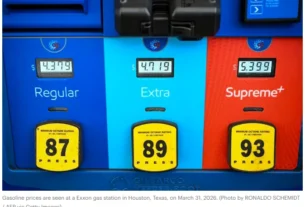
Be careful who you vote into office – you will end up paying for their decisions.
Humanity’s growing thirst for energy shows no signs of slowing. Despite years of “energy transition” rhetoric promising a shift away from fossil fuels, the reality is far different: we are in an Energy Additions Era, where new sources are layered on top of existing ones without meaningful displacement of oil, gas, or coal. This addiction to abundant, affordable energy is real and expanding — but flawed Net Zero-style policies in parts of the U.S. and Europe are inflating costs by billions, threatening reliability, and accelerating industrial decline.
Doug Sandridge wrote an outstanding article, “The Energy Transition That Isn’t!” and I am looking forward to visiting with him on a podcast soon.
The Energy Transition That Isn’t
The popular narrative of rapidly replacing fossil fuels with renewables is not matching the data.
Instead of substitution, the world is adding energy sources while overall demand surges. Fossil fuels continue to grow in absolute terms even as their percentage share slowly declines.
Global primary energy consumption reached record levels in 2025, with more crude oil, natural gas, and coal used than in any prior year.
Post-Paris Agreement (2015–2025), natural gas use rose 15%, crude oil 11%, and coal 10%. In the U.S., fossils still account for roughly 82% of primary energy, down only modestly from 84% in 2010. Renewables (excluding hydro) remain under 9% globally and about 14% in the U.S.This pattern follows historical precedent. Past “transitions” — from biomass to coal, then to petroleum — added new sources rather than eliminating old ones.
Efficiency gains often increase total consumption (Jevons Paradox), and rising living standards plus electrification of everything from vehicles to data centers drive relentless demand growth.

The bottom line: global hydrocarbon consumption will likely be higher in 2050 than today. Policies pretending otherwise ignore physics, economics, and history.
Blue States Pay 38% More — Net Zero Policies Exact a Heavy Toll
State-level energy policies are directly hitting consumer wallets. Democrat-run (“blue”) states consistently show significantly higher electricity prices than Republican-led (“red”) states, with the gap often cited around 38% higher on average for residential rates.

The bottom line: global hydrocarbon consumption will likely be higher in 2050 than today. Policies pretending otherwise ignore physics, economics, and history.
Blue States Pay 38% More — Net Zero Policies Exact a Heavy Toll
State-level energy policies are directly hitting consumer wallets. Democrat-run (“blue”) states consistently show significantly higher electricity prices than Republican-led (“red”) states, with the gap often cited as around 38% higher on average for residential rates.
Analyses show:
Blue states saw electricity rates rise 32.4% from 2014 to 2024, versus 18.5% in red states. We have covered this many times, and thanks to the Energy Bad Boys with Isaac Orr for their research.
States with aggressive Renewable Portfolio Standards or 100% carbon-free/net-zero mandates experienced the steepest increases.
The top expensive states almost universally feature mandates requiring high renewable or carbon-free shares, net metering that shifts costs to non-solar customers, and restrictions on natural gas infrastructure.
These policies raise system costs through intermittency management, backup requirements, transmission upgrades, and subsidies — costs ultimately passed to ratepayers.
PJM Grid Under Pressure: Warnings of Reliability Risks
The largest U.S. regional grid, PJM Interconnection (serving ~67 million people across 13 states + D.C.), faced serious stress in early July 2026 during a heatwave. Record or near-record demand, generator outages, overloaded transmission lines (especially in data-center-heavy Northern Virginia), and surging air-conditioning loads forced emergency actions.
PJM activated demand-response programs, issued Hot Weather and Maximum Generation alerts, and curtailed large industrial loads. Wholesale prices in constrained areas spiked above $2,000/MWh (normal levels ~$40/MWh). The U.S. Department of Energy issued emergency orders allowing temporary environmental waivers for fossil plants and curtailment of large loads to prevent blackouts.
No widespread outages occurred thanks to quick action, but the episode exposed tightening reserve margins driven by rising demand (data centers, electrification) and the challenges of balancing rapid renewable growth with reliability.

Europe’s Industrial Death Spiral: A Cautionary Tale
Europe offers a stark preview of what aggressive Net Zero policies can produce. Germany’s Energiewende and the EU Green Deal have driven industrial electricity prices roughly twice U.S. levels and 50% higher than China’s.
Energy-intensive sectors — chemicals (BASF), autos (Volkswagen planning up to 100,000 job cuts), steel, and glass — are suffering. Companies are relocating production to the U.S. and Asia for cheaper, more reliable power. German industrial output has declined, with surveys showing that emissions reductions often occur through deindustrialization (exporting emissions and jobs), rather than genuine decarbonization.
The result: higher costs, lost competitiveness, and economic pain that may prove difficult to reverse without major policy shifts toward dispatchable power and realistic timelines.

What Consumers Should Look For in Energy Policies
Smart energy policy delivers affordability + reliability + security without ideological blinders:
All-of-the-above approach: Natural gas for flexibility, nuclear for baseload, economic renewables where they make sense, and retention of existing dispatchable capacity until replacements are proven.
Avoid premature retirements of coal and nuclear plants without adequate replacements.
Market-driven decisions over rigid mandates and subsidies that distort prices.
Infrastructure investment: Accelerate transmission, smart grids, and strategic storage — not just intermittent generation.
Transparency on full system costs: Include backup, integration, and reliability expenses, not just Levelized Cost of Energy (LCOE) for wind/solar.
We have to get the Levelized Cost of Energy redefined – this is a major issue, and there will be more articles on this one.
Consumer protection: Policies that keep bills predictable and support energy-intensive industries that provide jobs.
States and countries prioritizing these principles deliver lower prices and stronger economies.
How Consumers Can Prepare for Potential Grid Stress or Failures
Recent PJM events and broader trends remind us that the grid faces real risks from extreme weather, rapid demand growth, and policy-driven retirements. Preparation is prudent:
Home backup: Whole-house or portable generators (natural gas/propane preferred for reliability), plus battery systems paired with solar where cost-effective.
Demand flexibility: Smart thermostats, programmable appliances, and participation in utility demand-response programs. – I am NOT a smart meter fan as they pump out some horrible signals and are not good for the human body.
Emergency kit: Flashlights, batteries, non-perishable food, water, medications, and a plan for medical devices.
Community readiness: Know neighbors, especially vulnerable residents; support local resilience efforts.
Advocacy: Push for policies that value reliability and affordability alongside environmental goals.
Energy security starts at home.
I found this week in Abiline that my house was a little light on the preparedness category, and I am taking care of that this week. I am getting everything staged and labeled for faster deployment. We lost power, and I had a generator capable of keeping the refrigerator and freezer running, but it was severely lacking in lighting and air conditioning.
I filmed the Doomberg episode while running on batteries or a generator, and the power came back on shortly after. Loved having the StarLink as a backup connection, and I highly recommend getting together in groups and having people have neighbors or groups that can stay in contact during natural disasters.
The solution is a Jackery Portable Power Station and another gas generator. The brands we have standardized on are the Harbor Freight Predator Series for gas. I have not played with their competitor to the Jackery line. Neither is a major investment, but with the right cables and solar panels, it is a great total package.
You don’t have to spend a lot of money to put together an energy disaster plan. It is definitely better to do that before the tornado or natural disaster hits.
Conclusion
We are addicted to energy — and that’s not changing anytime soon. The real question is whether we will meet that growing demand with pragmatic, cost-effective policies or continue down paths that inflate bills by billions, strain grids, and hollow out industries.
The evidence from blue-state rate premiums, PJM’s close calls, and Europe’s industrial struggles is clear: ideology over engineering has consequences. Consumers deserve policies grounded in reality — abundant, reliable, and affordable energy for all.
Again, a shout-out to Doug Sandridge for his great article, and we will be talking on a podcast soon. We also need to get caught up with the Energy Bad Boys.
And yesterday’s podcast with Rye Barcott was a lot of fun, and there’s an offer for any military veterans working with his group; we would love to help get exposure on the Energy News Beat podcast.
I would even be a resource to help raise awareness of energy policy and drill them on energy questions for other news interviews. The more great candidates that are America First will help all of us.
Thanks again to our great paid Substack Subscribers, patrons, and sponsors of the Energy News Beat podcast. You have no idea how much your help means!
Tomorrow, I am recording a dual podcast with Trisha Curtis, President and CEO of PetroNerds, and I am looking forward to getting that rolling. Have several other CEOs of nuclear companies and oil-and-gas executives lined up.
Appendix: Sources & Links
- The Energy Transition That Isn’t – Douglas C. Sandridge (primary reference for energy additions analysis)
- Largest US Power Grid PJM Escalates Emergency Actions to Avoid Blackouts – The Energy News Beat
https://theenergynewsbeat.substack.com/p/largest-us-power-grid-pjm-escalates - Europe’s Industrial Death Spiral Due to Net Zero Energy May Not Be Recoverable – The Energy News Beat
https://theenergynewsbeat.substack.com/p/europes-industrial-death-spiral-due
Additional Supporting Sources on Electricity Prices:
- Institute for Energy Research: Blue States, High Rates
https://www.instituteforenergyresearch.org/the-grid/blue-states-high-rates/ - American Energy Alliance: Whose Policies Are Increasing Electricity Rates? (32.4% vs 18.5% increase)
https://www.americanenergyalliance.org/2026/02/whose-policies-are-increasing-electricity-rates/ - Payless Power analysis: Blue states pay ~37% more on average
https://paylesspower.com/blog/red-vs-blue-which-states-pay-the-most-for-electricity/ - Always On Energy Research / IER map and analysis of state electricity prices
https://www.aoenergy.org/work/blue-states-high-rates/ - The Energy Bad Boys – linked above
Data drawn from U.S. Energy Information Administration (EIA) and other public sources as cited in the referenced reports. All links current as of publication.