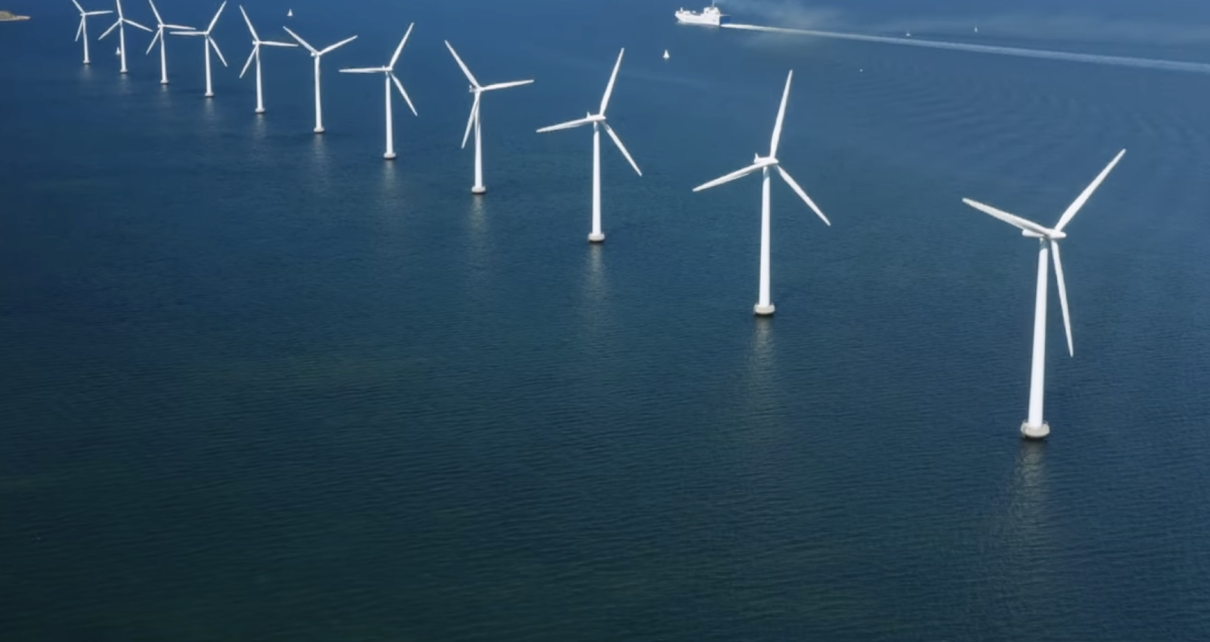
Floating offshore wind is similarly preposterous. It must be canceled before any more money is wasted. This was posted on the California Globe, and we highly recommend reading their publication.
By Edward Ring, July 9
There are at least three ways to evaluate the economic viability of energy projects. The easiest way is to just repeat whatever is in a press release. The other extreme, a mandatory exercise for anyone poised to actually invest and build a project, is to develop complex projections that take into account the benefits of tax credits, favorable depreciation treatment, other deductions and subsidies, revenue enhancements, grants — every conceivable variable that affects long-term after-tax cash flow.
There’s another method, however, that may get closer to the heart of the matter. What do the actual physical assets cost to build, and how much does it cost to operate them? After all, if subsidies and tax breaks improve a private return on investment, those costs were socialized, and the economy at-large still covers the full cost. But what if the subsidies and tax breaks are reduced or even eliminated?
This reality is playing out right now in Morro Bay, where two of the three offshore wind developers have terminated their leases. Could it be that the decision to withdraw was because, absent massive public sector incentives, the projects could not make a profit?
A few months ago I took a look at the cost for floating offshore wind, basing the analysis purely on actual construction costs as documented by official sources. Here is an updated summary – the numbers haven’t changed much:
$184 billion to “procure and install” 25 gigawatts of floating offshore wind turbines. (NREL, ref. page 7)
$12 billion to upgrade existing port infrastructure. (CEC, ref. page 25)
$36 billion to upgrade transmission infrastructure for “offshore wind integration.” (CAISO, ref. page 5)
That amounts to a total cost of $232 billion. Based on the current commercial bond market terms that offer a 25 year term at 4 percent interest, the financing payment is not quite $15 billion per year.
California’s “Offshore Wind Energy Strategic Plan,” updated in June 2024, calls for 25 gigawatts of capacity. At a 40 percent yield and 90 percent uptime, that equates to 78,840 gigawatt-hours per year. That’s a lot. It would equal 28 percent of California’s total electricity consumption of 278,338 gigawatt-hours in 2024. But what would it cost?
It’s simple enough to divide the $14.9 billion annual financing cost by 78,840 gigawatt-hours, then divide by one-million to express the result in kilowatt-hours. The result is $0.19 per kilowatt-hour.
That’s expensive electricity. Think about what’s still missing from this number. It’s based on cost projections, not final costs for a completed project. If we applied High Speed Rail overrun metrics to this, we would be looking at $1.90/kWh. But suppose there are no overruns. This isn’t even a wholesale number. A wholesale price per kWh would have to include operating and maintenance costs, for 2,083 floating towers, approximately 800 feet (or more) in height from the waterline to the tip of a rotor blade in vertical position. Each of them would have a hub containing a 12-megawatt turbine teetering at least 500 feet above the waterline. Each of these towers would sit atop massive pontoons, straining at tethering cables anchoring them to the sea floor in water 4,000 feet deep, with high voltage undersea cables connecting them to the mainland 20 miles away. Pick a number. That’s a lot of maintenance.
Compare the cost of floating offshore wind to the cost for solar energy. Both require battery or other storage backup, adding cost, but at $1 million per megawatt of capacity at a much lower 25 percent yield, under the same terms, the financing cost for photovoltaic electricity is $0.03 per kilowatt-hour. Three cents. Seven times cheaper than floating offshore wind. And solar installations can be decentralized on private land including on rooftops, greatly reducing the need for transmission grid upgrades.
This scheme for floating offshore wind in California must also be compared, on a pure cost-to-build and operate basis, against a vast installed base of generating assets in California that are fully paid for and have decades of useful life left in them. Does anyone think these offshore wind farms are going to last more than the 25 year term of their financing?
Floating offshore wind developments must also be compared to other emerging technologies for large scale electricity production. New nuclear power technologies may soon become commercially viable. There are also promising developments in so-called enhanced geothermal power generation.
Proponents of floating offshore wind, to be charitable, want economic growth. But for economic growth to benefit everyone in the economy, it has to be a financially sustainable investment. Floating offshore wind does nothing of the sort. It would rob electricity ratepayers statewide in order to profit developers who could not hope to make their projects compete in a fair market.
In Humboldt Bay, the state’s other proposed staging area for floating offshore wind farms, the economy would grow if responsible logging was permitted at the scale it attained forty years ago, while adding reasonable safeguards. That would create jobs, reduce wildfire risk, and done right, actually improve forest ecosystems. Along all of the California coast, merely a less draconian Coastal Commission might unlock productive investment without provoking a stampede.
In business school we were once presented a hypothetical business plan. It was scrupulously researched. Every assertion was footnoted and backed by rigorous academic study and field testing. It proposed fitting contact lenses onto the eyes of chickens in order to blur their vision and make them more docile. This in turn would allow them to grow faster and yield more pounds of meat for the supermarket. It was a hoax, of course, designed to remind us to never let go of our common sense.
Floating offshore wind is similarly preposterous. It must be canceled, before any more money is wasted.