On the night of August 7-8, 2026, Russia and Ukraine exchanged strikes targeting energy infrastructure and civilian areas. Russian forces launched ballistic missiles and drones at the Kyiv region and capital, while Ukrainian forces conducted long-range drone strikes on two Russian oil refineries.
Russian strikes hit the Brovary district near Kyiv and areas in the capital. Officials reported three people killed (including a child) and several injured in the Kyiv region, with fires in Kyiv districts. Ukraine’s Air Force reported six ballistic missiles (Iskander-M and S-400) and about 151 drones launched; none of the ballistic missiles were intercepted amid ongoing air defense shortages. Explosions were heard in central Kyiv.
Ukraine’s General Staff confirmed strikes on the Ilsky Oil Refinery in Krasnodar Krai and the Syzran Oil Refinery (part of Rosneft) in Samara Oblast. Fires broke out at both sites. The Ilsky facility has a design capacity of approximately 6.6 million tonnes of oil per year across multiple processing units; its products support both civilian and military needs. The Syzran refinery has a design capacity of about 8.5 million tonnes per year and produces motor fuels, bitumen, and other products.
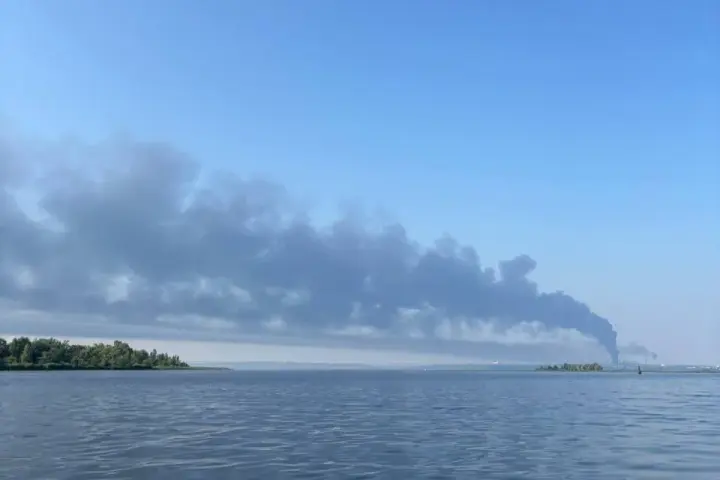
Russian regional authorities attributed the Ilsky fire to falling drone debris and reported five injuries. The fire was later extinguished. Samara officials confirmed an industrial site was targeted without initially naming the refinery. Russia’s Defense Ministry claimed it downed hundreds of Ukrainian drones overnight. Independent verification of exact damage remains limited in the immediate aftermath, as is common with these incidents.
Bomb Damage Assessment on the Refineries
Ukrainian strikes have systematically targeted primary distillation units (such as ELOU-AVT atmospheric-vacuum units), secondary processing equipment (crackers, reformers), storage tanks, and related infrastructure. These components are expensive, complex, and time-consuming to repair or replace, especially under sanctions limiting access to specialized parts.
For the August 8 strikes, Ukrainian sources reported hits causing fires at both plants, with damage assessments ongoing. Syzran had previously sustained significant damage (e.g., to AVT units in earlier July strikes confirmed by satellite imagery). Ilsky has been hit multiple times in the campaign. Fires and smoke were reported via monitoring channels and local statements, consistent with patterns at other facilities where primary processing capacity is disrupted for weeks or months.
Across the broader campaign (intensified in 2026), Ukraine has struck nearly all of Russia’s major refineries, including the top 11 by capacity (completed with the Omsk strike in early July). Many facilities have been hit repeatedly. Satellite imagery and industry reports show persistent damage to critical units, storage, and secondary processing at sites like Moscow (Kapotnya), Ryazan, Yaroslavl (Slavneft-YANOS), Kirishi, and others. Repairs often lag due to repeated attacks and parts shortages.
Russia’s Lost Refining Capacity
Estimates of offline capacity vary by source and timing:
- Ukrainian General Staff assessments in early July put designed capacity disabled at around 42.7%.
Independent analyses (Oxford Institute for Energy Studies, Energy Intelligence, Reuters-cited sources, and others) indicated roughly one-third offline at peaks in mid-2026, with ranges of 20–45% cited across reports. Some Ukrainian analysts claimed higher figures near half of primary capacity. - Refinery throughput fell sharply: from around 4.6 mb/d in March to as low as 3.7 mb/d in June 2026 (lowest in over two decades).
- Product output dropped to about 3.8 mb/d in June (from ~4.7 mb/d average in 2025), with gasoline down ~24%, jet fuel ~23%, and diesel ~20% year-on-year in that period.
Russia’s total refining capacity is roughly 6–6.6 mb/d (depending on design vs. operable figures). Attacks have affected the majority of plants (24 of 34 reported by mid-2026, covering ~81% of capacity). Not all damaged capacity stays offline simultaneously—repairs and workarounds occur—but the cumulative and repeated nature has kept effective throughput well below normal levels into August.
Are They Still Stopping Exports?
Yes. Russia has maintained and extended temporary bans and restrictions on refined product exports to prioritize the domestic market amid shortages:
- Gasoline export bans (in place since earlier in 2026) extended, with reports of prolongation through late 2026 or into 2027 in some measures.
- Jet fuel bans extended through November 2026 or longer in places.
- Diesel (and related gasoil/marine fuel) export bans introduced or expanded in July 2026 (initially temporary, later extended for producers into late August or further, with some exemptions for existing contracts/intergovernmental deals). One government move extended key bans toward January 2027.
Seaborne oil product exports fell sharply (e.g., ~33% month-on-month in July to about 3.9 million tonnes, with diesel/gasoil down ~60% in some data). Crude oil exports have risen to compensate (by hundreds of thousands of barrels per day in earlier months), keeping total oil export volumes more resilient, though product exports (higher-value) have declined markedly. Russia has also begun importing some refined fuels (e.g., from India) and expanded subsidies.
Impact on Russia’s Total GDP
Direct, precise quantification of the drone campaign’s isolated effect on overall GDP is challenging amid the broader war economy, sanctions, high interest rates, and military spending.
Available assessments point to meaningful but not yet catastrophic pressure:
- Growth forecasts have been revised downward (e.g., some Kremlin-linked or independent views to 0.5–1% or lower for 2026 in earlier projections).
- Oil and gas remain critical to budget revenues. Reduced refining adds costs via lost value-added (exporting more crude instead of products), massive increases in damper/subsidy payments to refiners and for imports (billions of dollars equivalent in peak months), higher domestic prices/inflation pressures, and local disruptions to transport, agriculture (harvest season), and industry.
- Cumulative direct and indirect losses to the oil sector have been estimated in the billions of dollars. Night-lights and local activity data show persistent declines near struck facilities. Budget deficits have widened, with higher taxes and depleted reserves noted.
- Offsetting factors include elevated crude export volumes at times, global price dynamics, and reallocation toward the war effort. The campaign complicates logistics and raises operating costs without collapsing overall oil production or export revenues entirely.
Broader effects include fuel rationing or restrictions in dozens of regions (majority of federal entities at peaks), queues, and price spikes, which ripple into civilian economic activity.
Russia’s Response
Moscow has responded on multiple fronts:
- Military/defensive: Claims of high numbers of drones intercepted; efforts to bolster air defenses around energy sites (including relocating systems); Putin has publicly ordered stronger protection of oil facilities.
- Operational/economic: Accelerated repairs where possible; prioritization of domestic supply via export bans; expanded fuel subsidies (damper mechanism payments surged); negotiations for imports; special measures for agriculture and state users during harvest; meetings with oil company executives and regional officials.
- Public/political: Putin acknowledged a “certain deficit” of fuel and “difficult period” in late June 2026, while framing the strikes as attacks on civilian infrastructure. Officials initially downplayed shortages but later imposed rationing and controls. Rosneft leadership has privately described damage as unprecedented in some reports.
The campaign continues as a form of economic pressure, with Ukraine framing the strikes as reducing resources for the war. Russia maintains that it is adapting and that fuel stocks and production adjustments mitigate the worst effects. Both sides continue mutual infrastructure targeting.
- Ukrainian General Staff and official statements on August 8 strikes (via UNN, Ukrainska Pravda, Kyiv Independent): https://unn.ua/en/news/the-general-staff-confirmed-the-striking-of-two-russian-oil-refineries-and-a-station-on-the-syvash-drilling-rig ; https://www.pravda.com.ua/eng/news/2026/08/08/8047863/ ; https://kyivindependent.com/russian-oil-refineries-reportedly-struck-by-ukraine-in-samara-oblast-krasnodar-krai/
- Reuters on Ilsky fire extinguished and related: https://www.reuters.com/business/energy/fire-russias-ilsky-oil-refinery-put-out-after-ukrainian-drone-attack-2026-08-08/ ; https://www.reuters.com/world/europe/three-killed-russian-strikes-kyiv-region-official-says-2026-08-08/
- Oxford Institute for Energy Studies commentary (July 2026 impact analysis): https://www.oxfordenergy.org/wpcms/wp-content/uploads/2026/07/Comment-The-Impact-of-Ukraine-attacks-on-Russian-energy-infrastructure.pdf
- UNITED24 Media on campaign milestones and capacity: https://united24media.com/war-in-ukraine/ukraine-hits-all-11-of-russias-largest-oil-refineries-in-long-range-drone-campaign-20523
- Energy Intelligence, Reuters, and related on throughput/exports: Various reports including https://www.reuters.com/business/energy/russian-july-seaborne-oil-product-exports-drop-33-mm-data-sources-shows-2026-08-04/ ; https://www.reuters.com/business/energy/russia-extends-diesel-gasoline-export-bans-until-end-january-2027-2026-07-30/
- RUSI, Carnegie, Al Jazeera, Washington Post, and others on shortages, response, and economic effects: https://rusi.org/explore-our-research/publications/commentary/putins-fuel-dilemma ; https://carnegieendowment.org/russia-eurasia/politika/2026/06/russia-new-refinery-strike ; https://www.aljazeera.com/news/2026/6/30/how-severe-is-russias-energy-shortage-because-of-ukrainian-strikes ; https://www.washingtonpost.com/world/2026/06/27/unease-deepens-russia-ukraine-steps-up-long-range-strikes/
- Additional capacity and strike tracking: Meduza, Euromaidan Press, Kyiv Post, and open-source reports from June–August 2026.
Reporting is based on official statements from both sides, industry data, satellite/OSINT assessments, and analyses available as of August 8, 2026. Damage figures and economic impacts evolve with repairs, further strikes, and market adjustments.