Hungary’s newly elected government is already testing Brussels’ resolve on energy policy. In a move that could signal growing fractures within the EU, Prime Minister Péter Magyar’s administration has signaled it will continue purchasing Russian energy if it remains the cheapest and most reliable option—directly challenging the bloc’s binding phase-out rules under the REPowerEU framework.
According to a Bloomberg report published today, Hungary’s new Economy and Energy Minister István Kapitany has outlined plans to diversify imports while explicitly refusing to eliminate Russian supplies outright. This stance risks a direct confrontation with the European Union, which formally adopted a regulation in February 2026 (Regulation (EU) 2026/261) mandating a stepwise ban on Russian natural gas: LNG imports phased out by the end of 2026 and pipeline gas by no later than November 2027.
The new Hungarian government, which took power after Magyar’s Tisza party swept the April 2026 elections and ended Viktor Orbán’s 16-year rule, had campaigned on reducing Russian dependence as a “systemic risk.” Yet post-election statements from Magyar himself emphasized pragmatism: “No one can change geography. Russia and Hungary are here to stay. The government will procure crude oil and gas in the cheapest and safest way possible.” He has floated a 2035 target for ending reliance—well beyond the EU’s 2027 deadline—and even suggested sanctions could be lifted once the Ukraine war ends to restore competitiveness.
This isn’t just about one country. It raises a bigger question: As Europe grapples with persistent high energy costs, deindustrialization, and fiscal strain, will more member states begin prioritizing national energy security and affordability over strict EU-wide solidarity?
EU Energy Policy: From Dependence to a Binding Ban
The EU’s push to sever ties with Russian energy began in earnest after Moscow’s full-scale invasion of Ukraine in 2022. The REPowerEU Plan, launched that year and strengthened through 2025–2026, aimed to cut Russian fossil fuel imports through diversification, renewables acceleration, efficiency gains, and electrification.
Key milestone: The REPowerEU Gas Regulation, adopted in January 2026 and in force since February, turns the roadmap into hard law. It prohibits new Russian gas contracts, requires prior authorization for non-Russian imports, and imposes reporting and penalties. Russian gas imports have already plummeted—from 45% of EU supplies in 2021 to around 12–13% by 2025—but residual volumes (especially via pipelines to landlocked Central European states) remain contentious.
Oil phase-out remains slower, with Hungary and Slovakia historically reliant on the Druzhba pipeline. The EU is preparing further oil measures, but the gas ban is the immediate flashpoint.
The Economic Backdrop: Deindustrialization and Fiscal Pain
Europe’s energy transition has come at a steep price. Industrial electricity prices in the EU remain roughly double those in the United States and significantly higher than in China. The 2022 energy shock—exacerbated by Russia’s weaponization of supplies and compounded by recent volatility from Middle East conflicts—has accelerated deindustrialization.
Germany, Europe’s industrial heartland, offers the starkest example: energy-intensive sectors like chemicals, steel, and autos have shed hundreds of thousands of jobs since 2020. Production in key industries fell sharply, with capacity utilization in chemicals dropping to around 70%. Broader euro-area industrial output has lagged, contributing to sluggish GDP growth (projected around 1.1% for the euro area in 2026) and rising fiscal deficits as governments roll out subsidies and relief measures.
High energy costs have driven companies to relocate or curtail investment, widening the competitiveness gap with the US (bolstered by cheap shale gas and the Inflation Reduction Act). Fiscal strain is mounting: subsidies to cushion households and industry have pushed deficits higher, with some forecasts showing EU public debt climbing amid repeated energy-price shocks. Potential output has been permanently lowered by roughly 0.8% in the euro area due to the cumulative effects.
In this environment, cheap Russian energy—despite the geopolitical risks—looks attractive to cash-strapped governments and energy-intensive industries.
What Options Do EU Countries Have for Energy and Financial Security?
Member states face a narrowing but still viable set of choices. Compliance with REPowerEU is mandatory, but implementation leaves room for national strategies—and potential pushback.
Diversification of Imports: Ramp up LNG from the US, Qatar, Norway (pipeline), North Africa, and Azerbaijan. The EU has already shifted dramatically—LNG now accounts for ~45% of gas imports (up from 20% pre-2022). New terminals and interconnectors help, but LNG is more expensive and exposes Europe to global price swings and tanker competition.
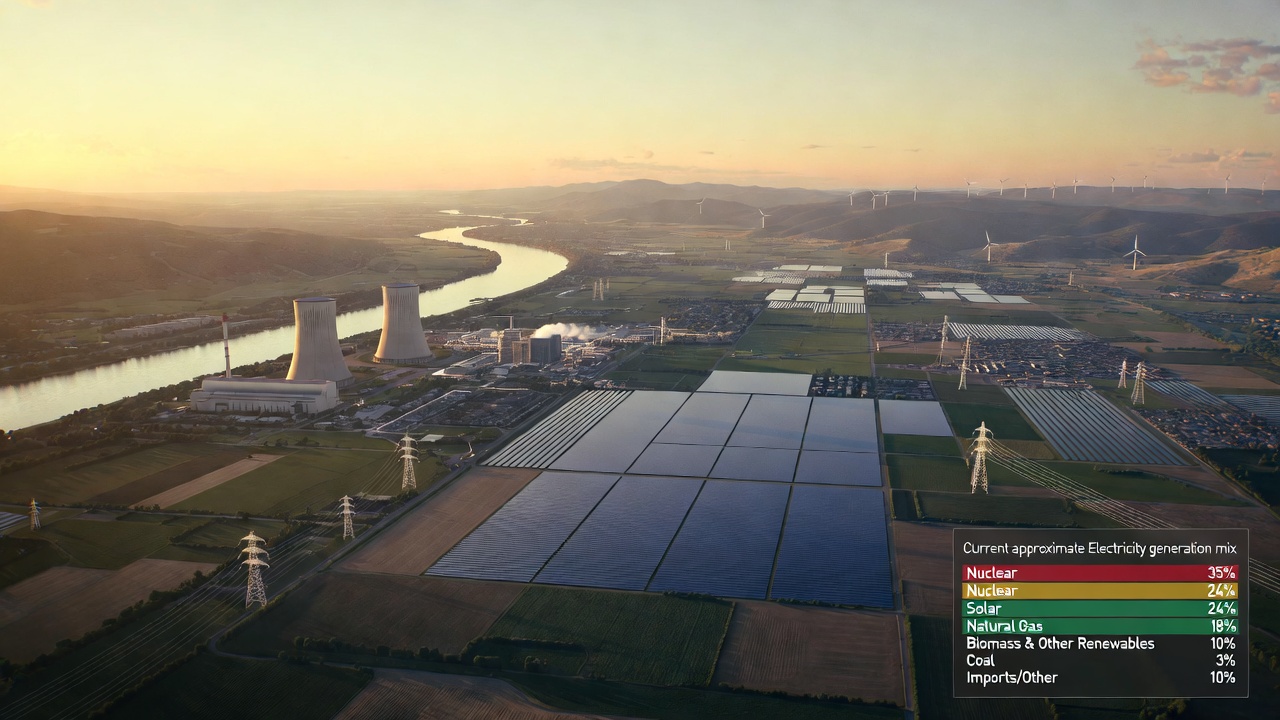
Nuclear Expansion: France’s model shows the value of reliable, low-carbon baseload. Several countries are reconsidering or expanding nuclear programs. This offers energy security without Russian dependence but faces regulatory hurdles, public opposition in some states, and long lead times.
National Derogations and Bilateral Deals: Hungary (and potentially Slovakia under PM Robert Fico, who has openly criticized the phase-out as benefiting US middlemen) may seek exemptions, extended transition periods, or legal challenges. Fico recently questioned whether Europe wants to pay “high-margin surcharges” to American suppliers instead of buying directly from Russia.
Internal Market Integration and Solidarity: Better cross-border electricity and gas trading, joint procurement, and storage coordination can lower costs without new infrastructure. The EU is pushing these under the REPowerEU banner.
Short-Term Relief vs. Long-Term Strategy:
Temporary subsidies or coal/lignite use buy time but undermine green goals and fiscal health. The real financial security lies in reducing overall import dependence and shielding industry through competitive domestic energy.
The catch: Most alternatives require upfront capital that fiscally strained governments may lack. Hungary’s new leaders appear to be betting that a slower, pragmatic timeline preserves jobs and living standards while they negotiate EU funds and flexibility.
The Trend Question: Hungary as Harbinger?
Hungary is not isolated. Slovakia’s Fico has echoed similar criticisms. Eastern and Central European states with historical infrastructure ties to Russia feel the pinch most acutely. As another energy-price shock ripples through Europe in 2026, more voices may question whether the 2027 deadline is realistic—or worth the industrial and fiscal cost.
If Hungary’s approach gains traction, it could mark the beginning of a broader reassertion of national energy sovereignty. The EU’s strength has always been unity, but its energy policy success now hinges on whether it can deliver affordable security without triggering a wave of opt-outs or legal battles.
The coming months will be telling. Will Brussels enforce the rules strictly and risk alienating key members? Or will pragmatism prevail, allowing tailored transitions that keep industries humming?
Europe’s energy future—and its industrial competitiveness—may depend on the answer.
- Bloomberg: “Hungary’s New Government Risks EU Fight Over Russian Energy” (May 11, 2026) – https://www.bloomberg.com/news/articles/2026-05-11/hungary-s-new-government-risks-eu-fight-over-russian-energy?srnd=phx-industries-energy
- European Commission – REPowerEU Phase-Out Page: https://energy.ec.europa.eu/strategy/repowereu-phase-out-russian-energy-imports_en
- EU Regulation (EU) 2026/261 details via Eur-Lex and Commission updates.
- Al Jazeera, Euronews, Kyiv Independent, CBS News reports on Péter Magyar’s statements (April 2026).
- ECB, IMF, and economic analyses on EU deindustrialization and energy shocks (2026 reports).
- Slovak PM Fico statements via recent coverage (May 2026).
- Additional context from Politico, Jones Day, and industry analyses on REPowerEU implementation.
All data and quotes drawn from publicly available reporting and official EU documents as of May 11, 2026.