
As U.S. stock futures surge ahead of Monday’s open, signaling yet another leg higher for the major indices, energy markets tell a very different story. The reopening of the Strait of Hormuz—following Iran’s recent declaration that the vital waterway is “completely open” during the ceasefire—has triggered a sharp plunge in oil prices. This is great news for U.S. consumers, airlines, and the broader economy, but it is putting significant pressure on oil-export-dependent nations in the Gulf that rely heavily on Hormuz for their economic lifelines.
U.S. Markets: Futures Point to a Strong Monday Open
U.S. equity futures are firmly in the green this weekend, reflecting Friday’s record-setting close and building optimism around Middle East de-escalation. As of late Friday evening, data carries into Sunday:
Dow Jones futures: +1.84% at approximately 49,663
S&P 500 futures: +1.23% at approximately 7,164
Nasdaq 100 futures: +1.33% at approximately 26,841
These gains follow a strong Friday close where the S&P 500 and Nasdaq hit fresh records, with the Dow also posting its highest level in weeks. The “Hormuz Hope” rally—fueled by expectations of reduced geopolitical risk and lower energy costs—has propelled U.S. indices to multi-month highs despite earlier volatility tied to the U.S.-Iran conflict.
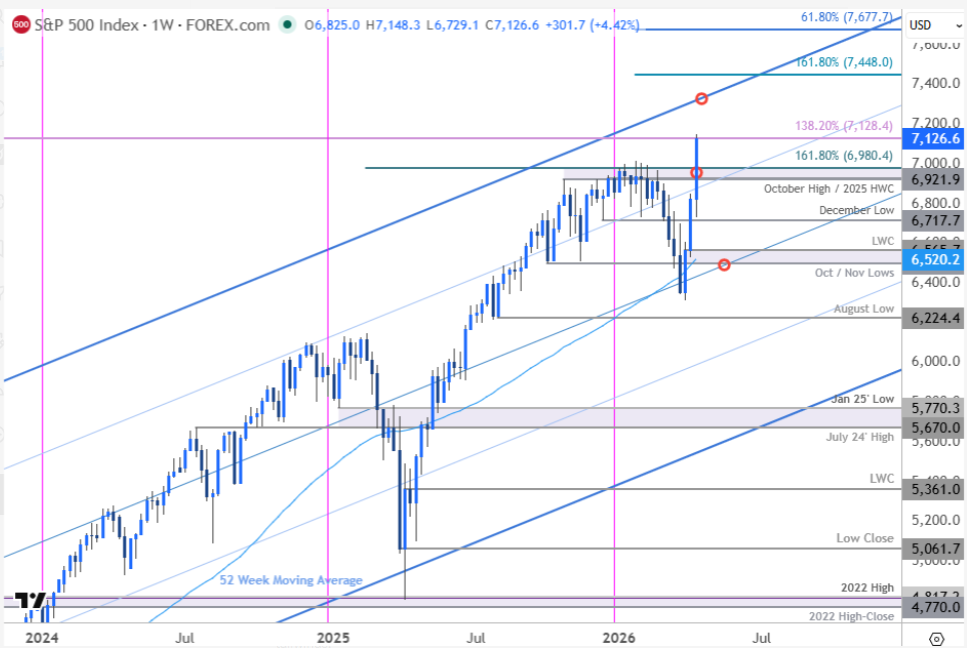
S&P 500 Weekly Chart (recent performance showing the bull run into April 2026)The U.S. market’s resilience stems from several factors: America’s relative energy independence insulates it from Hormuz disruptions, while lower oil prices act as a tax cut for consumers and businesses. Tech and AI-driven sectors continue to lead the charge, with strong corporate earnings providing additional tailwinds.
Oil Prices Plunge on Hormuz Reopening News
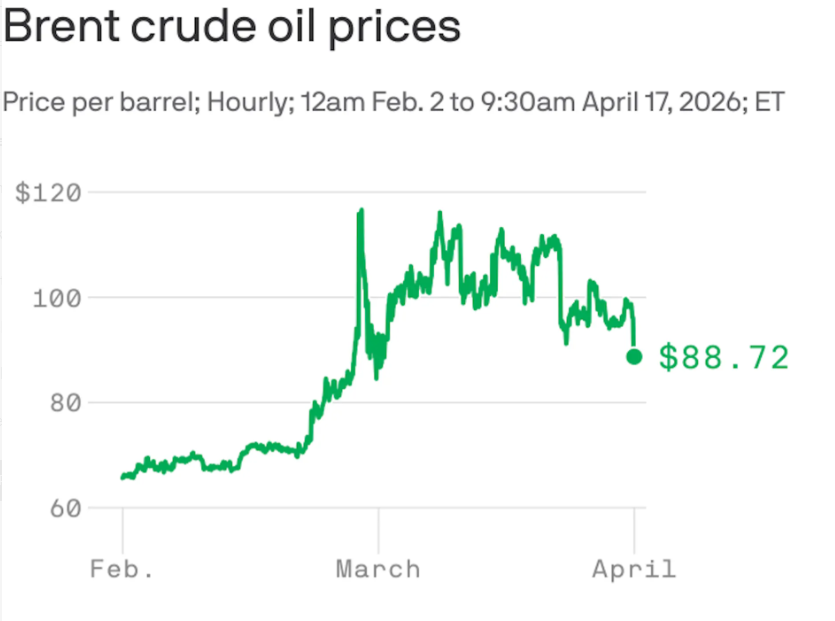
The Strait of Hormuz, through which roughly 20% of global oil passes daily, has been the epicenter of market volatility. Iran’s announcement that the strait would reopen for commercial shipping during the current truce sent benchmark prices tumbling more than 10-12% in a single session.
WTI Crude: Dropped to around $83–84 per barrel (down sharply from recent highs above $100).
Brent Crude: Fell to approximately $88.72 (a plunge of over 10% in recent trading).
This relief rally in equities (and pain for oil producers) highlights the classic divergence: cheaper energy is bullish for net importers like the U.S., but bearish for exporters.
Hormuz-Dependent Countries: Feeling the Heat
Gulf Cooperation Council (GCC) nations—Saudi Arabia, UAE, and others—are heavily reliant on the Strait of Hormuz for oil exports. While earlier tensions drove oil prices higher (temporarily boosting revenues), the sudden drop has shifted sentiment.
Saudi Tadawul All Share Index (TASI): Closed around 11,554 on April 16, down 0.30% that session. The index has shown resilience but remains vulnerable, with recent dips reflecting oil price sensitivity. Earlier in the conflict, it hit multi-year lows before recovering on ceasefire hopes.
Dubai Financial Market (DFM) Index: Around 5,987 (up ~0.97% on April 17 close), but broader UAE markets (ADX) have been mixed amid oil volatility. Year-to-date performance remains soft compared to U.S. benchmarks.
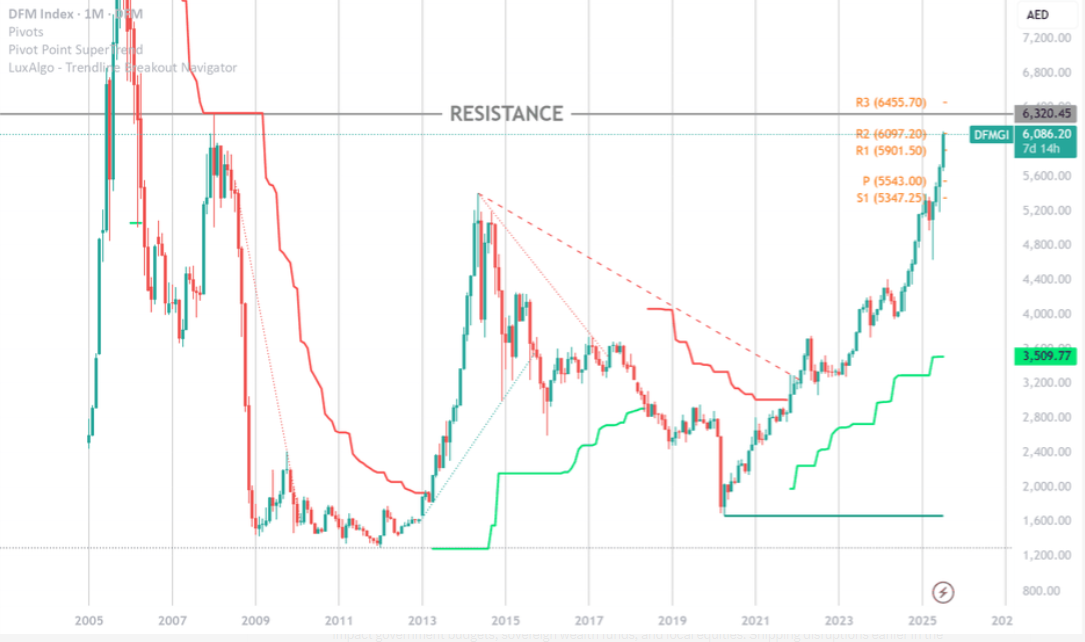
Dubai DFM / DFMGI Index – Mixed performance in an energy-dependent environment. These markets lack the diversified, tech-heavy drivers powering Wall Street. Lower oil revenues directly impact government budgets, sovereign wealth funds, and local equities. Shipping disruptions earlier in the crisis had already weighed on sentiment; the price crash now compounds the headwinds.
Foreign Markets Outlook for Monday Morning
Asian and European markets are expected to open positively on Monday (April 20), following U.S. futures and the global risk-on mood from de-escalation hopes. However, the divergence will likely persist: Western indices ride the relief wave, while energy-heavy emerging markets (especially GCC) lag.
Why the Split? Major Drivers Behind the Futures
Geopolitical Relief: Hopes of a U.S.-Iran deal and stable Hormuz shipping reduce supply-risk premiums.
Lower Energy Costs: Acts as a stimulus for U.S. growth and curbs inflation—bullish for stocks.
U.S. Structural Advantages: Tech/AI boom + domestic energy production.
GCC Exposure: Direct hit to export revenues and fiscal stability in oil-centric economies.
The result? A textbook bull run in New York, while Hormuz-dependent bourses face downward pressure.
Looking Ahead to Monday
U.S. markets appear poised for another green open, potentially extending records. Watch oil for any rebound on shipping confirmation (or renewed uncertainty). For energy investors, the volatility underscores the importance of diversification beyond pure-play exporters.
The Strait of Hormuz remains a geopolitical wildcard—but for now, its reopening is writing two very different stories: one of celebration on Wall Street, and caution in the Gulf.
Stay tuned to Energy News Beat for real-time updates as markets open Monday.
All data and charts drawn from publicly available market sources as of April 19, 2026 (Sunday pre-market).
- U.S. Futures & Stock Market Updates: CNBC Pre-Market (cnn.com/markets/premarkets), Business Insider Premarket, Reuters.
- Oil Prices & Hormuz News: Axios, Euronews, CME Group, Fortune, ABC News, Reuters (multiple April 17–18 reports).
- Tadawul (TASI) Performance: Yahoo Finance (^TASI.SR), TradingEconomics, Saudi Exchange.
- Dubai DFM: Yahoo Finance, DFM Market Watch.
- Charts: Sourced via financial visualization platforms including TradingView, Yahoo Finance, and market data providers (specific images reflect April 2026 performance).
- Additional Context: Barron’s, WSJ, Investopedia, Barchart.
For live charts:
- S&P 500: finance.yahoo.com/quote/^GSPC
- WTI/Brent Oil: finance.yahoo.com/quote/CL=F or investing.com/commodities/crude-oil
- TASI: finance.yahoo.com/quote/^TASI.SR
Energy News Beat – Independent energy market analysis. Not financial advice. Markets move fast—verify the latest data.