ENB Pub Note: This article originally appeared on David Blackmon’s Substack; we highly recommend subscribing. We will be covering this on several podcasts this week. This also brings in the Hydro Connection from Canada to New York City that we have covered. It is not wise to spend billions on importing energy without alternative sources – just saying.
The sudden collapse of U.S.-Canada trade talks late last week represents far more than another diplomatic snarl in the ongoing tariff spat between Washington and Ottawa. It strikes at the heart of America’s energy security in ways that too many in the political class are reluctant to acknowledge.
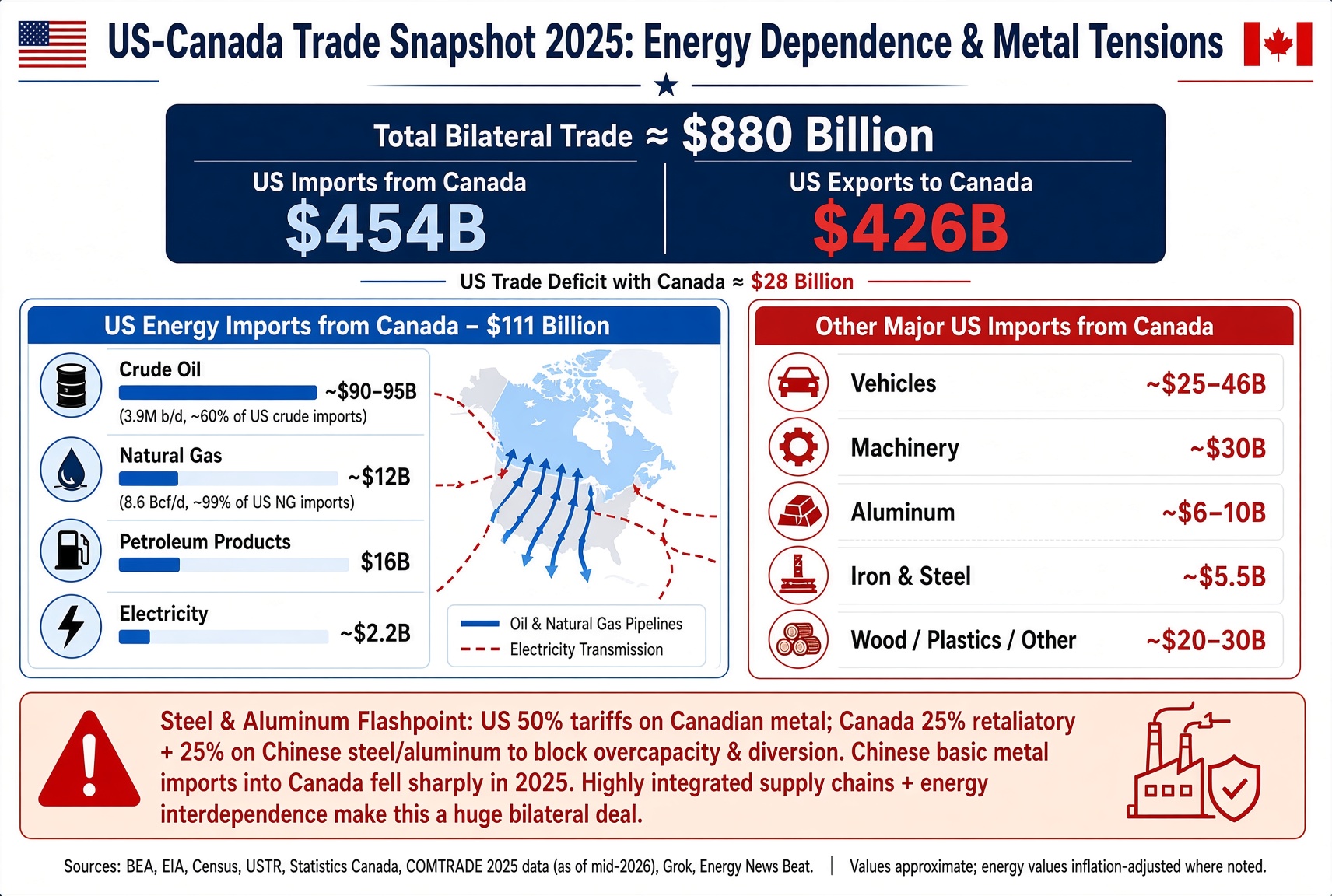
Upwards of 4 million barrels of Canadian crude oil flow into the United States every single day. Far from some marginal trade flow that can be casually disrupted without consequence, those Canadian barrels make up the single largest source of foreign crude for American refiners, and the overwhelming majority of it is the heavy, sour grades produced from Alberta’s oil sands.
Those heavy barrels are not interchangeable commodities that refiners could simply swap out for lighter grades from the Permian or the Gulf of Mexico. U.S. refining infrastructure – particularly the complex facilities in the Midwest and along the Gulf Coast – was deliberately configured over decades to process exactly this type of crude. These volumes of heavy crude, blended with lighter domestic grades, yield the gasoline, diesel, jet fuel, and petrochemical feedstocks that keep the American economy moving.
Without reliable access to Canadian heavy oil, utilization rates at those plants would drop, product yields would suffer, and prices at the pump and for trucking diesel would spike. The current tight global supply situation only compounds the problem. Spare capacity is limited, alternative heavy crude sources from places like Venezuela or the Middle East face their own geopolitical and logistical hurdles, and shipping longer distances across oceans would add both cost and vulnerability. Replacing lost Canadian volumes on short notice would be near-impossible for U.S. refiners operating at high rates to capture strong diesel margins.
This interdependence is a strength when relations are stable and a glaring weakness when they are not. The trade talks’ breakdown – complete with 50 percent tariffs now taking effect on billions in Canadian goods and Ottawa promising dollar-for-dollar retaliation – injects precisely the kind of uncertainty that markets and capital abhor.
Flash Point Summary:
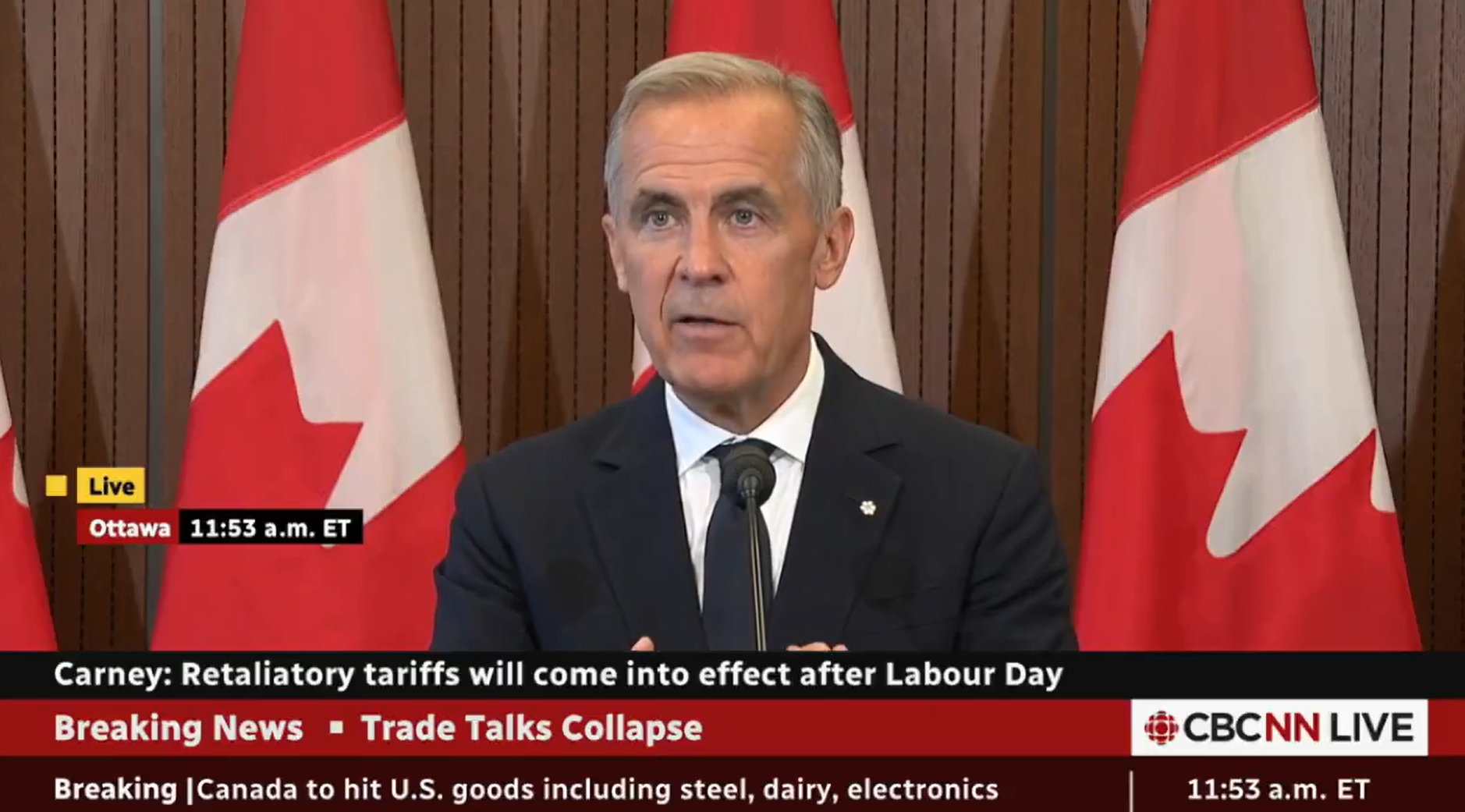
Saturday, following Friday’s disbanding of trade talks, Canadian PM Mark Carney told reporters that his country is “at war” with the United States:
Q: Why does it feel like today Mark Carney is going to war? Trade war.
Carney: Because we were attacked. You’re at war when you get attacked. We got attacked. That’s fine. We’ve got the reserves. We’ve got the resilience. We’ve got the plan. We’ve got the focus. We will respond.
I’m no fan of Canada’s duplicitous leader, but Mr. Carney does have plenty of tools at his disposal in this trade war, and most of them involve energy.
Energy security does not exist in a vacuum. It depends on predictable cross-border flows of molecules and the infrastructure that moves them. When governments start treating the other as an unreliable partner, the practical result is delayed investment, higher risk premiums, and projects that never leave the drawing board.
That brings us directly to the multi-billion-dollar pipeline projects designed to bring even more Canadian crude south. President Trump has repeatedly signaled his desire to revive the long-canceled Keystone XL project, floating the idea publicly in the very days leading up to the talks’ collapse and suggesting it “may be awoken from the grave.”
While reviving Keystone itself is an impossible dream for many reasons, a reworked version known as the Prairie Connector – leveraging some of the already-installed pipe on the Canadian side and pairing with a U.S. partner – has advanced to the point of securing significant shipper commitments for roughly 550,000 barrels per day, with a final investment decision targeted for next year. Other expansions of existing systems and new corridors have been discussed as ways to increase capacity by hundreds of thousands of barrels daily into the U.S. market.
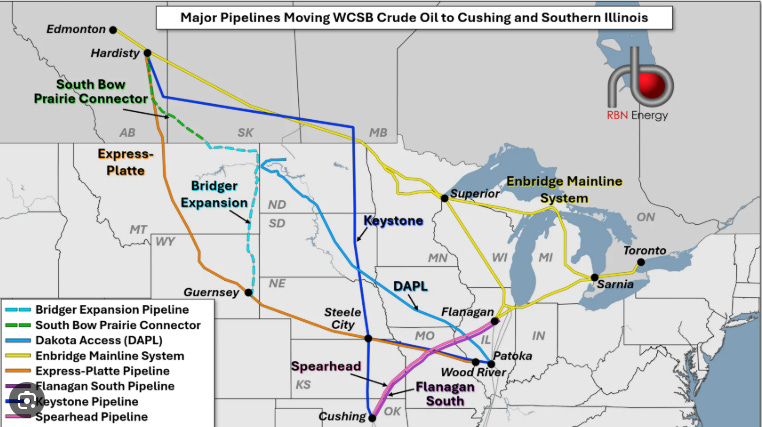
Will the collapse of trade talks scuttle these projects? The risk is real and growing. Cross-border energy infrastructure requires not just regulatory permits but a baseline of political trust and commercial confidence. Tariffs, retaliatory measures, and the public finger-pointing that followed the Friday night walkout erode both.
Canadian producers and pipeline developers facing higher costs or restricted market access will naturally look harder at alternatives, including more shipments to Asia via the expanded Trans Mountain system. American refiners, already staring at potential feedstock tightness, will hesitate to commit the long-term contracts that underwrite multi-billion-dollar midstream investments. Political capital that might have been spent smoothing permitting or aligning incentives is instead burned on tariff fights over dairy, steel, and softwood lumber.
The broader lesson is pretty clear: America’s refining sector and the transportation fuels it produces remain deeply tied to Canadian heavy crude and pretending otherwise is an exercise in self-delusion. A prolonged deterioration in the bilateral relationship does not magically create new heavy oil supplies elsewhere or reconfigure Gulf Coast cokers overnight. It simply raises the odds of tighter product markets, higher prices for American consumers and businesses, and forgone opportunities to expand secure North American energy infrastructure.
Energy security cannot be treated as an abstract slogan. It is measured in barrels that arrive on time, pipelines that get built, and trade relationships that prioritize mutual economic strength over temporary leverage. The collapse of these talks has just made the maintenance of that crucial equation much more precarious.
Here is the Live Link for the Energy Realities Podcast tomorrow morning at 9:00 with Dr. Tammy Nemeth, David Blackmon, and Stu Turley.