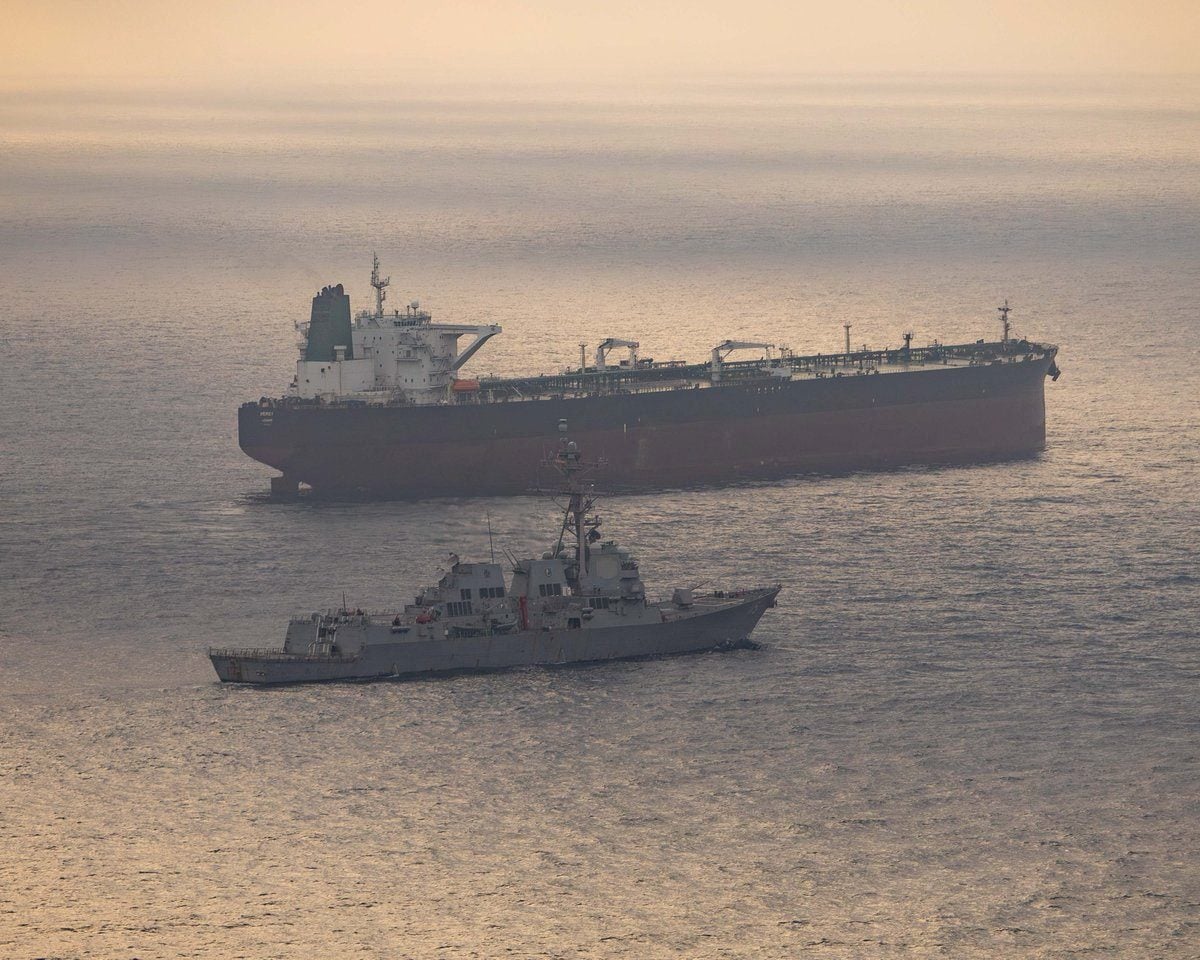
Washington expanded its economic campaign against Iran on October 1, designating the country’s rail system, major industrial firms, and a Russia-linked shadow banking network on the same day the U.S. military blockade continues to choke seaborne oil exports. The Treasury actions, issued under Operation Economic Outcast, come as three shadow-fleet tankers seized earlier this year and carrying nearly six million barrels of Iranian crude—valued at roughly $600 million—remain on a slow Atlantic crossing toward the U.S. Gulf Coast.
Treasury’s claim, and the trackers’ picture
The U.S. Department of the Treasury said Iran’s oil revenues have fallen to zero as the maritime blockade takes hold, forcing the regime to lean on rail, autos, steel, and informal finance to keep a veneer of solvency. Secretary Scott Bessent framed the October 1 designations as a direct strike on the remaining enablers: “Today’s action directly targets Iran’s enablers and lays the groundwork for the United States and our partners to drain the regime’s revenue once and for all.”
Independent ship-tracking data does not literally show a zero balance sheet, but it does show a closed export gate. United Against Nuclear Iran reported on October 1 that it has not tracked any tanker laden with Iranian crude successfully leaving the Gulf of Oman and avoiding U.S. enforcement since July 12, before the blockade was reinstated. Kpler and related reporting in early September said no Iranian crude had crossed the blockade line since mid-July, that loadings inside the Gulf had collapsed, and that oil already outside the blockade—then estimated near 29 million barrels, down from about 90 million in mid-July—could be exhausted by mid-October, with associated payments drying up by mid-December. Other commercial estimates put oil still outside the zone above 80 million barrels and residual receipts lasting another five to six months. The spread reflects different definitions of committed versus free barrels and different discharge assumptions. What the trackers agree on is that new loadings are trapped and that delayed Chinese payments, not fresh sailings, are the remaining cash flow.
Rail, industry, and the A7 network
OFAC issued sectoral determinations under Executive Order 13902 covering Iran’s automotive and rail sectors, authorizing sanctions on anyone operating in those industries. Named rail targets include the state-owned Islamic Republic of Iran Railway Company (RAI), Raja Passenger Trains Company, and freight operator Sherkat-E Rah Ahan-E Khamle-O-Naghle. Treasury said Tehran has turned to rail to move oil and sustain regional trade as tanker routes close.
Automotive designations hit Iran Khodro and SAIPA—together more than 90 percent of the domestic auto market—plus diesel, truck, and motorcycle producers and suppliers in Indonesia, the UAE, Turkey, and Hong Kong. Heavy Equipment Production Company (HEPCO) and its China subsidiary were designated, with Treasury citing machinery use tied to IRGC military facilities. Steel and metals actions covered Iranian producers and trading companies in the UAE, Germany, China, and Hong Kong, including a network linked to Iranian-Dominican businessman Ramin Keshvardoust that Treasury says facilitated tens of millions of dollars in steel and oil shipments.
A parallel action designated the A7 Network as a significant transnational criminal organization and saw FinCEN propose a rule blocking fund transfers involving A7 sub-agents. Treasury says the network, associated with sanctioned Moldovan-Russian figure Ilan Shor, has been used by Iran and the IRGC to move money, sell oil, and procure weapons. FinCEN identified more than $17 billion processed by A7 sub-agents between January 2025 and June 2026. One sub-agent and a sister company received nearly $140 million from entities tied to Iranian sanctions evasion, including counterparties in the shadow fleet. The network also uses the A7A5 ruble-backed token issued by previously sanctioned Old Vector LLC.
The three seized tankers
Energy News Beat reported on September 25, drawing on TankerTrackers and Kpler, that three sanctioned very large crude carriers boarded in the Indian Ocean are crossing the Atlantic with nearly six million barrels of Iranian-origin crude.
Tifani (IMO 9273337) was boarded on April 21, 2026, in the Bay of Bengal / Indian Ocean. It is an older VLCC that has used multiple flags and was treated as stateless at seizure.
Majestic X (IMO 9198317), also known as Phonix or Phoenix, was boarded two days later. OFAC-sanctioned in December 2024, managed through India-based Vision Ship Management, and credited by trackers with moving on the order of 20 million barrels of Iranian oil since 2023.
Lenore (IMO 9259367), also known as Davina or MT Davina, was boarded in early June southwest of Sri Lanka after loitering with AIS off. U.S. Indo-Pacific Command confirmed the boarding of the sanctioned, stateless VLCC.
As of the late-September tracking window used by Energy News Beat, Bloomberg, and gCaptain, two of the ships were off northern Brazil and the third had rounded Cape Horn or the Cape of Good Hope, all westbound at roughly 8–9 knots. AIS has not consistently advertised a U.S. discharge port, but trackers and a Voice of America review of maritime data pointed toward the U.S. Gulf, with Galveston cited as a likely heading for Majestic X and Tifani. Homeland Security Investigations has executed federal warrants; Justice Department forfeiture proceedings are underway. Historical practice—2020 multi-tanker forfeitures, the 2023 Suez Rajan case—points to court-supervised sale rather than a Strategic Petroleum Reserve deposit. Prize-court discussions reported in late summer could accelerate proceeds to the Treasury if applied. No public arrival notice at a Gulf terminal had been confirmed as of October 1.
How bad it is inside Iran, and the payroll question
The domestic picture is severe even if “zero oil money” overstates the residual offshore book.
Iran’s Statistical Center reported GDP contracting 10.1 percent year on year in the March 21–June 20 quarter, with the oil and gas sector down 26.4 percent. Twelve-month inflation was about 69.9 percent in early September; the rial traded beyond 2.2 million to the dollar, roughly double the year-earlier rate. Hudson Institute figures put oil exports near 260,000 barrels a day versus about 1.7 million a year earlier. Reuters interviews in late September described medicine and rent shortages, private-sector job losses, and a widening black market. Tehran itself has put war damage near $270 billion. Petrochemical exports, the second hard-currency earner, are reported down about 63 percent since early 2026.
Oil normally funds roughly a third of the state budget and, through dedicated companies and the shadow fleet, supplements IRGC and armed-forces accounts. That channel is the one the blockade and the October 1 designations are built to close.
Open sources do not publish a reliable “weeks of IRGC payroll left” figure. What they do publish is a revenue runway:
Kpler-based reporting in early September: floating stocks outside the blockade could be gone by mid-October, with payments for already-delivered cargoes fading by mid-December.
A separate commercial assessment carried by World Ports: more than 80 million barrels still outside the zone could support receipts for another five to six months, most of it already committed, consistent with Central Bank governor Abdolnaser Hemmati’s statement that exports have “virtually stopped.”
Steptoe’s September 16 risk note: floating reserves near 29 million barrels might last about a month at recent sales rates; a full economic breakdown is still framed as months away, more likely years, because Tehran can ration, tax, trade with partners outside easy U.S. reach, and prioritize the security forces over households.
Clingendael (October 1): the IRGC is expanding its grip on hard-currency channels, including any Hormuz transit fees, so the state increasingly depends on Guards-controlled revenue rather than the reverse. That cuts both ways—it protects IRGC pay relative to civil salaries, and it makes the new rail and A7 sanctions more relevant to the force that actually collects.
A reasonable reading is that fresh export receipts are measured in weeks to a few months, delayed payments in a similar band, and the ability to keep paying the IRGC and regular military longer than that only if Tehran drains reserves, prints money, and sacrifices civilian spending. Inflation near 70 percent already means those salaries buy far less than they did a year ago. Treasury’s October 1 actions are aimed at the substitutes—rail logistics, industrial cash flow, and the A7 pipes—that would otherwise stretch that runway.
Making Appendices Great Again
Check out the World’s Greatest Podcast Show Notes at EnergyNewsBeat.co or EnergyNewsBeat.com.
Appendix: Sources
- U.S. Treasury, Operation Economic Outcast — rail, auto, manufacturing, steel (October 1, 2026): https://home.treasury.gov/news/press-releases/sb0643
- U.S. Treasury, A7 Network action (October 1, 2026): https://home.treasury.gov/news/press-releases/sb0644
- U.S. Treasury, launch of Operation Economic Outcast / Economic D-Day (August 24, 2026): https://home.treasury.gov/news/press-releases/sb0613
- gCaptain, “U.S. Targets Iran’s Rail and Shadow Banking Networks as Maritime Blockade Tightens” (October 1, 2026): https://gcaptain.com/u-s-targets-irans-rail-and-shadow-banking-networks-as-maritime-blockade-tightens/
- Energy News Beat, “Iran-Linked Oil Tankers Seized by US Navy Now Headed to U.S. Coast” (September 25, 2026): https://energynewsbeat.co/crude-oil/iran-linked-oil-tankers-seized-by-us-navy-now-headed-to-u-s-coast/
- Energy News Beat, US forces board MT Davina / Lenore (June 2026): https://energynewsbeat.co/crude-oil/us-forces-board-sanctioned-tanker-in-indian-ocean-pentagon-says-energy-news-beat/
- gCaptain / Bloomberg, seized tankers and $600 million cargo (September 25, 2026): https://gcaptain.com/seized-iranian-oil-tankers-head-toward-u-s-with-600-million-cargo/
- Maritime Executive, forfeiture outlook (September 25, 2026): https://maritime-executive.com/article/us-appears-set-to-seize-600m-in-iranian-crude-oil-from-three-tankers
- United Against Nuclear Iran shipping update (October 1, 2026): https://www.unitedagainstnucleariran.com/analysis/iran-shipping-update-october-1-2026
- Steptoe, “How Iran’s Wartime Economy Works, and How Long it Can Last” (September 16, 2026): https://www.steptoe.com/en/news-publications/stepwise-risk-outlook/how-irans-wartime-economy-works-and-how-long-it-can-last.html
- World Ports / commercial assessment, blockade trilemma and 5–6 month residual receipts: https://www.worldports.org/irans-blockade-trilemma-endure-escalate-or-negotiate/
- Hudson Institute, export collapse, rial, inflation (September 27, 2026): https://www.hudson.org/foreign-policy/trumps-iran-strategy-working-ayatollah-suffers-oil-flows-again-zineb-riboua
- Al Jazeera, GDP and inflation figures (September 30, 2026): https://www.aljazeera.com/news/2026/9/30/economic-war-is-iran-losing-its-leverage-over-the-strait-of-hormuz
- Reuters, household impact of seven months of war (September 29, 2026): https://www.reuters.com/business/energy/iranians-stagger-under-soaring-costs-seven-months-war-2026-09-29/
- Clingendael, wartime economic role of the IRGC (October 1, 2026): https://www.clingendael.org/publication/wartime-economic-takeover-iranian-state
- CENTCOM Citadel, oil-revenue pressure overview (September 30, 2026): https://centcomcitadel.com/en_GB/articles/ssc/features/2026/09/30/feature-03