

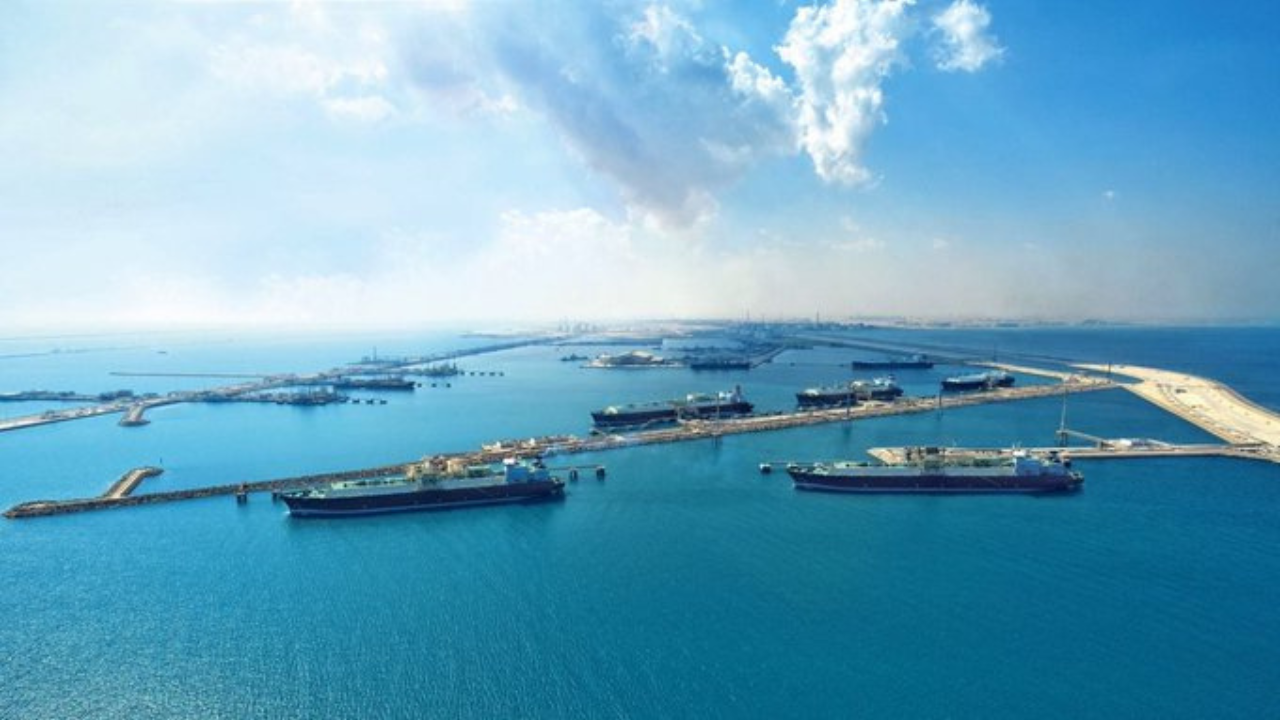
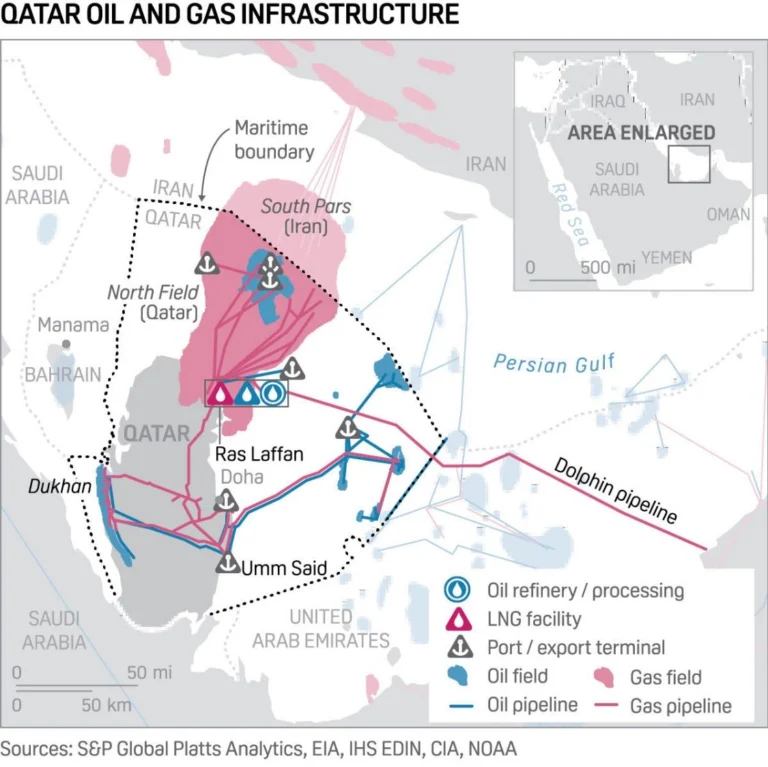
QatarEnergy is moving LNG tankers back to its Ras Laffan Industrial City complex as it prepares to resume exports once safe navigation through the Strait of Hormuz is restored, following a preliminary U.S.-Iran deal that has raised hopes for regional de-escalation.
Vessel-tracking data shows that at least four Qatar-owned LNG carriers recently began heading toward Ras Laffan, with a fifth chartered vessel also en route. Additional carriers are idling in the Gulf of Oman and could soon transit the strait once conditions allow.
Background: Months of Disruption
Qatar, the world’s second-largest LNG exporter, halted production and exports in early March 2026 after the Iran conflict erupted on February 28 and closed the critical Strait of Hormuz chokepoint. In mid-March, Iranian missile strikes damaged parts of the Ras Laffan LNG facility, compounding the shutdown.QatarEnergy declared force majeure on LNG shipments, and all production at the world’s largest LNG export hub came to a standstill due to both security concerns and the inability to ship cargoes.
Rapid Restart Plans: 50% in One Month, 80% in Two
QatarEnergy has informed its customers that it can restore approximately 50% of its production capacity within one month after safe passage through the Strait of Hormuz resumes. It expects to reach roughly 80% within two months, according to people familiar with the matter.
The company has been laying the groundwork for this quick rebound since April, conducting equipment testing and maintenance at Ras Laffan.Damaged Trains: Long-Term Impact on 17% of Capacity
The remaining portion — roughly 20% of total capacity — was damaged by the Iranian missile strikes in mid-March. Two of Qatar’s 14 LNG trains (Trains 4/S4 and 6/S6) were hit, sidelining 12.8 million tonnes per annum (mtpa) of production, equivalent to about 17% of Qatar’s total LNG capacity.
QatarEnergy CEO Saad al-Kaabi stated in March that repairs to the damaged trains would take three to five years. One gas-to-liquids (GTL) facility was also affected and is expected to be offline for at least one year.
Qatar’s total pre-conflict LNG production capacity stands at 77 mtpa across its 14 trains at Ras Laffan. The operable portion (approximately 64 mtpa) can therefore ramp up relatively quickly once shipping routes reopen, while the damaged trains represent a longer-term supply gap.
Strategic Move: Tankers Positioned for Quick Loading
The return of empty tankers to Ras Laffan signals QatarEnergy’s readiness to load cargoes rapidly once the strait reopens. This proactive positioning will help minimize delays in resuming deliveries to key markets in Asia (China, Japan, South Korea, India) and Europe.
The restart remains conditional on the U.S.-Iran ceasefire holding and sustained safe navigation through the Strait of Hormuz.
Market Implications
A swift partial recovery in Qatari LNG supply could provide meaningful relief to global natural gas markets, which have seen significant price volatility amid the regional disruptions. However, the long-term loss of the damaged trains means full pre-war export levels will not return for several years.QatarEnergy continues to emphasize its commitment to reliable supply while prioritizing safety and operational integrity at Ras Laffan.
- OilPrice.com: “Qatar Prepares LNG Comeback Ahead of Hormuz Reopening” (June 17, 2026) — https://oilprice.com/Latest-Energy-News/World-News/Qatar-Prepares-LNG-Comeback-Ahead-of-Hormuz-Reopening.html
- Bloomberg: “Qatar Moves LNG Ships Back to Mideast Ahead of Hormuz Reopening” (June 17, 2026) — https://www.bloomberg.com/news/articles/2026-06-17/qatar-moves-lng-ships-back-to-mideast-ahead-of-hormuz-reopening
- Bloomberg: “Qatar Plans to Rapidly Restart LNG Output After Hormuz Opens” (June 16, 2026) — https://www.bloomberg.com/news/articles/2026-06-16/qatar-plans-to-rapidly-restart-lng-production-after-hormuz-opens
- Reuters: “Exclusive: Iran attacks wipe out 17% of Qatar’s LNG capacity, repairs to take three-five years” (March 19/20, 2026) — https://www.reuters.com/business/energy/iran-attack-damage-wipes-out-17-qatars-lng-capacity-three-five-years-qatarenergy-2026-03-19/
- QatarEnergy LNG official site (capacity confirmation): https://www.qatarenergylng.qa/english/About-Us
- Additional reporting from Middle East Eye, Investing.com, and S&P Global Platts (March–June 2026 coverage of the conflict and restart preparations).
This article is based on the latest available reporting as of June 17, 2026. Developments remain fluid and dependent on geopolitical progress.